
Iran-US War: Missiles Strike Tel Aviv Amid Peace Negotiation Uncertainty
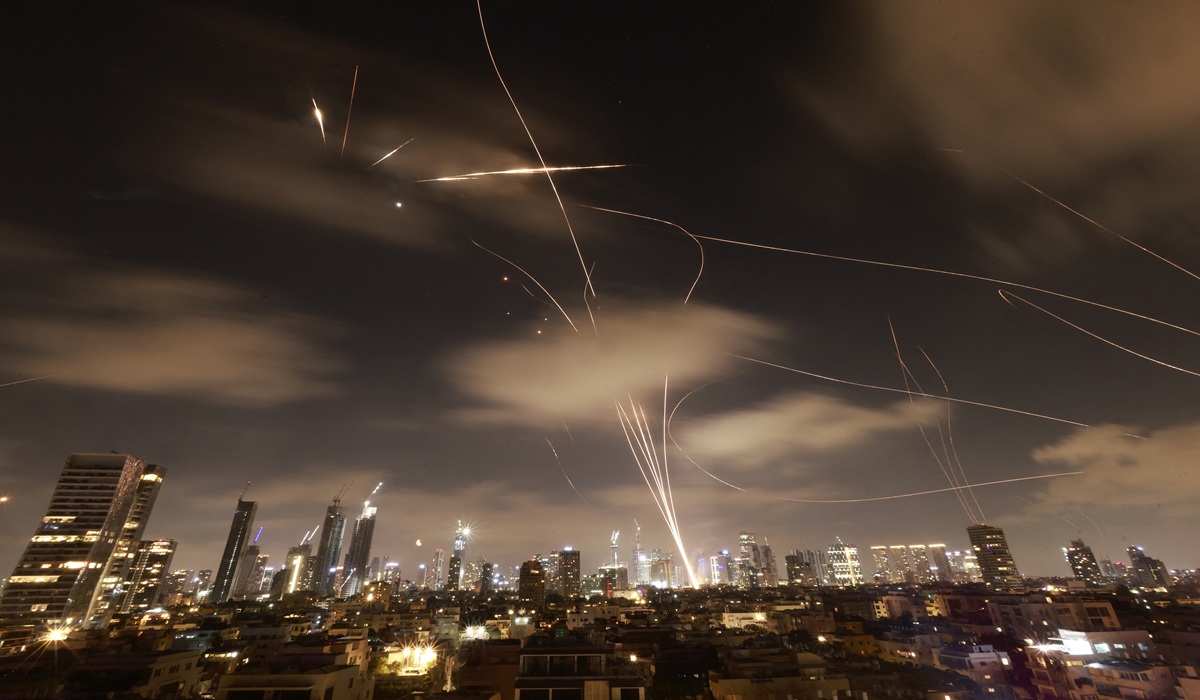
Escalation in the war between Iran, the United States, and Israel in the Middle East has intensified once again after Iran launched a missile attack on Israeli territory on Tuesday (24/3). The strike hit the commercial centre of Tel Aviv, causing building damage and injuring several residents.
Field reports show streets filled with debris, while the facade of a three-storey building in the upscale area of Tel Aviv was destroyed. Tel Aviv Mayor Ron Huldai confirmed a “direct attack” targeting the area.
Israeli security authorities suspect the damage was caused by a missile carrying cluster munitions with three to four warheads, each containing around 100 kilograms of explosives.
On the other hand, Iranian media reported retaliatory strikes by US and Israeli fighter jets that hit two gas facilities and one pipeline route. The attacks occurred a few hours after US President Donald Trump softened his threats against Iranian energy facilities.
“Our administration is talking with ‘important people’ at the top level,” Trump said, as quoted by AFP.
However, he also warned that if negotiations do not yield results within five days, “we will continue bombing as hard as possible.”
That statement was refuted by Tehran. Iranian Parliament Speaker Mohammad Bagher Ghalibaf asserted that “no negotiations” are underway and described Trump’s remarks as an attempt to “manipulate financial and oil markets.”
Nevertheless, US media reported the possibility of a meeting between US negotiators Steve Witkoff and Jared Kushner with an Iranian delegation in Pakistan this week. Pakistani Prime Minister Shehbaz Sharif also stated that he had communicated with Iranian President Masoud Pezeshkian to offer mediation.
Israeli Prime Minister Benjamin Netanyahu acknowledged the chance of a deal or negotiations as believed by US President Donald Trump. However, he emphasised that military operations would continue.
“Trump believes there is an opportunity to leverage the extraordinary achievements of the IDF and US military in a deal,” Netanyahu said.
Throughout the night, Israel continued strikes on the southern outskirts of Beirut and the Bshamoun area, reported to have killed at least two people. Targets included a fuel station affiliated with Hezbollah.
Lebanese authorities recorded more than 1,000 people killed and around one million residents displaced due to Israeli attacks. Meanwhile, data from the Human Rights Activists News Agency indicates at least 3,230 Iranian civilians killed in the conflict.
The uncertainty of the situation has also shaken global markets. Oil prices briefly exceeded $100 per barrel before falling back after Trump’s latest statement.
International Energy Agency head Fatih Birol warned that if the conflict continues, its impact could surpass the 1970s oil crisis.
Amid the situation, thousands of US marines are reportedly moving towards the Middle East region to strengthen the American military presence, amid speculation about possible ground operations to secure energy assets or open access to the Strait of Hormuz as a vital global oil supply route.
Tasnim reported that the IRGC claimed the attack targeted several locations in Beit Shemesh, Tel Aviv, and Jerusalem.
RIA Novosti reported from Moscow on Wednesday that the strike was also directed at “gathering points and combat support centres of the Zionist side.”
The IRGC used Haj Qasem missiles for the first time to attack US bases in Qatar and Bahrain as well as Israeli cities in retaliation for the death of Ayatollah Khamenei.
Iranian missiles struck Israel, with debris falling near the Al-Aqsa Mosque. Explore the history of the Al-Aqsa Mosque and the Old City of Jerusalem.
Missile strikes hit Israel on Monday (16/3). According to public broadcaster KAN News, suspected Iranian missile debris fell near the Al-Aqsa Mosque complex in the Old City.
The Japanese government affirmed it would deploy all diplomatic efforts alongside the international community to ease tensions in the Strait of Hormuz amid the escalating conflict.
Iran stated there are no direct talks with the United States, though it acknowledged receiving messages from several countries regarding requests for war cessation negotiations.
A joint control plan for the Strait of Hormuz by the United States and Iran has become a new dynamic that could potentially alter the power map in the Middle East amid the conflict.
Japanese PM Sanae Takaichi emphasised diplomatic efforts to ease tensions in the Strait of Hormuz amid the US-Israel and Iran conflict.
The Iranian government strongly denied US President Donald Trump’s claims regarding talks to end the war.