
Iran-US Negotiations Fail Completely, Israel Responds in This Manner
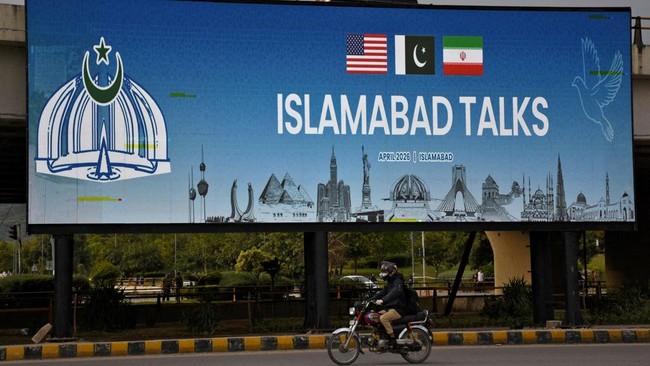
Jakarta, CNBC Indonesia - The United States and Iran failed to reach an agreement to end the war after 21 hours of negotiations in Islamabad on Sunday (12/4/2026). This failure endangers the ceasefire previously agreed upon by both parties.
Citing Reuters, the two countries are blaming each other for the failure of the negotiations that have been ongoing for more than six weeks of conflict. The war has killed thousands of people and driven a surge in global oil prices since it began.
US Vice President JD Vance, who led the delegation, stated that this failure harms Iran more than the United States. He emphasised that Washington had clearly conveyed the limits or “red lines” in the negotiations.
The US claimed that Iran rejected several key conditions, including a commitment not to develop nuclear weapons. According to Vance, President Donald Trump’s main goal is to ensure that Iran does not have the capability to produce nuclear weapons quickly.
The negotiations in Islamabad marked the first direct meeting between the US and Iran in more than a decade. It was also the highest-level talks since the 1979 Iranian Islamic Revolution.
Iranian media described the US demands as “excessive” and an obstacle to the agreement. The main differences concern Iran’s nuclear programme and control over the Strait of Hormuz.
A spokesperson for Iran’s Foreign Ministry stated that the negotiations took place in an atmosphere of full distrust. He also considered it reasonable that an agreement could not be reached in just one meeting.
Pakistan’s Foreign Minister Ishaq Dar emphasised the importance of maintaining the two-week ceasefire agreed upon previously. This ceasefire is hoped to ease the conflict that began on 28 February due to US and Israeli airstrikes on Iran.
Meanwhile, Israeli security official Zeev Elkin stated that the possibility of further negotiations remains open but warned Iran. He said that Iran is “playing with fire” amid escalating tensions.
Amid the deadlock, the issue of the Strait of Hormuz remains a primary concern as it is the route for about 20% of global energy supplies. Nevertheless, some oil tankers have begun to pass through again, although hundreds of others are still held in the Gulf region.
President Trump stated that whether an agreement is reached or not is not a major issue for the US. He even claimed that his country is already in a “winning” position in the conflict.
The US delegation also included Steve Witkoff and Jared Kushner, while the Iranian side was represented by Mohammad Baqer Qalibaf and Abbas Araqchi. The talks were described as dynamic with an atmosphere that fluctuated throughout the negotiations.
In addition to the nuclear demands, Iran also requested the release of frozen assets and control over the Strait of Hormuz. Tehran even proposed war compensation and an end to conflicts in the region, including in Lebanon.
On the other hand, Israel continues its attacks against Hezbollah groups in Lebanon. Airstrikes reportedly hit rocket launchers, while warning sirens sounded in border areas due to threats of retaliatory attacks.