
Iran–US–Israel War: Ulama, Ideology, and National Defence
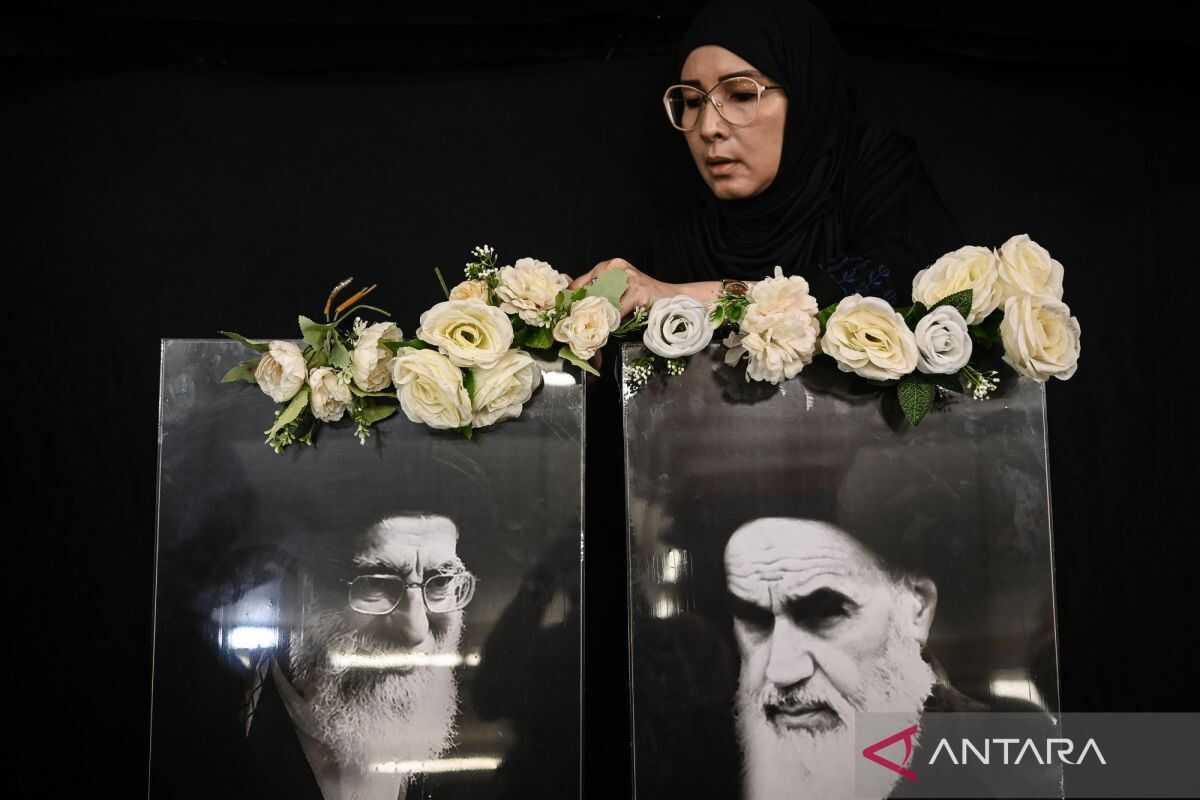
Jakarta (ANTARA) - The attack on Iran by the United States–Israel alliance marked a historic turning point, prompting deep reflection on the essence of national defence. The death of Iran’s Supreme Leader Ali Khamenei was not merely a clash of advanced military hardware, but a test of ideology, the role of the ulama, and national defence that has been entrenched for decades in a single state.
The doctrine of Wilayat al-Faqih has been a foundation of Iran’s theocracy since the 1979 Revolution. Ideologically, the concept provides absolute religious legitimacy to the Supreme Leader as the representative of the Imam of the age, unifying spiritual and political authority. The ulama are the Rahbar, the Supreme Leader; the highest political, moral, and spiritual legitimacy. The Rahbar is a devout, learned, and capable man. Therefore he is honoured and obeyed by all the people.
Tracing Indonesia’s long history of struggle, we will find a very relevant precedent for understanding the dynamics between ideology, the ulama, and national defence, as seen in Iran. Our past teaches that eliminating the pinnacle leadership figure can fail to extinguish the flame of people’s resistance. When the ulama and moral leaders are amputated by colonial powers, the structure of struggle does not collapse, but transforms into a collective energy that is harder for adversaries to contain.
We begin with the memory of the Java War fought fiercely between 1825 and 1830. Prince Diponegoro led a major resistance that shook the stability of the Dutch East India Company’s government across Java. The war erupted on 20 July 1825 and lasted to 1830. The Prince was captured through deception in a negotiation at Magelang on 28 March 1830. Diponegoro was exiled to Manado and then to Makassar, where he died on 8 January 1855. By conventional military calculations, the war is regarded as ending with the capture of its leader.
However, morally and sociologically, Diponegoro’s resistance generated an enduring collective memory of resistance to injustice and colonialism. The Warok resistance in Ponorogo and several local uprisings thereafter successfully troubled the Dutch.