
Iran-US-Israel War Raises Concerns for Kim Jong Un's North Korean Future?
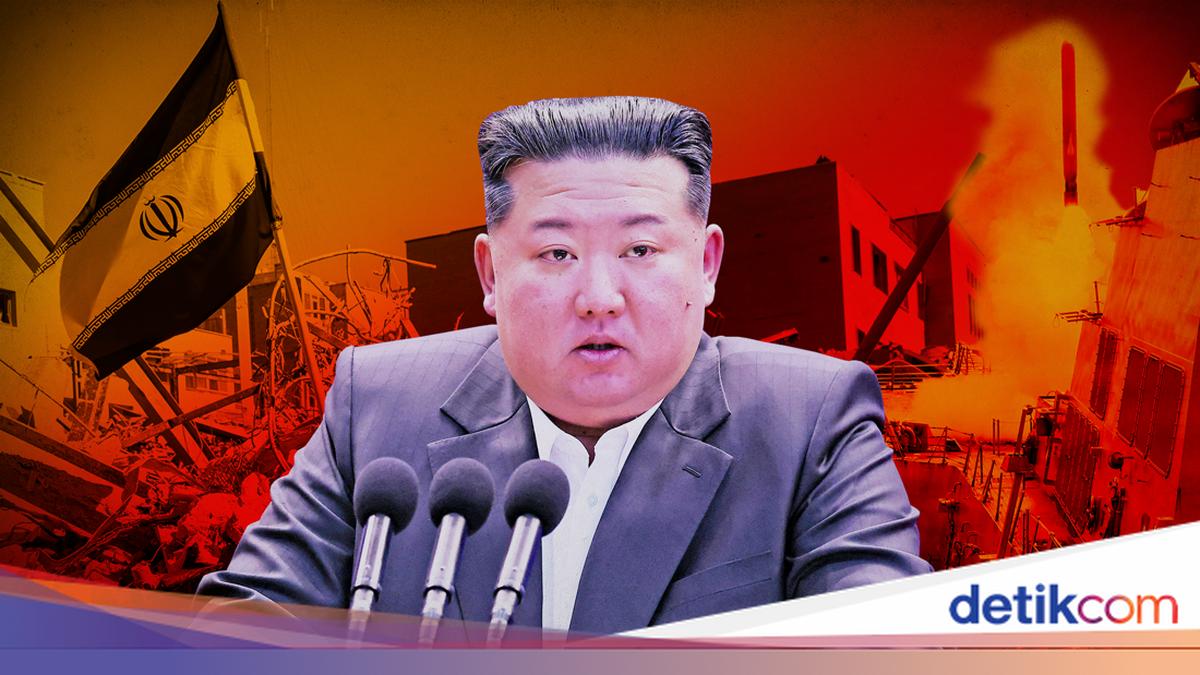
Analysts say that the US and Israel’s attacks on Iran are likely to strengthen North Korean leader Kim Jong Un’s belief that nuclear weapons are vital for his survival. Kim Jong Un is probably grappling with complex thoughts following the United States and Israel’s launch of war against Iran. North Korea quickly condemned the attacks as an “unjustifiable war of aggression”. Nevertheless, Iran and North Korea have maintained a “blood alliance on the anti-American front line” since 1979. The two countries subsequently built a partnership in missile development. Iran is also a primary destination for North Korean arms exports, according to a former North Korean diplomat who spoke to the BBC on condition of anonymity. However, analysts note that two factors place North Korea in a far more advantageous position than Iran. During the 2003 Iraq War, the late leader Kim Jong Il disappeared for 50 days. According to South Korean intelligence, he spent much of that time hiding in a bunker at the Samjiyon complex, about 600 km from the capital, Pyongyang. In contrast, his son, Kim Jong Un, has not shied away from the public spotlight, even after Iran’s Supreme Leader Ali Khamenei was killed in an attack. This markedly different response, according to Jang Yong-seok, former director of the North Korea analysis team at South Korea’s National Intelligence Service, reflects North Korea’s growing confidence in its own power. ‘A kind of nuclear power’ North Korea has routinely conducted missile tests under Kim Jong Un’s leadership. (AFP / KCNA VIA KNS) North Korea is de facto a nuclear-armed state, with even US President Donald Trump stating in 2025 that the country is “a kind of nuclear power” possessing “many nuclear weapons”. According to a 2025 report by the Stockholm International Peace Research Institute, North Korea has about 50 nuclear warheads and enough fissile material to produce 40 more. In July 2024, South Korea warned that North Korea is in the “final stage” of developing tactical nuclear weapons, which have a shorter range and are designed for battlefield use. Last year, South Korean President Lee Jae Myung also stated that North Korea has nearly developed intercontinental ballistic missiles capable of striking the US mainland with nuclear warheads, although the missile guidance system and the warhead’s ability to survive re-entry into the atmosphere remain questionable. The UN’s International Atomic Energy Agency (IAEA) states that Iran has a “large and ambitious nuclear programme, but has not seen evidence indicating a structured programme to produce nuclear weapons”. After a key nuclear deal in 2015, Iran agreed to further restrictions on its uranium enrichment programme. IAEA inspections were also expanded, which helped slow Iran’s nuclear programme, said Jang Ji-hyang, a Middle East expert at the Asan Institute for Policy Studies. However, after President Trump unilaterally withdrew from the nuclear deal in 2018, Iran began limiting IAEA access to its nuclear facilities. The watchdog stated in a confidential report that Iran has ceased all cooperation following the war with Israel in June 2025, according to the AP news agency last month. Meanwhile, North Korea conducted its first nuclear test in 2006 and expelled all IAEA inspectors three years later. The country then carried out five additional nuclear tests, with the last in 2017. Trump and Kim held a historic meeting in Singapore in 2018. (AFP via Getty Images) At that time, North Korea sought engagement with the US, leading to two historic meetings between the leaders of the two countries in 2018 and 2019. Kim wanted international sanctions lifted and offered to dismantle the Yongbyon nuclear facility. However, Trump demanded more, and the talks eventually collapsed. North Korea now appears more confident, as the war in Ukraine has brought it closer to Russia, which provides much-needed economic and military cooperation, said Jenny Town, director of the Korea programme at the US think tank, Stimson Center. However, Trump and Kim seem to have a good personal relationship, with the US president still praising the North Korean leader as recently as last year. Kim understands there is a “unique opportunity in dealing with Trump”, but will not “sacrifice anything to revive that relationship”, said Town. Nevertheless, North Korea did not publicly attack Trump when the country condemned the war on Iran. And at last month’s party congress, North Korea stated that it would maintain good relations with the US if its status is respected, essentially opening the door to dialogue. China, Russia, and the ‘nuclear hostage’ Geographic aspects also favour North Korea, as the country borders China directly, which views it as an important buffer against the US and its ally, South Korea. And if the North Korean regime collapses, China could face a massive wave of refugees. This is why, historically, relations between the two communist countries are often described as close as “lips and teeth”. Since 1961, China has pledged to protect North Korea if it is attacked, through the only joint defence treaty of its kind ever signed by Beijing. This does not mean China always views North Korea as a perfect ally, as Pyongyang’s nuclear expansion makes the region more unstable. China is also likely not pleased with North Korea’s increasingly close ties to Russia, especially after the two countries signed a defence pact in 2024, according to Jang Yong-seok, a visiting researcher at Seoul National University. However, he added: “North Korea has ni