
Iran-US-Israel Conflict Escalates as Oil Prices Touch US$100 Again
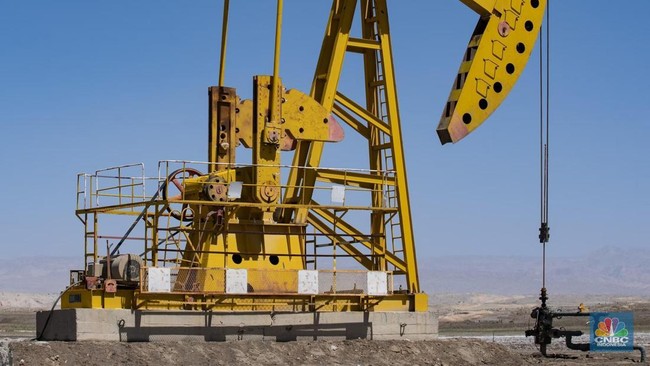
Global oil prices have once again breached the US$100 mark at the start of this week. The sharp rise that has occurred since early March has placed oil at its highest levels in recent years, driven by escalating Middle Eastern conflict that threatens global energy distribution routes.
Tensions between the United States and Iran, coupled with disruptions to vital global oil shipping lanes, have returned the market to crisis mode.
According to Refinitiv data as of 08:55 WIB on Monday, 16 March 2026, Brent crude oil was recorded at US$103.80 per barrel, whilst West Texas Intermediate (WTI) crude stood at US$98.45 per barrel.
In recent days, price movements have been highly volatile. Brent surged from approximately US$81.40 per barrel on 4 March to over US$103 per barrel by mid-March. WTI, meanwhile, rose from US$74.66 per barrel to nearly US$100 per barrel during the same period.
The sharp increase occurred following military conflict between the United States and Israel with Iran, which has triggered major disruptions to global oil distribution routes.
According to Reuters, Iran’s halting of oil shipments through the Strait of Hormuz has threatened approximately one-fifth of global oil supplies, making it one of the largest disruptions to the world’s energy system in recent decades.
Amid these tensions, US President Donald Trump stated over the weekend that Washington is negotiating with several countries to help secure this strategic corridor. The Strait of Hormuz is the world’s most critical energy passage, serving as the primary shipping route for oil from Gulf nations to Asian, European, and American markets.
However, the situation risks escalating further. According to Reuters, the United States has launched strikes against military targets in Iran, including continued threats to Kharg Island, Iran’s principal oil export hub, which handles approximately 90% of the country’s oil exports. Iran has responded with drone attacks striking the Fujairah oil terminal in the United Arab Emirates, a major storage and export hub in the region.
Fujairah Terminal itself serves as an outlet for approximately 1 million barrels per day of Murban crude from the United Arab Emirates, equivalent to roughly 1% of global oil demand. Although oil loading operations have been reported as having resumed, markets remain watchful of potential further disruptions that could tighten global energy supplies.
This escalation is making markets increasingly nervous as the conflict has entered its third week with no clear signs of resolution. Analyst Erik Meyersson of SEB, according to Reuters, notes that the United States is even considering high-risk options such as strikes against Iranian nuclear facilities, seizure of the Kharg oil export hub, and military operations to secure the Hormuz corridor.
Amid supply concerns, the International Energy Agency (IEA) has sought to ease market pressure. The agency has stated that over 400 million barrels of strategic oil reserves will soon be released to the global market. According to Reuters, reserves from Asian and Oceania nations will be released immediately, whilst stocks from Europe and America will become available by the end of March.
This represents one of the largest efforts in history to contain energy price rises caused by geopolitical conflict. Nevertheless, the release of reserves may not fully calm markets if supply disruptions from the Gulf region continue.
On the other hand, the US government has attempted to signal optimism. US Energy Secretary Chris Wright stated that the conflict between the US and Iran is estimated to end within the coming weeks. Should the conflict ease, oil supplies are expected to increase and global energy prices to gradually decline.
For now, however, the oil market remains in a phase of high uncertainty. With the Strait of Hormuz as the focal point of global energy crisis, every military development in the Middle East has the potential to directly shake global oil prices.