
Iran-US Conflict Escalates; Coordinating Minister Airlangga Assures Indonesia's Economic Fundamentals Remain Strong
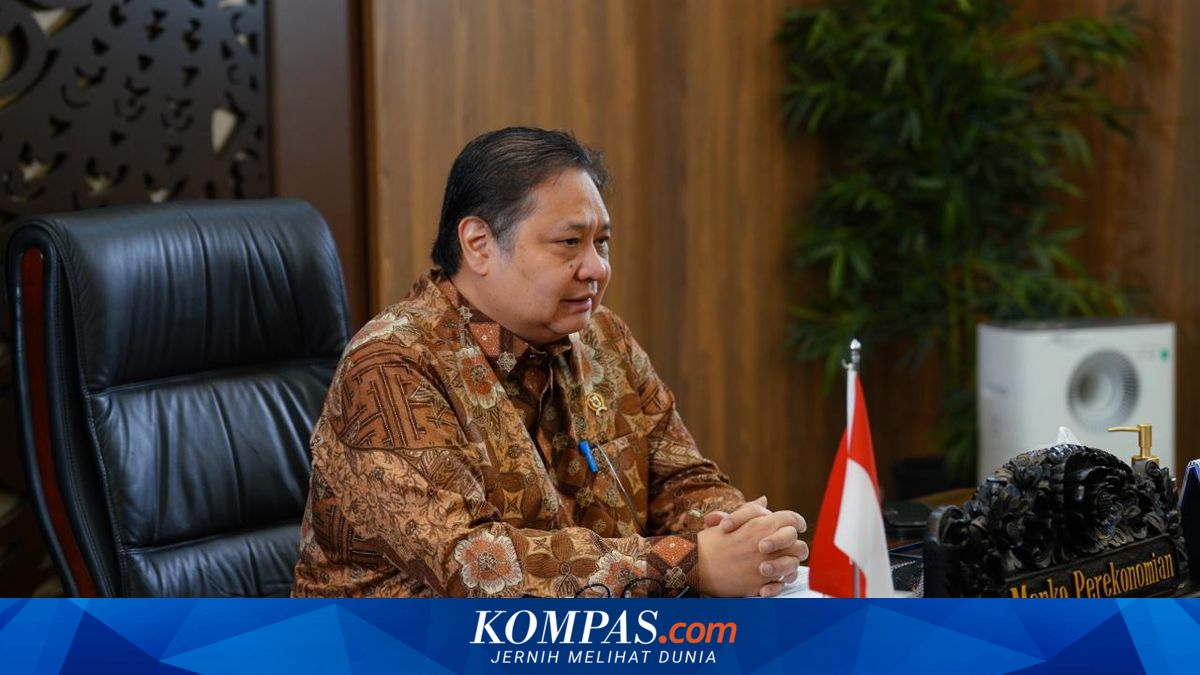
JAKARTA, KOMPAS.com — The Government continues to monitor the potential impact of geopolitical conflicts between the United States, Israel, and Iran on the national economy.
Coordinating Minister for Economic Affairs Airlangga Hartarto stated that a number of indicators demonstrate Indonesia’s economic fundamentals remain well-preserved, supported by strong domestic demand, external sector stability, and solid coordination of fiscal and monetary policies.
He noted that although the conflict between the United States, Israel, and Iran has been ongoing for more than two weeks, its impact on Indonesia is primarily transmitted through increases in global energy and commodity prices.
“So perhaps we can reaffirm that although the war situation between America, Israel, and Iran remains ongoing for more than two weeks, if we observe the transmission to Indonesia it comes in the form of oil prices, gas prices, and consequently commodity prices. Although in a war crisis situation, from a macroeconomic perspective we remain strong and solid,” Airlangga Hartarto stated during a discussion and breaking of fast gathering with the Macro Economic Journalists Communication Forum (Forkem) in Jakarta on Monday (16 March 2026).
Airlangga explained that domestic consumption remains strong with a contribution of approximately 54 per cent to gross domestic product (GDP), whilst public spending activity also remains maintained with the Mandiri Spending Index for February 2026 reaching 360.7.
From the perspective of external sector stability, Indonesia’s foreign debt ratio was recorded at 29.9 per cent of GDP, with foreign reserves of 151.9 billion US dollars, equivalent to financing approximately six months of imports.
Performance in the real sector also showed positive trends.
The Manufacturing PMI for February 2026 stood at level 53.8, indicating that the manufacturing sector remains in an expansion phase.
Increases in prices for several export commodities such as coal, rubber, nickel, copper, and aluminium also provided natural hedging, with export value of approximately 47 billion US dollars helping to offset the oil and gas sector deficit of approximately 19.5 billion US dollars.
On the other hand, national rice production in 2025 reached 34.7 million tonnes, an increase of 13.54 per cent year-on-year, whilst Indonesia also recorded a surplus diesel production of approximately 4.84 million kilolitres.
The Government also continues to strengthen coordination of fiscal and monetary policies to maintain national economic stability.
Bank Indonesia conducted market intervention to maintain stability in the rupiah exchange rate.
Meanwhile, the use of Local Currency Settlement (LCS) transactions with partner countries such as Malaysia, Thailand, Japan, and China increased significantly, with transaction value in 2025 reaching 25.66 billion US dollars, nearly double compared to the previous year.
In facing global dynamics, the State Budget remains functioned as a shock absorber through various support programmes, including food assistance of Rp 11.92 trillion, distribution of holiday allowances for civil servants, military, and police, as well as energy subsidies and compensation.