
Iran-US Ceasefire Threatened with Failure, Middle East Conflict at Risk of Escalation
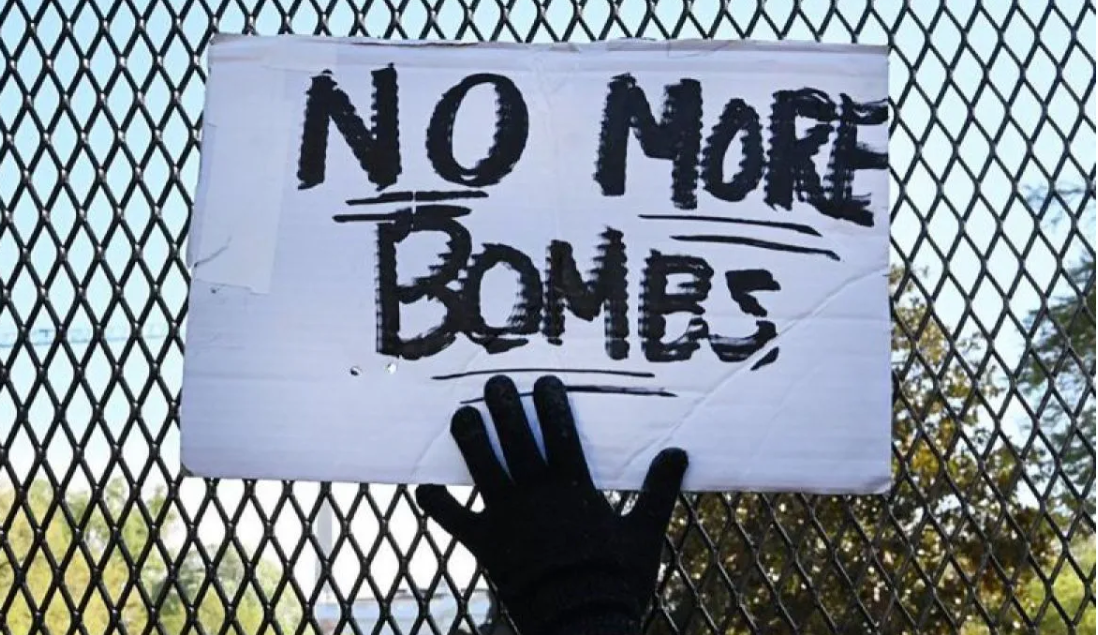
Further negotiations will be held in Islamabad on Friday (10/4).
The ceasefire agreement between Iran and the United States is considered fragile amid differing views with Israel regarding attacks in Lebanon. This situation raises concerns that the conflict in the Middle East region could potentially expand once again.
Faris Al-Fadhat, an expert in international political economy from Universitas Muhammadiyah Yogyakarta, welcomes the agreement positively as an initial opportunity towards peace. However, he assesses that the on-the-ground realisation shows serious challenges.
According to Faris, the two-week ceasefire should serve as an entry point for deeper negotiations to end the conflict. Nevertheless, just one day after the agreement was announced, several crucial issues immediately emerged.
“However, just one day later, we see two aspects that may be burdensome and could or have already caused this peace or ceasefire to fail,” said Faris when contacted by Media Indonesia on Thursday (9/4).
Faris explained that the first issue relates to the lack of agreement on managing the Strait of Hormuz.
“The first is indeed the absence of a meeting point for managing the Strait of Hormuz,” he stated.
He views the Strait of Hormuz as a strategic area seen as Iran’s political interest, while the United States demands that the shipping lane remain open.
“The Strait of Hormuz is Iran’s political territory, but the United States asks for it to be opened. But we see that after the ceasefire, no one dares to pass through,” he said.
This condition, according to Faris, triggers discomfort on the US side and demonstrates the fragility of the agreement’s implementation.
The second factor complicating the situation is the escalation of conflict in Lebanon.
“The second is related to Lebanon. So Israel has carried out attacks and the news is that it has killed more than 200 people in Lebanon,” he said.
Additionally, US pressure on Iran regarding uranium development is seen as further clouding the diplomatic atmosphere.
“This is what I think has made it even more complicated. Moreover, the United States has repeatedly said that Iran must not develop uranium,” he added.
With these various factors, Faris doubts the durability of the ceasefire agreement.
“This is what I agree with: this agreement seems unable to last long. Even more than one day seems impossible,” he explained.
Faris warns that the failure of the agreement could bring the region back to open conflict and increase geopolitical uncertainty.
“If we see the failure of this ceasefire agreement, then we will return to the previous condition,” he said.
He assesses that instability in the Middle East region will have widespread impacts on global political and economic stability.
“Where the atmosphere in the region, especially in Arab Middle Eastern countries, becomes uncertain,” he continued.
According to him, the economic impacts of the conflict are cumulative and have been ongoing for more than a month.
“Because we cannot assess that the negative impact is only today. But actually, this has been accumulating since more than a month ago,” he said.
Faris also warns of the potential for global economic stagnation due to supply chain disruptions.
“There will be economic stagnation; the projected economic growth at the beginning of the year of 2.6 to 3.3 percent will be difficult to achieve due to disruptions in the global supply chain,” he continued.
Disruptions in the energy sector, particularly oil, according to him, will also impact global investment.
“Because the hindrance to energy like oil is not only related to oil consumption, but its chain with investment,” he explained.
He added that concerns among investors in Western countries could extend to the technology sector and various other industries.
“This chain will be very long. This is what is feared from an economic perspective,” he said.
From a political and social perspective, Faris assesses that prolonged conflict also impacts other countries, including Indonesia.
“Specifically, for example, us in Indonesia. The longer this conflict, the more uncomfortable it becomes for us. For Hajj, Umrah, and so on, Indonesians become very worried and uncomfortable,” he explained.
He views the key to resolving the conflict lies in the United States’ ability to control Israel.
“So if I look at it, the key is with the United States. How much the United States can control its objectives,” he continued.
According to Faris, the success of peace greatly depends on Washington’s political commitment.
“Only earlier, whether the US government’s commitment wants to resolve this conflict peacefully or not. That’s all actually,” he concluded.
The Indonesian government through the Ministry of Foreign Affairs (Kemenlu) strongly condemns Israel’s attack in Beirut, Lebanon.