
Iran: The Birthplace of Global Agriculture, Developed 5,000 Years Ago
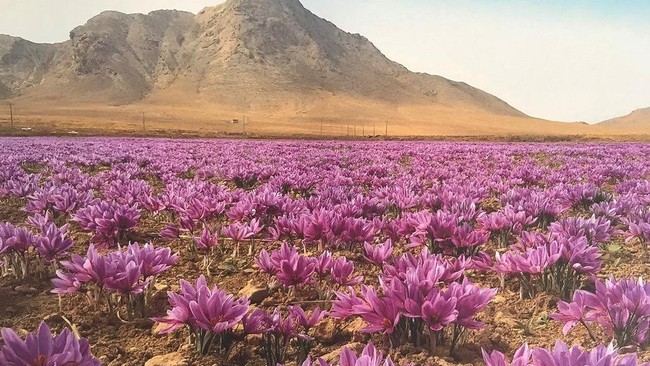
Agriculture is often associated with fertile lowlands such as Mesopotamia or the Nile River Valley. However, numerous archaeological studies demonstrate that Iran’s highlands played an early and significant role in the development of global agriculture.
Knowledge of crop domestication, cultivation techniques, and water management developed in this region thousands of years ago and subsequently spread to other areas.
Iran is one of the world’s most important exporters of agricultural commodities, ranging from saffron to pistachios. Iran is the world’s largest pistachio producer, supplying approximately 81 percent of global production.
Approximately one-third of Iran’s total land area comprises arable agricultural land. However, fewer than one-third of these cultivated lands utilise irrigation systems, whilst the remainder depends on rainfed agriculture.
The western and northwestern regions of Iran possess the most fertile soil. At the end of the twentieth century, agricultural activities contributed approximately one-fifth of Iran’s gross domestic product (GDP) and employed a similarly large proportion of the workforce.
Agriculture possesses a very long history and tradition in Iran. Around 10,000 BCE, the earliest known domestication of goats occurred in Iran’s highlands.
Several fruits, such as peaches, first entered Europe from Persia, evident from their Latin name Persica, which subsequently became the word “peach” in English.
The same applies to tulips, which were first cultivated in ancient Persia, and spinach, where the word “spinach” derives from the Persian word Esfenāj.
Chinese scholars in 647 CE even referred to spinach as the “Persian herb.”
Around 400 BCE, Persian society had already adopted an early form of ice cream. Additionally, the ancestor of baked goods (cookies) is believed to have originated in Persia—from the Persian word Kūlūcheh—around the seventh century according to many sources.
By the fifth century BCE, Persia was also the source of the spread of domesticated chickens to Europe.
For example, the fifth-century BCE poet Cratinus (according to the later Greek writer Athenaeus) referred to chickens as the “Persian alarm.”
In Aristophanes’ comedy The Birds (414 BCE), chickens are called the “Median bird,” indicating that the animal was introduced from Persia.
One of the most important technological achievements in the Persian tradition is the qanat, an underground water channel used for agricultural irrigation.
The qanat has been in use for thousands of years and continues to be used in modern Iran.
According to Badi Badiozamani’s writing in Iran & America: Rekindling a Love Lost, Iran’s highland region became the initial location for agricultural development through two primary routes. Ancient communities in this area began taming wild plants and animals that lived on the plateaus.
In the subsequent phase, they developed techniques for obtaining and channelling water to agricultural land.
Several archaeologists regard the area surrounding the Caspian Sea as one of the earliest centres of agricultural activity. Professor Ernest Herzfeld and Sir Arthur Keith contend that the Caspian people, early inhabitants of Iran’s highlands, developed agricultural practices that subsequently spread to the alluvial plains around them. These regions subsequently became the locations where early urban civilisations emerged.
Archaeological findings reinforce this view. One of the oldest human settlements was discovered at Siyalk near the city of Kashan in central Iran.
Stone tools found at this location include flint knives and sickle blades, indicating crop harvesting activities.
Archaeological research by Roman Ghirshman demonstrates that livestock breeding and agricultural activities developed after the early phase of settlement.
By the fourth millennium BCE, humans in this region were using ploughs and cultivating wheat and barley. Additional evidence was found at the Neolithic village of Geoy Tepe near Lake Urmia in northwestern Iran. Charred wheat grain discovered at this location indicates that the crop was cultivated more than 5,000 years ago.
Beyond staple crops, Iran also played a role in the history of horticultural plants. Laboratory analysis of a clay vessel approximately 4,500 years old found in northwestern Iran shows that the container was used to store wine.
This discovery is considered one of the earliest pieces of evidence for the use of wine storage vessels in history.
Grape vines subsequently spread to other regions of Asia. According to historical records cited by Badiozamani, a Chinese envoy named Zhang Qian brought grape plants from Iran to China in 128 BCE during the reign of Emperor Wu of the Han Dynasty. The word brought by this envoy to refer to the grape beverage was “budo,” believed to derive from the Persian word badeh.
Several other plants also bear traces of their origins in the Persian region. Botanist Alphonse de Candolle argued that spinach was first cultivated as a vegetable in Persia. The plant subsequently spread to Europe through the Arab world and Spain. Linguistic evidence demonstrates this connection, as the name for spinach in various European languages derives from Persian terms such as aspanah or asfinaj.
Historical records also demonstrate Persian influence in the spread of ornamental plants. In the book L’Iran Antique, Clement Hurat and Louis Delaporte explain that the word “rose” in various Indo-European, Aramaic, and Arabic languages has linguistic roots referring to the Persian term vard.
From the Fars region in southern Iran, rose oil production once became an important commodity traded to the Middle East and Europe.
These cultural traces are reflected in ancient architectural remains. Reliefs at Persepolis, the capital of the Achaemenid Empire dating back approximately 2,500 years, feature motifs of flowers and cypress trees.
The tradition of tree planting has remained alive in Iranian culture to the present day through the observance of tree-planting day, or Derakht Kari.
A series of archaeological and botanical evidence, supported by historical records and linguistic analysis, confirms Iran’s significant role as a centre of agricultural innovation whose influence extended throughout the ancient world.