
Iran says protocol is being implemented; Strait of Hormuz remains open to foreign vessels
Indonesia/Jakarta — Iran’s Ambassador to Indonesia, Mohammad Boroujerdi, has reaffirmed that the Strait of Hormuz remains open to international shipping even as tensions in the Middle East escalate. Iran will only apply additional navigational rules during periods of conflict; however, vessels that comply with the applicable protocols can pass through without hindrance.
‘The Strait of Hormuz is not closed, the Strait of Hormuz remains open,’ Boroujerdi said in Jakarta on Thursday (5 March).
He argued that as a country with responsibility for this strategic route, Iran will only impose extra traffic rules for ships passing through. He stressed that ships that comply with the protocols in force can cross those waters without obstruction.
‘Parties that do comply with the traffic protocol during the war can pass through the Strait of Hormuz with ease,’ he said.
Boroujerdi also stated that Iran has safeguarded the Strait of Hormuz for hundreds of years. He emphasised that security along the maritime lane must apply to all countries without exception.
‘We, as the security organisers for the Strait of Hormuz, only implement the protocols for all countries, of which Iran is included, or there must be no country able to exploit security there,’ he added.
He criticised the presence of the United States military in the region, calling it a source of concern for the stability of the strait, a vital route for around one-fifth of global oil trade.
‘Those worried about any closure of the Strait of Hormuz should ask the United States, which has come from very far to the region of the Middle East, to stop disturbing security in the Strait of Hormuz,’ he added.
Previously, reports had circulated that Iran had closed the Strait of Hormuz, triggering fears in global energy markets. Asian countries were expected to bear the greatest impact if the route were actually closed.
A senior commander of the Islamic Revolutionary Guard Corps (IRGC) even claimed that the Strait of Hormuz had been closed and warned that any ship attempting to traverse the route could be targeted.
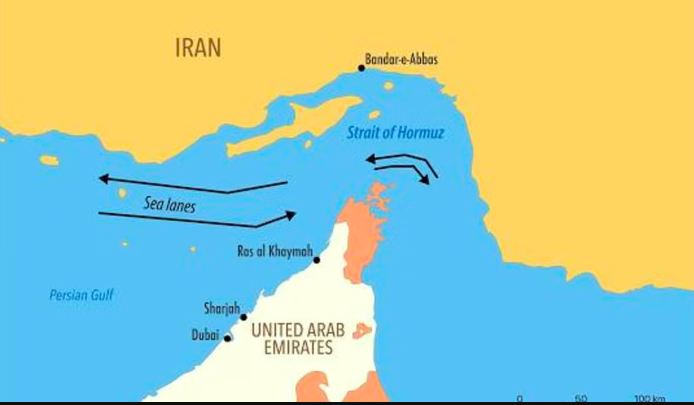
The Strait of Hormuz is recognised as one of the world’s most strategic shipping lanes, flanked to the north by Iran and to the south by Oman and the United Arab Emirates (UAE).
At the entrance and exit, the strait is about 50 kilometres wide, narrowing to about 33 kilometres at the centre. Its depth allows giant tanker ships to pass, making it a principal energy export route for oil-producing countries such as Saudi Arabia, Iraq, Kuwait, Qatar, Iran, and the UAE.
According to data from the United States Energy Information Administration (EIA), in the first half of 2023 around 20 million barrels of oil passed through the Strait of Hormuz daily, with trade valued at nearly USD 600 billion per year.