
Iran Ready to Negotiate with US in Geneva, What are the Conditions?
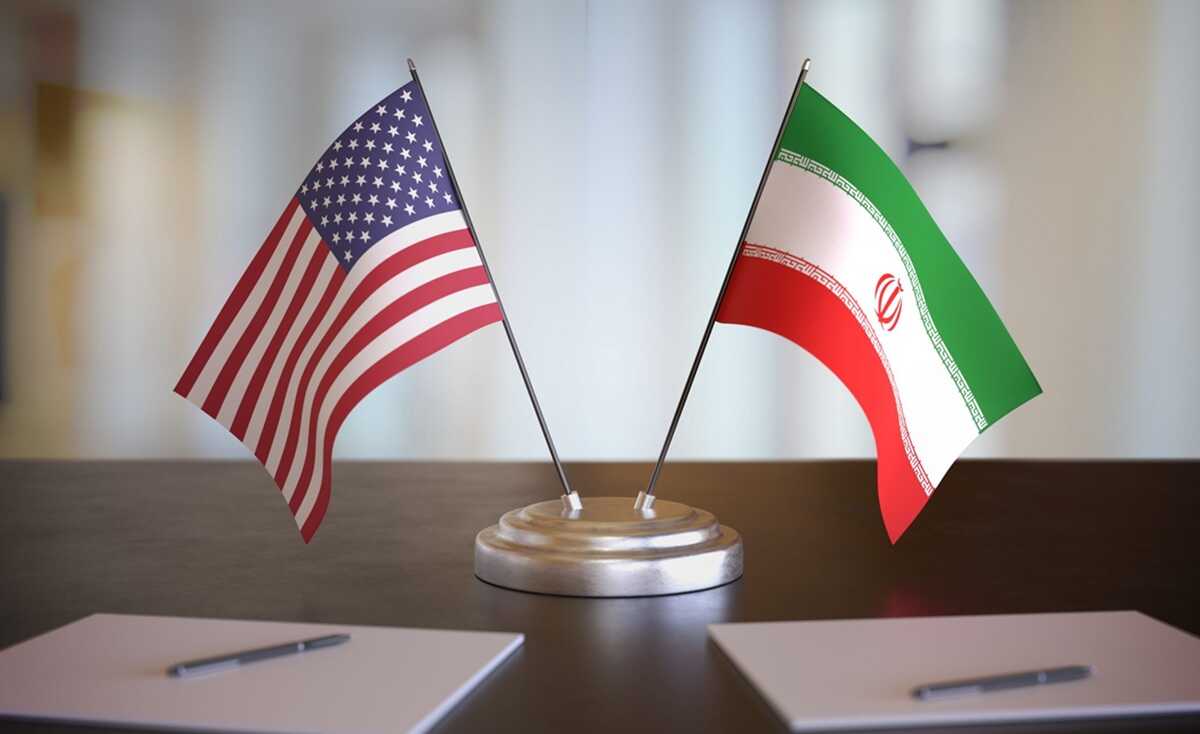
Iran is entering a new phase of crucial nuclear negotiations with the United States in Geneva, Thursday (February 26th) local time. Tehran has expressed confidence that an agreement can be reached, provided that the Donald Trump administration is willing to respect certain diplomatic preconditions that have been previously discussed through special envoys.
Iranian diplomats have set three main conditions: recognition of Iran’s symbolic right to enrich uranium, permission to dilute its stockpile of highly enriched uranium, and no restrictions on its ballistic missile program.
Although Iranian officials claim that special envoys Steve Witkoff and Trump’s son-in-law, Jared Kushner, had previously accepted these principles in indirect talks, uncertainty now looms over the negotiating table.
US Secretary of State Marco Rubio has issued a stern warning, stating that it would be a “major problem” if Iran refuses to negotiate on its missile program.
This stance is in line with President Trump’s confrontational State of the Union address, in which he accused Iran of still pursuing nuclear ambitions and continuing to build a ballistic missile program that threatens Europe.
“We destroyed it (nuclear facilities) and they want to start all over again,” Trump said in his speech, referring to last year’s US strike.
This statement is in contrast to the message from Iranian Foreign Minister Abbas Araghchi, who, before departing for Geneva, reaffirmed his country’s commitment to peace through social media.
“Our fundamental position is very clear. Iran will never, under any circumstances, seek to develop nuclear weapons; at the same time, we Iranians will never give up our right to benefit from peaceful nuclear technology,” Araghchi said.
The Iranian negotiating team is reportedly willing to offer Trump a “political victory” by crafting an agreement that looks better than the 2015 agreement from the Barack Obama era. As a first step, the US delegation is reportedly only asking Iran to limit uranium enrichment to below 5% for civilian purposes.
However, the main obstacle remains in the economic sector. So far, the US offer has not included the lifting of sanctions. Instead, Iran is demanding the release of its assets frozen abroad as a guarantee of an irrevocable commitment.
The Director-General of the International Atomic Energy Agency (IAEA), Rafael Grossi, who is also present in Geneva, warned that the situation is now developing into a very dangerous situation with the strengthening of a massive US military presence in the Middle East.
“Reaching an agreement is within reach, but only if diplomacy is prioritized,” Araghchi concluded.
If this diplomacy fails, the fear of an open conflict involving the entire Middle East region is predicted to become an unavoidable reality. (The Guardian/Z-2)
The Composite Stock Price Index (IHSG) opened in the green zone on Thursday, February 26, 2026.
US Secretary of State Marco Rubio warned Iran to discuss its ballistic missile program amid the issue of potential US military strikes.
North Korean leader Kim Jong Un has expressed his willingness to establish good relations with the United States if his country’s nuclear status is recognized, but he has closed the door to South Korea.
Just appointed to lead the “war against fraud,” US Vice President JD Vance immediately froze Minnesota’s Medicaid health funds by US$259 million.
A SSRS survey for CNN showed that the majority of respondents were satisfied with US President Donald Trump’s State of the Union address in Congress, but still doubted his ability to lower the cost of living.
US Secretary of State Marco Rubio warned Iran to discuss its ballistic missile program amid the issue of potential US military strikes.