
Iran Offers "Secret" Proposal to Trump on Strait of Hormuz, Here's the Content
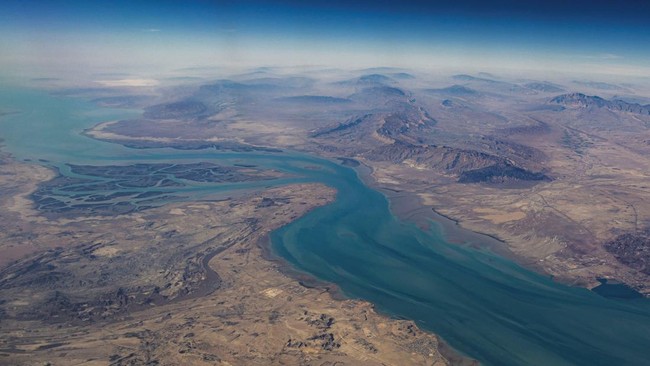
The Islamic Republic of Iran is reportedly softening its stance by offering a crucial proposal in negotiations with the United States regarding the conflict in the Strait of Hormuz. Tehran is said to be willing to consider permitting ships to pass freely through Omani territorial waters without the risk of attack, provided an agreement is reached to prevent new conflicts.
The war between the United States-Israel and Iran has caused the largest disruption in history to global oil and gas supplies. This was triggered by Iran’s actions in halting traffic in the Strait of Hormuz, which serves as a route for around 20% of the world’s oil and liquefied natural gas (LNG) flows.
“Iran could consider allowing ships to sail freely through the Omani side of the Strait of Hormuz without risk of attack as part of the proposal offered in negotiations with the United States, provided an agreement is reached to prevent new conflicts,” said a source briefed directly by Tehran to Reuters on Thursday (16/4/2026).
The current situation on the ground is dire, with hundreds of tankers and other vessels, along with around 20,000 seafarers, trapped in the Gulf since the war broke out on 28 February. Although a two-week ceasefire has been in effect since 8 April and US President Donald Trump has stated that the war is nearly over, control over the Strait of Hormuz remains a key issue in the talks.
“Iran may be willing to allow ships to use the other side of the narrow strait in Omani waters without any hindrance from Tehran,” said the source, who declined to be identified due to the sensitivity of the matter.
However, it remains unclear whether Iran would also agree to clear any mines that may have been laid in the waterway. Additionally, there is no certainty on whether all ships, including those affiliated with Israel, would be permitted to pass freely under the proposal.
“The proposal depends on whether Washington is prepared to meet Tehran’s demands, a condition that is central to any potential breakthrough regarding the Strait of Hormuz,” the source added, emphasising Iran’s main prerequisite.
In response to this news, the White House has not provided an official comment. Similarly, Iran’s Foreign Ministry could not be reached for a statement on the developments concerning the proposal in the 34-kilometre-wide strategic shipping lane.
“The proposal to allow ships to pass through Omani waters without hindrance is being worked on, although it is unclear whether there has been any response from Washington so far,” revealed a Western security source monitoring the situation.
This move by Iran is seen as Tehran’s first signal to retreat from more aggressive ideas in recent weeks. Previously, Iran had floated the idea of imposing transit fees for ships in the international waterway and asserting sovereignty there, which the global shipping industry viewed as a violation of maritime conventions.
Member states of the United Nations’ International Maritime Organisation (IMO), meeting in London this week, have strongly rejected Iran’s idea of toll fees. The IMO stated that such actions would set a highly dangerous precedent for international maritime law.
If realised, this proposal would be an initial step towards restoring the status quo of shipping in the Strait of Hormuz that has prevailed for decades. The two-way traffic separation scheme adopted by the UN since 1968 has divided the shipping corridor through Iranian and Omani waters, before it was completely paralysed due to the US blockade and armed conflict since February.