
Iran, Mashhad, and Steadfastness That Speaks Little
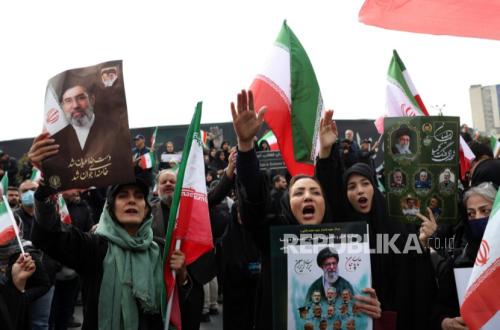
Iran today speaks again in a harsh language: missiles, retaliatory strikes, and threats extending across the region. The world reads this as escalation. As danger. As tension that must be guarded against. But almost everyone agrees on one thing: the situation has crossed the boundary of calm. The question is no longer what is happening, but how we choose to read it.
Experience often dismantles the simplicity imposed by distance.
In 2023, the author visited Iran for a short trip: attending a short course at the International Gohar Shod Institute. Three cities were traversed: Mashhad, Tehran, and Qom. Each has its own face, its own different story. Tehran feels alive, moving quickly, full of dynamics. Qom feels solemn, like a long and serious study space. But Mashhad, Mashhad is different; for some reason, something within the author lingered longer there. Mashhad is not just a city. It is like an expanded inner space.
Mashhad is a city that shows a face almost opposite to the image that often circulates. There is no striking clamour. No explosive expressions. What is felt instead is the opposite: a nearly systematic calm.
Around the Imam Reza complex, people walk without haste. Voices do not rise. Public space feels dense, but not chaotic. There is a kind of social discipline that works without needing to be displayed. In that silence, Iran shows something that rarely appears in conflict reports: the ability to compose oneself.
At this point, it becomes clear that Iran cannot be read sufficiently from today’s events alone. It needs to be seen from how it builds itself, both literally and symbolically.
Architecture becomes one of the most honest entry points. Layered golden domes, intricate mosaics, and precise symmetry are not merely religious ornaments. They are statements about a worldview.
In the framework of Henri Lefebvre’s thinking (1991), space is a social product; it stores values, relations, and even ideology.
In Mashhad, space appears designed for resilience, not just fleeting beauty. Details worked on patiently give the impression that time is not something to be chased, but to be processed. This is not an aesthetic born from spontaneity, but from long consistency.
The same is seen in its social life. Mashhad is not just a religious city, but a city with a rhythm shaped by continuously repeated spiritual practices. In the perspective of the Sociology of Religion, what happens there can be read through Émile Durkheim’s (1995) idea of collective effervescence. However, unlike many other examples, the collective energy in Mashhad does not appear in the form of emotional explosions, but in stable calm.
There is an order that does not feel imposed. People seem to adjust to the same rhythm without needing explicit regulation. Here, spirituality works as something more than personal belief; it becomes a social mechanism.
This experience becomes relevant when viewing Iran today. Amid global pressures and conflict escalation, many analyses focus on military power, regional strategies, or geopolitical interests. However, such approaches often miss one important thing: that a country’s response does not arise in a vacuum.
In the Constructivism framework, as explained by Alexander Wendt (1999), states act not only based on material interests, but also based on the identities they build and believe in. In the context of Iran, the steadfastness seen today seems not merely a situational response, but part of a longer continuity.
What is seen in the political realm echoes in culture. The steadfastness that emerges in the state’s attitude has parallels in how space is built, how society moves, even how silence is maintained.
Iran is often read too quickly, without seeing the roots that shape it. Sometimes it is seen as a source of tension, sometimes as a symbol of steadfastness.
Edward Said’s (2003) thinking reminds us that the way we view “the other” often reflects our own perspective more. Iran often occupies that position, read from the surface, without sufficiently entering its inner experience.
Yet, in many ways, Iran moves from something deeper than mere political calculation: a spiritual awareness of justice and resistance to injustice. In the Shia tradition, the memory of the Battle of Karbala is not just history, but a framework for living that fighting injustice is a moral obligation, even when the outcome does not promise victory.
From here, Iran’s steadfastness becomes more understandable: it is not merely a political stance, but a continuation of a long spiritual imagination of endurance, dignity, and not submitting to what is considered oppressive.
Viewing Iran only through conflict will obscure this layer. But seeing it only as a space of calm is also insufficient. What exists is both at once: calm that is maintained, and steadfastness that can turn into action when it feels disturbed.
Perhaps the most honest way to understand it is not by simplifying, but by acknowledging that Iran stands between spiritual depth and the hardness of world realities.
Iran does not ask to be justified, but it cannot be understood if continuously simplified. And perhaps, to read Iran today, we need to do something rarely done in a fast-paced world: slow down our way of seeing.
Ciputat, 29 Ramadan 1447 H