
Iran Launches 'Heaviest' Attack on Israel and US Targets across Middle East
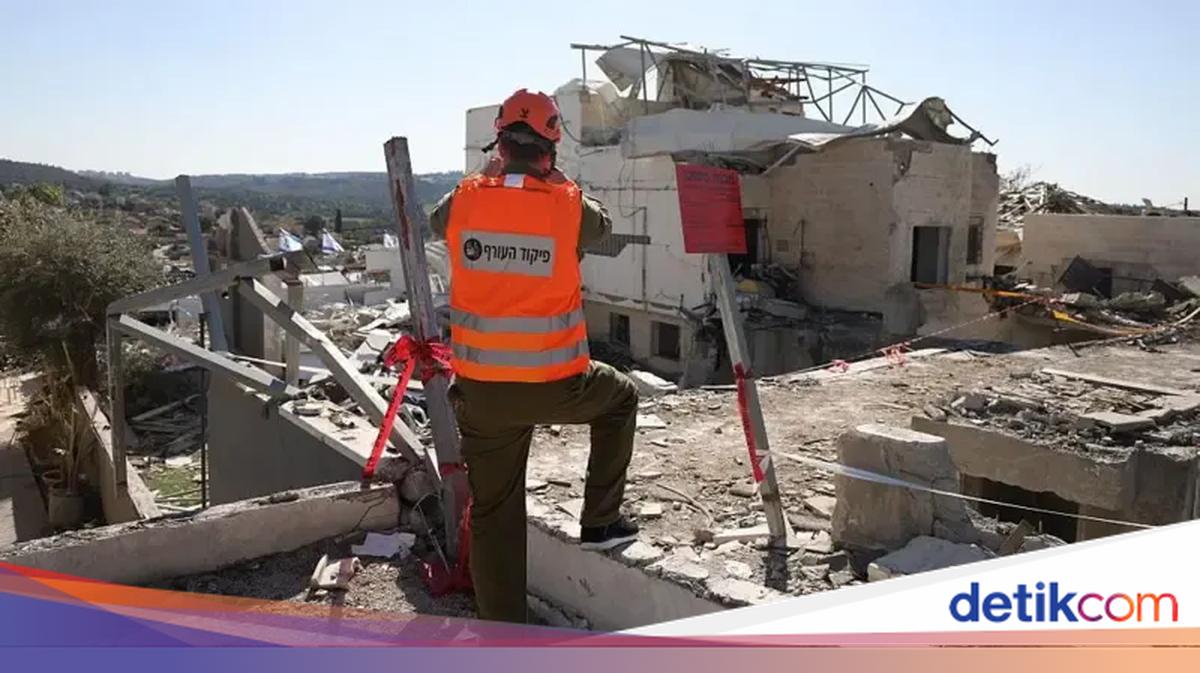
In recent hours, Iran has launched a new wave of attacks targeting Israeli and American positions throughout the Middle East. Iranian state media has described the series of attacks as the “most intense and heaviest” since the beginning of the conflict, according to news agency AFP.
Iran has fired missiles at US military bases at Al Udeid in Qatar, Camp Arifjan in Kuwait, and Harir in Iraq, according to a statement from the Islamic Revolutionary Guards Corps (IRGC) posted on X. The statement, shared by ISNA, a state media outlet, indicated that the “large-scale launch” also targeted the US Navy’s Fifth Fleet in the region and that “the operational infrastructure of the US military has been destroyed.”
US officials have not yet commented on the attacks. Meanwhile, Israel claims to have detected missile launches originating from Iranian territory. Israeli authorities stated that the current situation is sufficiently safe for civilians to leave shelters.
Saudi Arabia reported that it successfully intercepted and destroyed two drones targeting an oil field. Air raid sirens were also sounded in Bahrain, which serves as the headquarters of the US Navy’s Fifth Fleet. Saudi security authorities claim to have destroyed six ballistic missiles directed at its military bases. The Saudi Ministry of Defence stated that it intercepted and destroyed six ballistic missiles directed at Prince Sultan Air Base, a military facility in the eastern region of the country. The ministry also reported shooting down several drones on the same day, including two units in the northeastern city of Hafar Al-Batin. The statement did not specify the source of the missile or drone launches.
The United States Central Command (Centcom) stated that US forces have “destroyed” 16 Iranian mine-laying vessels near the Strait of Hormuz on Wednesday, 11 March. Centcom also released a video apparently showing the moment when these vessels were attacked. This statement came after comments from US President Donald Trump, who stated that US forces had struck 10 inactive Iranian vessels in the Strait of Hormuz, after previously promising to handle the presence of these vessels “swiftly and harshly.”
Mojtaba Khamenei has been appointed as Iran’s new Supreme Leader by the Assembly of Experts, replacing his father, Ayatollah Ali Khamenei, according to reports from Iranian state media. In a statement read by a national television broadcaster, the Assembly of Experts affirmed that the process of appointing a leader continued despite the country being in a state of war and facing direct threats from enemies. They also noted that bomb attacks on the Assembly Secretariat office that killed staff members and security team members did not stop the institution’s efforts to select and announce a new leader. After reading the statement, the broadcaster called out, “Allahu Akbar, Allahu Akbar, Khamenei is the leader.”
In its statement, the IRGC described Mojtaba Khamenei as “a competent legal expert, young thinker, and the figure who most understands political and social issues.” The IRGC also expressed “respect, devotion, and obedience” to Mojtaba Khamenei, affirming that its members are “ready to fully comply and sacrifice to carry out the divine commands of the Supreme Leader.”
Iran’s Foreign Minister, Abbas Araghchi, stated that no foreign party would be involved in the process of selecting the new supreme leader. This statement came after US President Donald Trump earlier this week hinted that Washington wanted to help determine a replacement for Ali Khamenei. In an interview with NBC News, Araghchi emphasised that Iran “does not permit anyone to interfere in our internal affairs.”
The appointment of Mojtaba Khamenei came as Iran was being bombarded by US and Israeli forces. The Israeli military (IDF) claimed to have launched attacks against “a number of fuel storage complexes” in Tehran. The IDF described the strikes as “significant attacks” on fuel tanks, which it claims are frequently used by the Iranian regime to support military infrastructure. Explosions at several fuel depots in southern Tehran were reported by the Fars News Agency.
In an official statement, the National Iranian Oil Company mentioned that several oil depots in Tehran and Alborz Province were also hit by the attacks. However, fuel supply to both regions was reported to continue “sustainably from other sources.”
Some residents described the situation following the explosions. “Thick smoke covered the city. I could smell something burning,” said a woman in her twenties living in Tehran, speaking to the BBC. A resident of Karaj, a city near Tehran, said his family was in panic. “My mother was very worried. At first there was a red light, then the sky seemed to ignite. Then a red cloud formed. When we went up to the roof, we realised that the oil depot had been attacked.”
Another resident in Karaj added, “It felt like night turned into day.”
A day earlier, explosions followed by thick smoke occurred at Mehabad Airport, Iran’s busiest airport and main domestic flight hub. In video recordings shared by eyewitnesses on social media, several aircraft appeared to be engulfed in flames.