
Iran–Israel War: Who Will Run Out of Breath First?
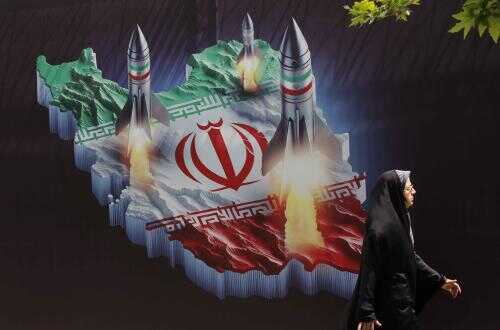
Modern warfare often appears to be a contest of technology. But in many cases, victory goes to whoever can breathe the longest.
On 28 February 2026, the Middle East again heated up as Israel launched a major air strike against Iran under Operation Roaring Lion. The attack targeted Iranian military facilities, including air defence systems and infrastructure related to its missile programme.
The United States subsequently became involved through Operation Epic Fury to destroy Iran’s missile capability and curb its nuclear potential. Iran retaliated with ballistic missile and drone strikes through Operation True Promise IV directed at Israel and American military bases in the region.
Yet behind all the military dynamics arose a more fundamental question than who wins today’s battle. How long can the war last before one side begins to run out of breath?
Modern missile warfare is essentially an economic war. Each missile fired has a price. Each interceptor used to shoot it down also carries a non-trivial cost. The longer the conflict lasts, the war is decided less by technology and more by industrial and logistical capacity.
To understand this logic, past experience of the Iran–Israel conflict provides important insight. In June 2025, the world witnessed a conflict involving Iran–Israel–the United States lasting around twelve days. The conflict often referred to as the Twelve-Day War provided real data on the costs of modern missile warfare.
According to various international security reports, Iran spent around USD 1.1 billion to USD 6.6 billion on missile and drone strikes during that conflict. Conversely, Israel and the United States were estimated to spend about USD 1.48 to 1.58 billion merely on air defence interceptors. The figure does not even include infrastructure damage and domestic economic disruption.
The data reveal a key pattern in modern warfare: the cost of shooting down missiles is often far higher than the price of launching them.
Many of Iran’s ballistic missiles are believed to cost around USD 200,000 to USD 500,000 per unit. By contrast, the interceptors used by Israel and the United States are far more expensive. The Arrow-3 interceptor is estimated to cost about USD 2–3 million per unit. The Patriot PAC-3 can reach around USD 4 million, while the THAAD interceptor can exceed USD 12 million.
This cost disparity creates a phenomenon in military studies known as the cost-exchange ratio. In many cases, shooting down a single missile requires costs several times higher than the price of the missile being intercepted.
Based on the twelve-day conflict, we can create a simple simulation to understand how the conflict would unfold if it lasts longer. For example, Iran launches around 100 missiles per day. In modern air defence practice, a single target is usually shot down with two interceptors to increase the chances of success. That means around 200 interceptors are needed per day to repel 100 missiles.
If the conflict lasts 30 days, the total interceptors required would be around 6,000 units. Assuming air defence composition uses a realistic mix of around 80 percent Arrow and 20 percent Patriot, air defence costs could reach around USD 560 million per day. In one month of war, total costs could approach USD 17 billion.
Conversely, if the average cost of Iran’s missiles is around USD 500,000 per unit, an attack of 100 missiles per day would require only about USD 50 million per day. Over 30 days, Iran’s attack costs would amount to around USD 1.5 billion.
This comparison shows a striking difference. In the simulation, the defender incurs costs more than ten times those of the attacker.
But cost is not the only determining factor. The more critical variable is the stock of interceptors available.
The global interceptor stock is actually far more limited than public perception suggests. The United States’ THAAD system, for example, is estimated to have just over six hundred interceptors deployed at various military bases around the world. In the previous twelve-day Iran conflict, around 150 THAAD interceptors were used to help defend Israel.
The problem is that interceptors cannot be produced quickly. The defence industrial supply chain takes years to replace depleted stocks. Patriot PAC-3 production is currently only in the hundreds of units per year, even though the United States is trying to significantly increase capacity.
In modern missile warfare, interceptor consumption can far outpace production rates. A single day of large ballistic missile attack can exhaust tens to hundreds of interceptors at once.
This is what some analysts refer to as the emergence of a missile economy. In this paradigm, wars are not won by the country with the most expensive weapons, but by the country capable of producing cheap weapons in large quantities.
Iran seems to understand this logic. By mass-producing missiles and drones at relatively low cost, Tehran is attempting to create logistical pressure on its adversary’s air defence system. Attacks do not always have to destroy strategic targets to have an impact. It is enough to force the opponent to fire expensive interceptors repeatedly.
A thirty-day simulation shows b