
Iran-Israel-US Conflict Threatens Indonesia's Energy Security and State Budget
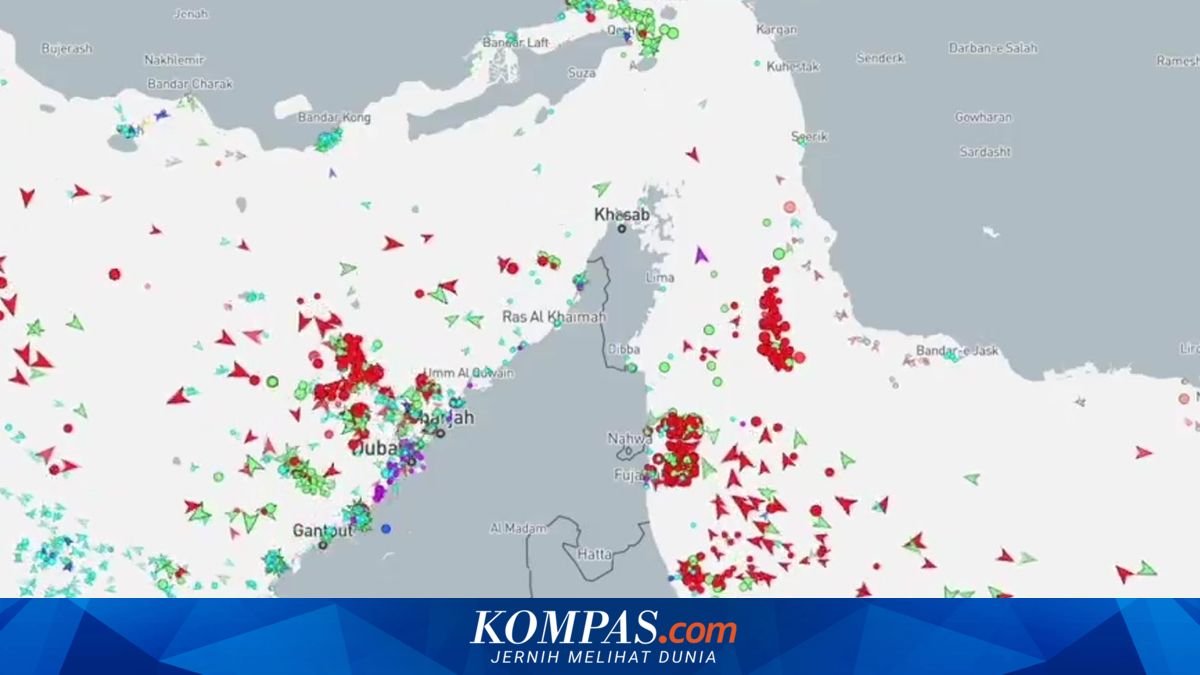
Jakarta – The conflict between Iran and Israel, involving the United States, has triggered concerns about the sustainability of global oil and fuel supply. This geopolitical tension also poses potential risks to Indonesia’s energy security and fiscal condition.
The risk emerges particularly if the conflict disrupts oil distribution through the Strait of Hormuz, one of the world’s most critical energy trade corridors.
Komaidi Notonegoro, Executive Director of the ReforMiner Institute, stated that the conflict could pressure Indonesia’s fiscal condition through rising energy prices.
“The war between Iran and Israel-America has the potential to create pressure on Indonesia’s fiscal condition and state budget,” Komaidi said in a ReforMiner Institute note, as quoted by Kompas.com on Thursday (12 March 2026).
“Fiscal pressure is primarily transmitted through energy prices, particularly oil price increases.”
Meanwhile, approximately 75 per cent of oil trade through the strait is absorbed by four major consuming nations: China, India, South Korea, and Japan.
Although the conflict occurs in the Middle East region, Indonesia’s crude oil and fuel supply security is still considered relatively safe. This is because the proportion of Indonesia’s energy imports passing through the Strait of Hormuz is not dominant. In 2025, approximately 18.13 per cent of Indonesia’s crude oil imports transited the Strait of Hormuz, whilst fuel imports through the corridor accounted for approximately 14.23 per cent.
This means approximately 81.87 per cent of Indonesia’s crude oil imports and 85.77 per cent of fuel imports do not pass through the Strait of Hormuz.
To minimise risk, Indonesia is assessed as needing to prepare alternative sources for crude oil and fuel imports. These alternatives can be achieved by replacing supply sources from other countries or continuing to import from Middle Eastern countries but through distribution routes that bypass the Strait of Hormuz.
Additionally, regions with oil reserve capacity exceeding consumption needs, such as North America, Central and South America, the Commonwealth of Independent States (CIS), and Africa, could serve as alternative sources for Indonesian imports.
In the 2026 state budget, the Indonesian Crude Price (ICP) assumption is set at 70 US dollars per barrel. However, if the average oil price through the end of 2026 reaches around 90 US dollars per barrel, or approximately 1.44 million rupiah per barrel (assuming an exchange rate of around 16,000 rupiah per US dollar), the estimated additional state budget deficit would reach approximately 136 trillion rupiah.