
Iran-Israel Conflict Threatens To Increase Beverage Packaging Costs In Indonesia
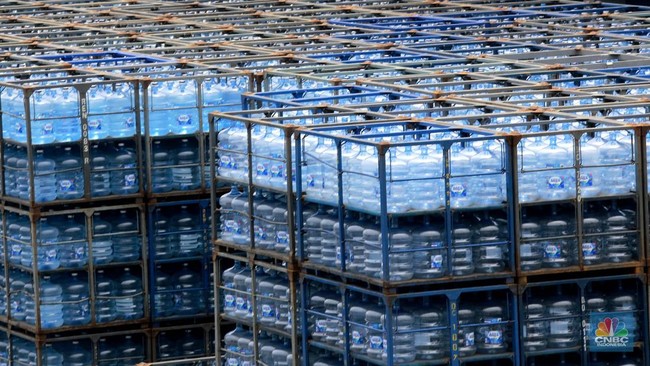
Indonesia’s food and beverage (FMCG) industry is beginning to monitor the potential for price increases in packaged beverage products, particularly bottled drinking water (AMDK). This concern has arisen following the potential rise in prices of plastic packaging materials used in packaging, specifically crude oil, which has been affected by the Iran-Israel conflict.
Putu Juli Ardika, Director General of Agro-Industry at the Ministry of Industry, stated that cost pressures for the food and beverage industry do not stem from high energy consumption such as in the chemical, cement, or metal industries. However, cost increases potentially derive from packaging components.
According to him, in numerous beverage products, packaging components carry a significantly dominant proportion of production costs.
“If the food and beverage industry is not an energy-intensive type like chemicals, metals or cement. The energy we use is not very large, so the impact is not very significant,” said Putu at the Ministry of Industry on Friday (12 March 2026).
Nevertheless, he emphasised that the FMCG industry is highly sensitive to changes in packaging material prices, particularly plastic based on crude oil that is widely used for bottles and beverage packaging.
In some products, the value of packaging can even exceed the cost of the product contents themselves. This is most apparent in bottled drinking water products.
“For bottled drinking water, what is expensive is not actually the water, but the packaging. So the largest cost component actually comes from the plastic bottle,” said Putu.
He illustrated how the impact of plastic price increases could be far greater for the food and beverage industry than other sectors. If upstream price increases occur in small percentages, the impact could multiply for downstream industries.
“If there it rises by, say, 10%, for us it could become 60%. Even if there it is 50%, here it could reach 380%. The impact could be very large,” he said.
According to him, this condition occurs because plastic used for packaging derives from petrochemical raw materials or petroleum-based plastic whose prices are heavily influenced by global conditions.
Rising plastic raw material prices not only affect production costs but also potentially impact product selling prices in the market.
However, Putu stated that potential price increases for products cannot be confirmed in the short term as the industry is still discussing the matter with associations and raw material producers.
“We cannot communicate how much the increase will be now because we are still in the process of discussion with associations such as GAPMMI and also packaging producers,” he said.
On the other hand, he ensured that food and beverage supplies for Eid (Lebaran) needs are currently in safe condition because most products have already been distributed to the market earlier.
This distribution was carried out by producers well before the peak demand period to ensure stock remains available at distributor and retail levels.
“For Eid needs, it is actually safe because food and beverage products have been distributed previously to distributors,” he said.
However, specifically for bottled drinking water, the distribution pattern is different because the product has large volume and is usually supplied according to market needs.
“Bottled drinking water is usually not stored for too long by distributors because of its large volume. Usually supply is done according to needs,” said Putu.