
Iran Holds Upper Hand Over US as Trump Stumbles
JAKARTA, CNBC INDONESIA — President Donald Trump has yet to finalise a decision on extending a ceasefire with Iran. Talks between the two nations are ongoing. If an additional ceasefire is agreed, Iran and the US could begin negotiations on other issues, including Tehran’s nuclear programme. Washington insists Iran must not be capable of developing nuclear weapons. However, Trump appears to be facing a dilemma with numerous considerations regarding an agreement with Iran.
Despite most of Iran’s uranium enrichment infrastructure being destroyed or severely damaged during Israeli and US airstrikes, most of the highly enriched uranium is believed to remain intact. This is the US’s greatest concern ahead of nuclear talks.
On Friday (29 May), Trump stated in a social media post that Iran must agree to “dig up” and destroy enriched uranium buried underground following previous US strikes, in coordination with Iran and the UN nuclear watchdog.
What is Enriched Uranium?
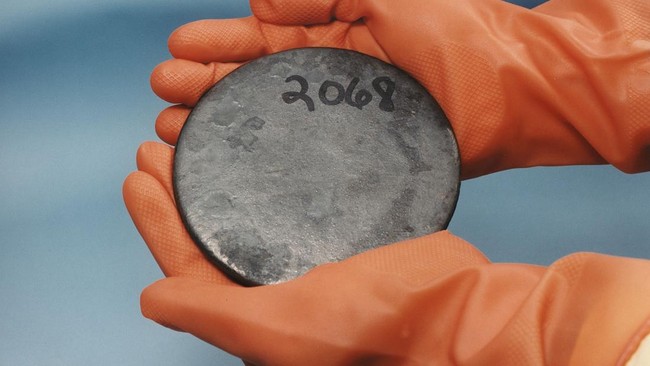
Enriched uranium is one of two fissile materials, alongside plutonium, used to create nuclear bomb cores. Plutonium is typically extracted from spent nuclear reactor fuel, requiring large-scale infrastructure that is highly visible.
Uranium, however, can be enriched using centrifuges with a much smaller footprint.
Two of Iran’s three known operating enrichment sites targeted in June’s Israeli and US strikes were underground. All above-ground facilities were destroyed.
Highly enriched uranium reaches a purity of 20%, while weapons-grade is around 90%.
Modern reactors generally use fuel enriched up to 5%, though some require higher levels. US nuclear submarine reactors reportedly use fuel enriched above 90%.
How Much Enriched Uranium Does Iran Have?
Iran has not informed the UN nuclear watchdog of the status of enriched uranium since the June attacks or allowed inspectors to return to storage sites.
The International Atomic Energy Agency (IAEA) estimated Iran possessed the following as of 13 June when Israeli bombs first fell:
440.9kg enriched to 60%
184.1kg enriched to 20%
6,024.4kg enriched to 5%
2,391.1kg enriched to 2%
According to IAEA benchmarks, the 60% stockpile could produce up to 10 nuclear weapons if further enriched. The 20% stockpile would suffice for one weapon, while 5% could yield 12.
The remaining quantity remains unclear. IAEA chief Rafael Grossi said the agency believes “over 200kg” of the 60% stockpile is stored in the Isfahan tunnel complex, which largely survived the June strikes. Some is also located at the Natanz nuclear site, he added.
Why the US Is Concerned
US concerns focus on the 60% material as it is the easiest and quickest to weaponise. Washington wants the material eliminated. Iran denies seeking nuclear weapons.
As enrichment levels rise, further enrichment becomes significantly easier. Going from 60% to 90% is simpler than enriching natural uranium to 5%.
Trump withdrew the US from the nuclear deal between Iran and major powers, which had kept Tehran far from atomic bomb capabilities compared to today.
The US withdrawal in 2018 dismantled the agreement, prompting Iran to rapidly expand its nuclear programme.
Under the 2015 deal, Iran was limited to enriching uranium up to 3.67%. Even at 90%, additional steps are needed to produce a bomb core. Enriched uranium is in gas form and must be converted to metal for weapon use.
Can Iran Move Its Uranium?
Yes. Iran moved enriched material between sites under IAEA supervision before the June strikes.
Under the 2015 deal and prior agreements, Iran’s 20% enriched uranium was diluted or converted into reactor fuel plates and shipped overseas.
International transportation of highly enriched nuclear material is sensitive but routine.
“This requires some precautions but can be moved,” Grossi told PBS in March when asked about the 60% material.
Iran’s supreme leader has reportedly instructed that the 60% material not be sent abroad, according to two senior Iranian sources last week.
Iranian sources said Tehran might agree to send half to a third country in exchange for 5% enriched uranium, while diluting the remainder domestically.