
Iran Halts Regional Attacks, Trump Issues New Threats
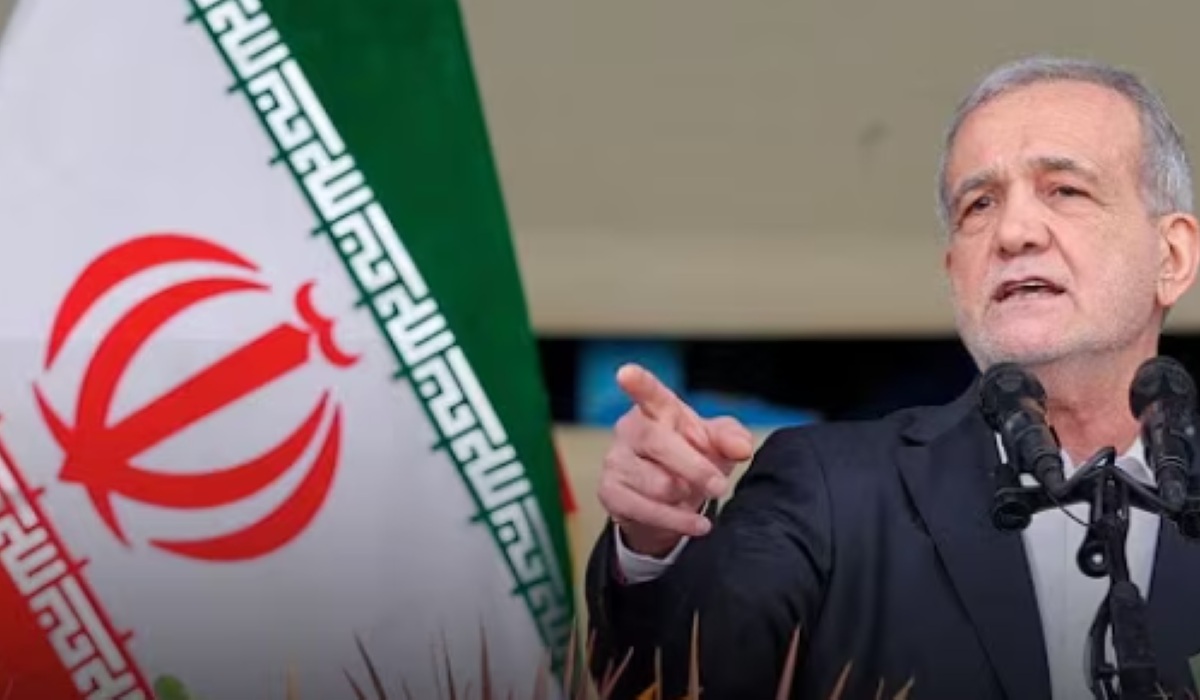
TEHRAN — Iran’s interim leadership council has approved a decision to halt attacks against neighbouring countries in the region. Pezeshkian said Iran would no longer strike neighbouring states as long as attacks do not originate from their territory, in a statement carried by Iranian media. He also expressed apologies to neighbouring countries for attacks in recent days.
Meanwhile, U.S. President Donald Trump warned that attacks on Iran could escalate. In a post on Truth Social, Trump said Iran would be ‘hit very hard’. He described the Iranian peace message as a sign that the Iranian president has conceded to Gulf states and issued additional threats against other targets in the region. Trump also claimed that the U.S. military had destroyed dozens of Iranian warships in recent days, asserting that 42 warships had been destroyed in three days. Iran responded with sharp warnings.
An Iranian military spokesperson said enemy ships entering the Gulf would face serious consequences, and that such vessels would end up at the bottom of the sea. Nevertheless, Pezeshkian rejected Washington’s demand for unconditional surrender and stressed that Iran adheres to international law. ‘Our commitment to building good relations with our neighbours does not negate Iran’s inherent right to defend itself against aggression by the United States and the Zionist regime,’ he said.
Similar posture was voiced by the Islamic Revolutionary Guard Corps (IRGC). In a statement carried by government media, the IRGC affirmed that Iran respects the sovereignty of neighbouring states and has not carried out aggression against them. ‘Following the president’s statement, the armed forces again state that they respect the interests and sovereignty of neighbouring states and, to date, have not engaged in aggression against them,’ the IRGC said. However, the IRGC warned that if attacks on Iran continue, all American and Israeli military interests in the region would become targets.
‘If hostilities persist, all bases of the criminal and fake Zionist regime on land, sea, and air across the region will be considered prime targets and will come under the devastating attack of the Islamic Republic of Iran’s armed forces,’ it added.
Recently, Pezeshkian also clarified via X that Iran is not directly attacking neighbouring states. He said Iran’s targets are American military facilities in the region. According to him, Iran’s commitment to maintaining good relations with neighbouring countries does not negate Iran’s inherent right to defend itself against aggression by the United States and the Zionist regime.
However, several observers argue that the president’s statements do not fully determine the country’s military policy. Al Jazeera journalist Resul Serdar said the greatest influence on security matters lies with the IRGC and the office of the Supreme Leader. ‘Political figures in Iran are responsible for state and non-strategic affairs. But when it comes to strategic matters such as foreign policy and national security, politicians do not have a say,’ Serdar said. He added that in a conflict seen as a fight for survival, military decisions lie entirely with the IRGC. Serdar also described IRGC head Ahmad Vahidi as one of the organisation’s most hardline commanders.
Several Gulf states have been targets because of the presence of US military facilities in the region. GCC members such as Saudi Arabia, Qatar, the United Arab Emirates, Kuwait, Bahrain, and Oman have been affected by the conflict. In addition, Iraq, Jordan, Azerbaijan, and Turkey have also been drawn into the conflict. The fighting has caused casualties, damaged infrastructure, disrupted air travel, and led to the closure of airspace in several countries. Oil and gas production in the Gulf region has also been disrupted, impacting global energy markets.
Qatar Energy Minister Saad al-Kaabi warned that energy exports from the Gulf could be disrupted if the war continues. ‘If the war continues for several weeks, global GDP growth will be affected,’ al-Kaabi told the Financial Times. ‘Energy prices for everyone will rise. There will be shortages of some products and a cascading effect on factories that cannot supply,’ he added.
Meanwhile, casualties on the American side were reported when Iran attacked a US military command center in Kuwait, killing six soldiers. Within the United States, the war against Iran is said to lack broad public support. Al Jazeera correspondent Heidi Zhou-Castro said many Americans, including Trump supporters, question their country’s involvement in the conflict.