
Iran Emerges as Strategic Victor in US-Iran War
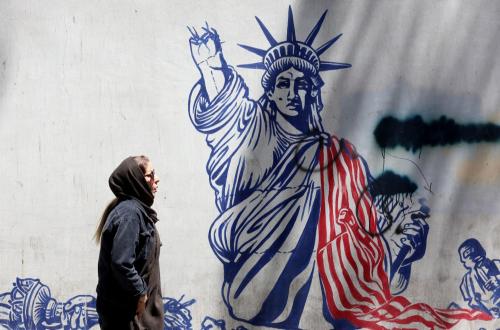
When a war ends, the world usually rushes to find a winner. But in the US-Iran war that lasted from 28 February to 19 June 2026, there was a hasty consensus: no one won, everyone lost. That statement sounds wise. It sounds neutral. And it is almost always wrong.
War does not always produce equal destruction. There are parties that emerge from the battlefield in a stronger position than when they entered. In this war, that party is Iran. Not an Iran triumphant with military parades in the streets of Tehran. Not an Iran burning enemy flags while cheering. But an Iran that, quietly and measurably, managed to hold onto everything that was meant to be taken from it, and then returned to the negotiating table in a position even stronger than before the first shot was fired.
Recall the original objectives of the US and Israeli military operation launched on 28 February 2026: destroy Iran’s missile capacity, cripple its nuclear programme, and, most ambitiously, topple the Islamic Republic regime. Trump even stated explicitly that only Iran’s unconditional surrender would be acceptable. Three months later, not a single one of those three objectives had been achieved.
Iran’s nuclear programme? Under the Islamabad Memorandum of Understanding signed on 17 June 2026, Iran was merely asked to maintain the status quo of its nuclear programme, not dismantle it, not permanently halt it. The nuclear issue was deferred to further negotiations, with no guarantee of any outcome. Trump himself admitted that in the Islamabad talks, almost all points were agreed upon, except the nuclear issue, and Iran did not budge an inch on it. A country that was initially ultimatumed to surrender unconditionally now sits at the negotiating table with its nuclear cards still full in hand.
Iran’s missiles? They remain. Trump even surprisingly defended Iran’s right to retain some of its ballistic missiles, citing the principle of equality among nations. This was a concession unimaginable at the start of the war, when the total destruction of Iran’s arsenal served as the moral justification for the most massive air strikes in the Middle East in a decade.
The Iranian regime? It has hardened and sharpened. The death of Khamenei, which Washington had hoped would be the tipping point for the collapse of power, instead triggered lightning-fast domestic consolidation. Khamenei’s son was appointed as his successor. An external enemy, as history repeatedly shows, became the most powerful and cheapest glue for nationalism. External attack did not erode the regime’s legitimacy; it renewed its contract with the people. A regime besieged from outside rarely collapses from within. History proves this over and over, from Cuba to North Korea.
More decisive is who Iran faced. Not one country. Iran faced the United States, Israel, Saudi Arabia, the United Arab Emirates, and Kuwait, a coalition that militarily and economically far surpassed Iran’s capacity. For nearly four months, Iran did not just survive; it retaliated. US bases in the Gulf region were struck. The Strait of Hormuz, the world’s energy artery, was closed, shaking global markets. Hezbollah, the Houthis, and the Axis of Resistance network moved with a coordination that exceeded Western intelligence estimates. Iran fought in a manner suited to its capacity: asymmetric, dispersed, and exhausting a far larger opponent. In asymmetric warfare doctrine, survival is a form of victory, and Iran survived longer than anyone anticipated. Most importantly, it was not Iran that came first to request a ceasefire.
Herein lies the uncomfortable paradox of victory. Wikipedia has already recorded in its entry for this war: Result: Iranian victory (disputed). The word disputed is there not because the outcome on the ground is unclear, but because some parties refuse to acknowledge it on paper. In international politics, recognition is a matter of narrative, not fact. And Iran is clever enough not to need that recognition, because the substance is already in its hands.
For Indonesia, this conclusion is not about sympathy or antipathy towards Iran. It is about reading global shifts clearly. If a country with an economy crippled by years of sanctions, losing its supreme leader in the middle of a war, and facing the world’s strongest military coalition, can still successfully preserve its nuclear programme, its arsenal, and its regime, then something fundamental has changed in how great powers impose their will. Maximum pressure no longer guarantees maximum compliance. Hegemony no longer works in the old way.
For Indonesian diplomacy, which upholds the principle of being free and active, understanding this shift is not a choice. It is the starting point for any foreign policy that wishes to remain relevant in a world that is changing shape. The world after this war is not the same as the world before it. In this war, there is no winner in a heroic and clean sense. But there is one party that emerged from the ruins with more than it brought in. And that party’s name is Iran.