
Iran Disables Oil and Gas Production in Israel, Qatar, and Saudi Arabia
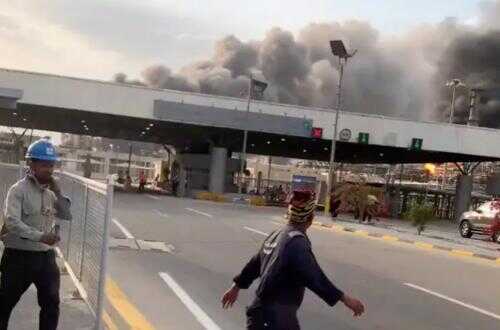
On the third day of the conflict triggered by United States-Israel hostilities, several energy production facilities in the Middle East were forced to halt operations following Iranian retaliatory strikes. This has increased the potential for significant spikes in petroleum and gas prices.
According to Reuters, Israel’s Ministry of Energy on Monday ordered the temporary closure of some of the country’s natural gas reservoirs amid intensifying Iranian counterattacks. The Leviathan gas field located off the Israeli coast, operated by Chevron, has been affected according to three sources interviewed by Reuters. Energean’s production vessel serving several Israeli fields has also ceased operations, the company stated.
The Israeli Ministry said the decision was based on “current circumstances and in accordance with security assessments”. The country’s energy requirements will be met through alternative sources, and the electricity sector is ready to operate power plants using alternative fuels if necessary. Chevron directed commentary requests to the ministry but declined to specify which fields were impacted.
Qatar’s Ministry of Defence stated that two drones attacked energy facilities in the industrial cities of Ras Laffan and Mesaieed on Monday with no reported casualties. “One drone targeted a water tank at a power plant in Mesaieed, and another targeted an energy facility at Ras Laffan Industrial City, owned by Qatar Energy,” it said. All damage and losses from the attacks will be assessed by relevant authorities, with an official statement to follow.
Following the strikes, Qatar Energy, one of the world’s largest natural gas producers, announced a halt to liquefied natural gas (LNG) production and related products.
In Saudi Arabia, oil and gas company Aramco halted operations at the kingdom’s largest refinery at Ras Tanura on the Persian Gulf coast after unmanned aircraft attacks in the area. The Ras Tanura refinery is one of the world’s largest.
Futures oil prices surged amid reports of refinery closures, which are major suppliers of diesel, as Iranian strikes intensified and damaged critical energy infrastructure across the region.
Aramco shut down the Ras Tanura facility, which has a capacity of 550,000 barrels per day, on Monday as a precautionary measure whilst assessing damage, Saudi Arabia’s Ministry of Energy stated. A “limited” fire at the facility was caused by debris from the interception of two drones targeting the installation, with flames “quickly extinguished”, according to the Saudi Press Agency. Aramco’s media office did not respond to requests for comment.
Meanwhile, ICE crude futures surged more than 20 percent, marking the largest daily increase since March 2022. Crude oil in London traded approximately 9 percent higher, approaching USD 79 per barrel.