
Iran Determines the Trajectory of War
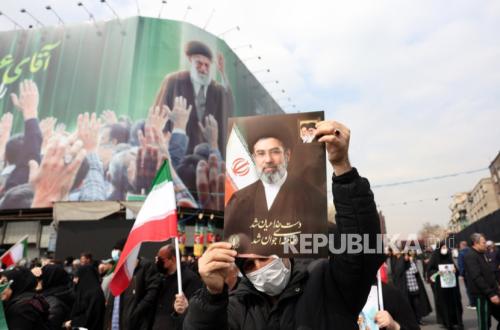
The major US-Israeli assault on Iran that commenced on 28 February, occurring even as diplomatic negotiations between Iran and the United States showed substantial progress, has revealed that Iran’s two principal adversaries have underestimated the military capabilities of the Islamic Republic to defend itself.
The fascist administration of US President Donald Trump and the far-right Israeli government led by Prime Minister Benjamin Netanyahu sought to topple Iran’s leadership, seize its energy resources, marginalise the role of Russia and China in Iran, and establish Israel as the region’s primary hegemon. These objectives have completely failed and have instead backfired. The internal and external position of Iran’s leadership has grown stronger, and opposition to the aggressors has intensified. Iran’s opposition movement, which mobilised demonstrators with US and Israeli support from late December through mid-January 2026, has now reversed course, with Iran’s national security becoming the priority over the narrow interests of Reza Pahlavi, who has colluded with Trump and Netanyahu. Meanwhile, the domestic political situation in the United States faces mounting pressure. The US finds itself isolated on the regional and global stage, and public support for Netanyahu within Israel has begun to waver. The Arab Gulf states have borne the greatest cost.
Iran has not only attacked US military bases in Gulf Cooperation Council (GCC) monarchies – comprising Oman, the United Arab Emirates, Saudi Arabia, Qatar, Bahrain, and Kuwait – as well as in Iraq and Jordan, but has also targeted civilian infrastructure, particularly oil refineries that form the lifeblood of these nations. The closure of the Strait of Hormuz, a critical shipping route through which 20 percent of global energy supplies pass, has created a worldwide financial and energy market crisis. Trump’s call for the international community to unite in reopening the Strait of Hormuz has gone unheeded. Iran now determines the trajectory of the war.
The Controversy Surrounding US War Objectives
The reluctance of regional and Western allies to assist the overwhelmed US and Israel stems from the fact that this war is discretionary rather than necessary, and was undertaken by the United States without consulting its allies. Moreover, given that the war’s objectives remain unclear, the assault violates the UN Charter and international law and norms. On 10 March, frustrated members of Congress learned from White House officials in a closed-door meeting that secret documents revealed the rationale behind the US war.
According to these documents, the war does not aim to destroy Iran’s nuclear programme – the narrative that the US and Israel have long promoted as the justification for attacking Iran. Indeed, the US pretext for war has shifted repeatedly. If the objective is not Iran’s nuclear programme, why did the US-Israeli assault in June of last year target Iran’s nuclear sites?
The aggression was apparently launched at Netanyahu’s strong insistence, as he views Iran as the sole obstacle to Israel’s consolidation as the region’s hegemon. In other words, Israel’s ambition to realise a biblical Greater Israel cannot materialise whilst an independent Iranian regime possessing strategic weapons continues to exist.
The secret US documents also state that the war’s objective is not regime change in Iran. Yet why have Iran’s Supreme Leader Ayatollah Ali Khamenei, along with leading military commanders and political figures, been targeted for assassination? Clearly, this despicable action aims to create chaos in Iran that would facilitate US and Israeli proxies in seizing control of the state.
Following the massive demonstrations that began on 28 December after Khamenei’s assassination, Trump and Netanyahu orchestrated Iranian citizens to occupy state institutions. Equally important is Trump’s insistence that the United States should determine Iran’s new leadership. Mujtaba, the late Khamenei’s son, will not be acceptable and will become the target of the next assassination attempt. Hujjatul Islam Mujtaba Khamenei – now bearing the title Ayatollah – is known to be more hardline than his father and is close to the Islamic Revolutionary Guard Corps (IRGC). The documents reportedly aim only at destroying missile factories, the Iranian navy, and military sites.
Beyond containing numerous contradictions, the documents fail to explain how the war will be conducted or when it will end. At its meeting in Brussels on 16 March, the European Union declared it will not become involved in the war, as its members have not been provided with an explanation of the war’s justification, objectives, and timeline. Moreover, throughout the conflict, Trump has consistently lied about the war’s progress. For instance, he claims that Iran has been crippled, its military assets have been decimated, and that the US has won. Yet why do Iranian missiles and drones continue to target Israel, Arab allies, and the United States? Why has Trump requested that China and Western allies assist the US in reopening the Strait of Hormuz?
The war has killed 13 US service personnel and wounded 150 others. Significant damage to Arab Gulf oil refineries and the closure of the Strait of Hormuz have triggered fuel price increases that have sparked a global recession, including in the United States, further eroding public purchasing power and making the war increasingly unpopular domestically.
Even before the war, US public support for military action stood at only 25 percent. Contradicting his claim that Iran has contacted him about ending the war, Trump has instead reached out to Russian President Vladimir Putin and Chinese President Xi Jinping to serve as mediators for a ceasefire. Tehran has been contacted, but Iran’s Supreme Leader Ayatollah Mujtaba Khamenei insists on continuing the war unless Trump meets Iran’s demands. The fact that Trump has lifted Russia’s ban on exporting oil has further disappointed the European Union.
Iran’s Leverage
In an effort to strengthen its bargaining position to end the war with Iran, the United States and Israel have now directed attacks against Iranian civilian infrastructure, including oil depots, hospitals, schools, Iranian banks, and most recently Iran’s oil export infrastructure at Kharg Island – which accounts for 90 percent of Iran’s oil exports – all constituting war crimes. This follows earlier attacks on a primary school in Minab that killed over 170 schoolgirls. This further underscores their arrogance regarding Iran’s capacity to respond.