
Iran Denies Launching 4,000 km Missile Amid US Invasion Threats
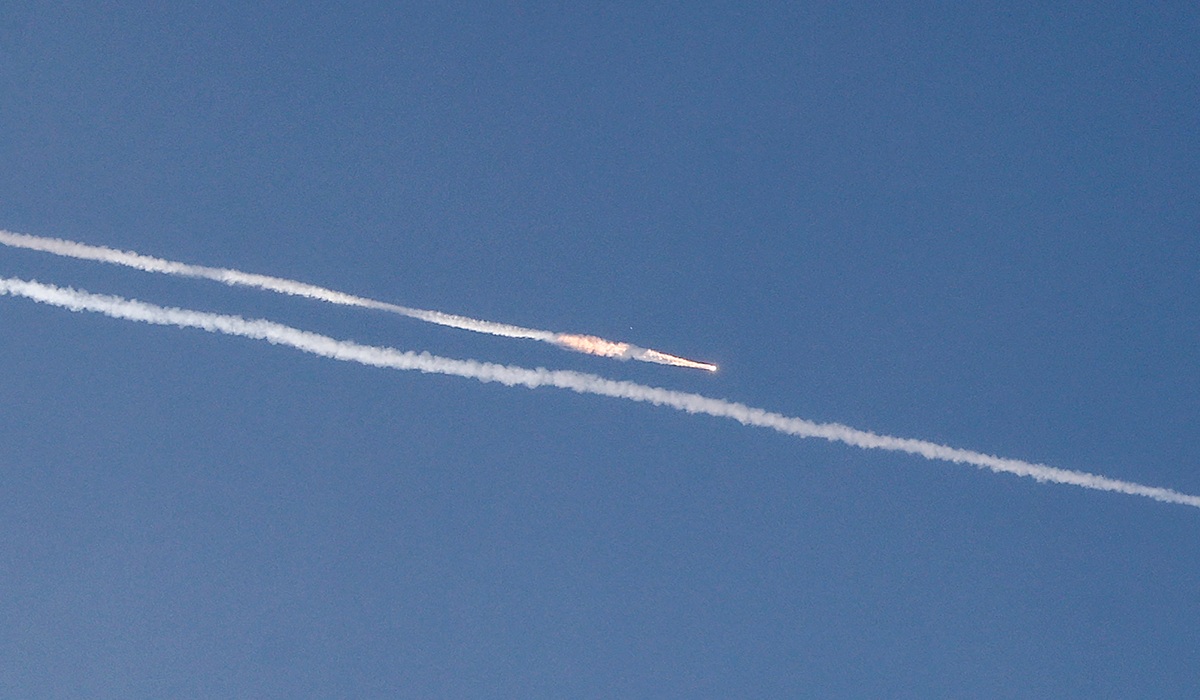
Iran has strongly denied involvement in the launch of a 4,000 km-range missile attack on the British military base at Diego Garcia on Sunday (22/3) local time. A senior Iranian official affirmed to Al Jazeera that the country was not behind the reported missile launch attempt. The statement follows a report by The Wall Street Journal claiming that Iran fired two intermediate-range ballistic missiles towards the joint US-UK military base in the Chagos Archipelago. The report stated that one missile failed during flight, while the other was likely successfully intercepted. However, the report did not specify exactly when the firing occurred. Diego Garcia is located approximately 4,000 kilometres from Iranian territory. If the attack report is true, it would raise significant questions about the actual range of Tehran’s missile capabilities. To date, Iran has publicly stated that its missile range is limited. Last month, Iran’s Foreign Minister, Abbas Araghchi, even emphasised that the country restricts its missile range to just 2,000 kilometres. However, the Israel Defense Forces (IDF) provided a different assessment via a post on social media platform X following the WSJ report. “The terrorist regime of Iran has launched long-range missiles for the first time since the start of Operation Roaring Lion, which can reach distances of around 4,000 km,” the IDF wrote, quoted from The Economic Times. The IDF added that it had uncovered Iran’s intentions to develop 4,000 km-range missiles since June 2025. “We have said it: the terrorist regime of Iran is a global threat. Now, with missiles that can reach London, Paris, or Berlin,” the IDF statement said. The tensions have emerged as Washington reviews military options against Tehran. Quoted from CBS News, the US Pentagon has prepared a comprehensive plan for the possible deployment of US ground forces to Iran. Sources familiar with the matter said that senior military commanders have made specific requests to ensure combat readiness as US President Donald Trump considers further steps. Trump himself has not given a final decision. “No, I am not placing troops anywhere,” Trump said. However, he added, “If I do it, I certainly won’t tell you.” White House Press Secretary Karoline Leavitt explained that the Pentagon’s role is to ensure the Commander-in-Chief has “maximum optionality” in any crisis. She emphasised that the preparations are not a signal of a final decision. “As the President said in the Oval Office yesterday, he does not plan to send ground forces anywhere at this time,” Leavitt said. On the other hand, US military officials are reportedly beginning to discuss logistics related to the capture and detention of Iranian personnel if an invasion truly occurs. The United States is also starting to position its forces in the region. Elements from the 82nd Airborne Division, Marine Expeditionary Unit, and Army Global Response Force are reportedly on alert. Thousands of Marines are even reported to be moving towards the Middle East, marked by the departure of three US Navy ships from California carrying more than 2,000 personnel. Tensions in the Persian Gulf are peaking. Qatar’s Ras Laffan was hit by missiles, while Saudi Arabia intercepted drone and ballistic missile attacks towards Riyadh. Iran stated that its armed forces have launched attacks on several locations suspected to be headquarters of Israeli and US commanders in the Middle East region. The statement was accompanied by footage that, according to the military, shows attacks aimed at destroying what they call air defence systems. The incidents occurred in Bnei Brak, just east of Tel Aviv, and the city of Rosh HaAyin, further to the east. Iran’s ballistic missile attack killed two people in central Israel. Meanwhile, a mysterious projectile struck the Bushehr nuclear power plant area in Iran.