
Iran Crisis Could Jeopardise BRICS, Why?
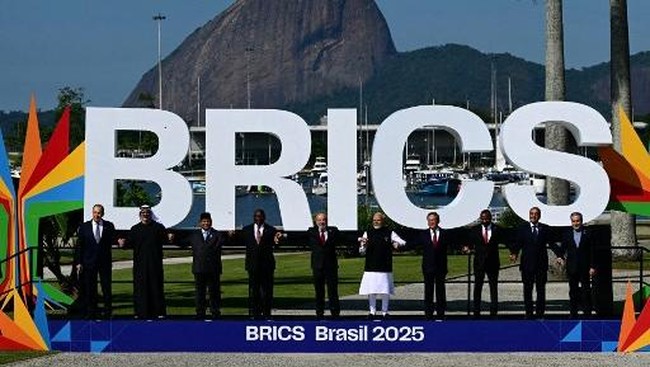
BRICS is now under scrutiny. The tacit stance adopted by the organisation—an acronym for Brazil, Russia, India, China, and South Africa—regarding United States-Israeli strikes on Iran has sparked disappointment.
This is considered risky. BRICS could even be regarded as an “obsolete” organisation.
This assessment comes from Russian analyst Fyodor Lukyanov, Chairman of the Presidium of the Council on Foreign and Defence Policy, and Director of Research at the Valdai International Discussion Club. Iran itself became a formal BRICS member in 2024 after being invited at the 2023 Summit.
“If an organisation fails to respond to aggression against one of its members, that organisation risks appearing irrelevant,” Lukyanov wrote in an analysis published on RT.
“However, demonstrating strong solidarity also carries its own risks,” he added.
“Few countries are enthusiastic about openly confronting Washington, especially when some BRICS members, such as India and the United Arab Emirates, maintain close partnerships with the United States,” he continued.
Lukyanov assessed that disappointment surrounding BRICS is justified, particularly given exaggerated perceptions about its capabilities.
“Rather than transforming BRICS into a formal international institution, its members chose to expand what might be described as a geopolitical space ‘without the West’—not a bloc opposing the West, but an arena where cooperation can occur independently from it,” he explained.
This reality, he stressed, will bring difficult transformations to BRICS. The current situation demonstrates differences in economic structures and geopolitical priorities among members.
Attempts to impose rigid structures would instead be assessed as paralysing the grouping amid the dominance of global financial systems by America.
“The alternative—building flexible networks outside Western-centred systems—largely remains a project for the future,” he asserted.
“For now, the United States maintains significant influence through its dominance of the global financial system. That power gives Washington substantial tools to undermine initiatives that threaten its position,” Lukyanov explained.
Whilst BRICS is unlikely to become a formal anti-American military coalition, the grouping represents a substantial portion of global economy and population capable of shaping future international order. President Donald Trump’s repeated outbursts against BRICS are regarded as Washington’s instinctive acknowledgement of this potential threat.
“For now, the group remains an imperfect and loosely organised platform. However, maintaining it and allowing it to develop may prove to be one of the most important lessons for the future,” he said.