
Iran Conflict Escalates: Indonesia Secures LPG Supply from United States
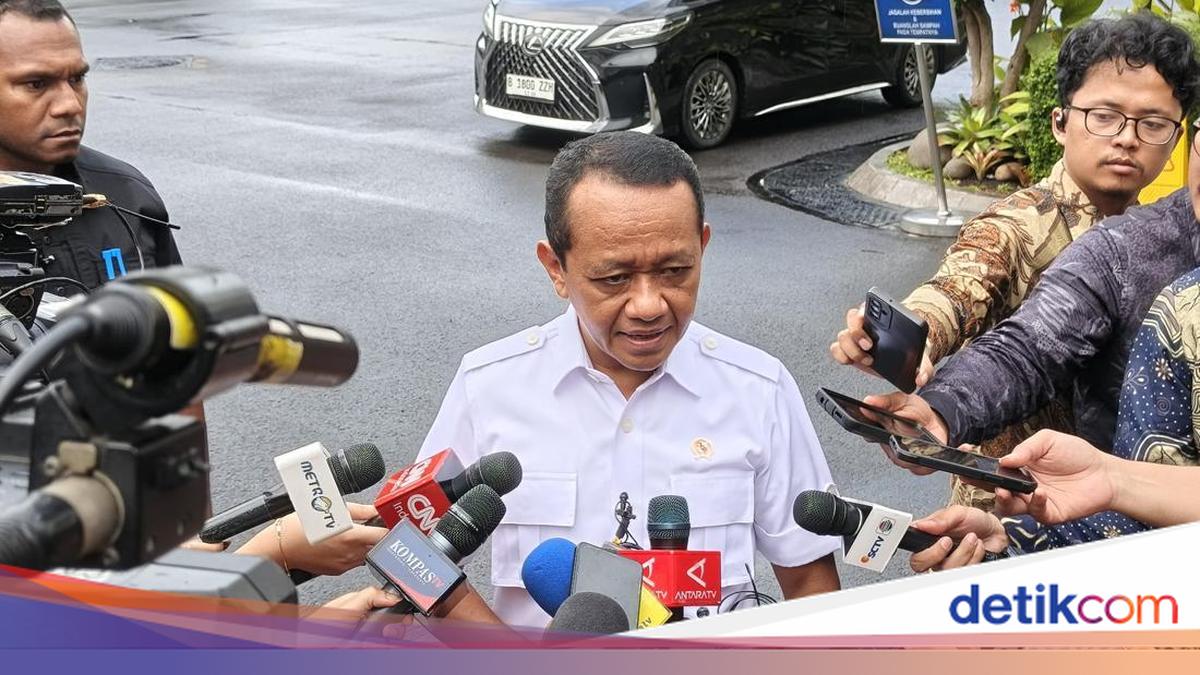
Geopolitical tensions in the Middle East are beginning to affect Indonesia’s energy strategy. The government has decided to increase imports of Liquefied Petroleum Gas (LPG) from the United States (US) to anticipate potential supply disruptions resulting from the conflict between the US and Israel against Iran.
The Minister of Energy and Mineral Resources (ESDM) Bahlil Lahadalia stated that the global LPG distribution chain is currently experiencing significant changes. Indonesia is taking precautionary measures to ensure the safety of domestic energy supply.
Bahlil explained that Indonesia’s total LPG imports currently reach 7.6 million tonnes. Of this amount, approximately 70-72% comes from the United States, roughly 20% from the Middle East, and the remainder is supplied by other countries.
To anticipate supply uncertainty from the Middle East region, the government has begun increasing supply contracts from the United States and several other countries, including Australia.
“Given the current situation in the Middle East, we are diversifying further by securing long-term contracts with America and several other nations. At the end of this week, two cargo shipments from Australia are arriving for LPG,” Bahlil stated in a written announcement cited by detikFinance on Saturday (14/3/2026).
Bahlil assured that diesel supply will not be disrupted as it is entirely sourced from domestic production. This condition is also supported by the inauguration of the Refinery Development Master Plan (RDMP) in Balikpapan in January 2026.
According to him, this project increases domestic fuel production capacity, thereby reducing imports. The increased refinery capacity can reduce petrol imports by up to 5.5 million tonnes and diesel by 3.5 million tonnes.
However, part of the nation’s petrol requirements are still met through imports from Malaysia and Singapore. Going forward, the government is promoting the development of new refineries to increase domestic fuel production and reduce import dependence.
“We must develop our refineries to produce everything domestically. Ultimately, if our crude oil production does not reach 1.6 million barrels per day, the difference between demand and our production capacity is what we import. So in the future, we will only import crude oil,” Bahlil explained.
On this occasion, Bahlil also assured that fuel and LPG availability is secure ahead of Eid al-Fitr 2026. He conveyed this to President Prabowo Subianto during a Full Cabinet Session in Jakarta on Friday (13/3).
Bahlil reported that reserves of Special Designated Fuel Type (JBKP) RON 90 reached 24.39 days, exceeding the minimum set limit. General Fuel Type (JBU) RON 92 reserves reached 28 days and RON 98 reached 31 days.
Meanwhile, subsidised diesel reserves reached 16.41 days. Diesel CN 53 reserves were recorded at 46 days, whilst jet fuel reached 38 days.
“So I believe the petrol matter is clear, sir (Mr President). Reserves ahead of the holiday for all fuel and LPG are secure, sir,” Bahlil concluded.