
Iran Conflict Escalates as Gulf Oil Production Faces Imminent Collapse
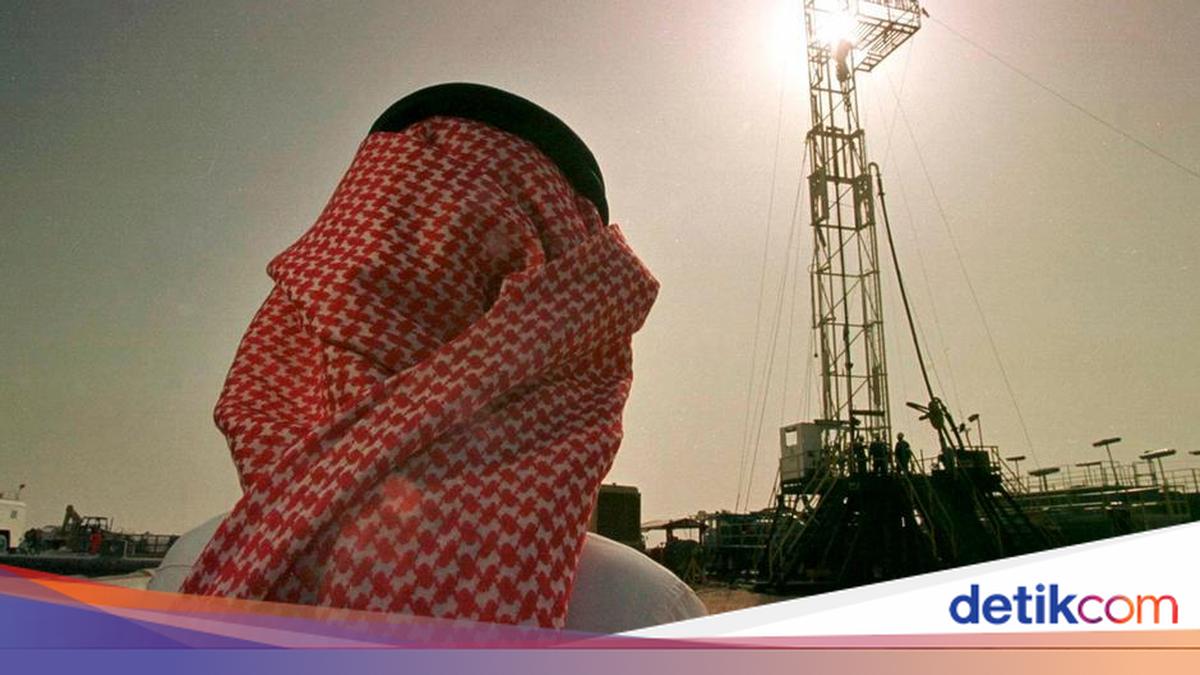
Oil prices surged to nearly $120 (approximately 1.9 million rupiah) per barrel on Monday, 9 March, after Israel struck Iranian energy infrastructure over the weekend and Tehran announced Mojtaba Khamenei as the country’s new supreme leader. The attack, marking a major escalation in a conflict that had been ongoing for 10 days, triggered fresh concerns in the global energy market, with Brent crude oil reaching $119.50 (approximately 1.85 million rupiah) per barrel.
Prices subsequently retreated to around $100 (approximately 1.57 million rupiah), and by Tuesday oil was trading below $90 per barrel (approximately 1.41 million rupiah), though still more than 20 per cent higher than when the conflict began on 28 February.
The deteriorating conflict has increased risks to Middle Eastern energy infrastructure, where producers already face facility damage from Iranian attacks and the closure of the world’s most critical oil shipping lane.
With export storage capacity diminishing rapidly, the question arises whether Gulf oil production could halt within days.
Why is the Strait of Hormuz critical to global oil supply?
Oil-producing Gulf states—Saudi Arabia, the United Arab Emirates, Qatar, Kuwait, and Bahrain—now find themselves directly affected by the US–Israel conflict against Iran.
Iran has drawn Gulf states into the conflict by launching attacks against energy facilities, airports, hotels, residential areas, and US military bases in the region. These attacks have triggered accusations of “treachery” and threats of military retaliation.
The situation has worsened due to Iran’s de facto closure of the Strait of Hormuz, the narrow maritime passage between Iran and Oman connecting the Persian Gulf with the Gulf of Oman and the Arabian Sea, which according to shipping analytics firm Kpler has halted almost all commercial traffic.
Approximately one-fifth of global oil supply passes through the Strait of Hormuz, making its closure considered the worst-case scenario for global energy markets.
What is happening to oil stocks in the Gulf region?
With oil tankers and LNG vessels trapped, Gulf producers hope the strait reopens quickly.
Although Saudi Arabia and the UAE have alternative routes to export some energy via the Red Sea and the Gulf of Oman, other Gulf states can only rely on rapidly depleting storage capacity.
Collectively, Gulf states can store approximately 343 million barrels of oil to delay the inevitable production shutdown, according to US investment bank JP Morgan.
However, typically around 15 million barrels of crude oil per day, plus more than 4 million barrels of refined products per day such as petrol, diesel, and jet fuel, pass through the Strait of Hormuz.
JP Morgan calculates that Gulf states collectively had only about 22 days of storage buffer when the war began.
Although reports on Tuesday, 10 March, indicated some tankers had successfully passed through the Strait of Hormuz amid the ongoing conflict, Iran’s Islamic Revolutionary Guard Corps (IRGC) issued a stern warning.
The IRGC stated that Tehran would “determine the end of the war” and promised not to allow “a single litre” of oil to be exported from the region if US and Israeli attacks continued.
Are Gulf states beginning to cut oil production?
Iraq, which has only six days of storage capacity, has likely reached its limit and begun cutting production by approximately 1.5 million barrels per day last week.
Norwegian energy research firm Rystad Energy warned that Iraq’s still-operating oil fields “face an almost certain shutdown in the near term.”
Meanwhile, Saudi Arabia had approximately 66 days of storage capacity on 28 February, according to JP Morgan. This figure assumes the kingdom can divert some exports via alternative routes.
However, Rystad Energy assessed that Saudi Arabia may have only “an effective window before forced production cuts” of around seven to nine days.
Saudi Aramco, the world’s largest oil exporter, is now redirecting as much oil as possible to the Yanbu port on the Red Sea, whilst the UAE is diverting some exports through Fujairah, which was also previously attacked by Iran.
However, these alternative routes can handle only about one-third of the oil that normally transits the Strait of Hormuz.
Bloomberg reported on Tuesday, 10 March, that Saudi Arabia had reduced production by up to 2.5 million barrels per day, whilst the UAE cut its production by approximately 500,000 to 800,000 barrels per day. Kuwait also cut production by approximately 500,000 barrels per day, and Iraq by approximately 2.9 million barrels per day, according to reports citing sources familiar with the situation.
What happens to oil prices if Gulf production stops?
A major halt in oil production and exports from the Gulf would almost certainly drive prices substantially higher, as the region accounts for approximately one-third of global seaborne crude oil exports.
Qatar’s Energy Minister told the Financial Times that oil prices could reach $150 per barrel (approximately 2.36 million rupiah) if the conflict does not end quickly and production must be halted.
Saudi Aramco also warned of “very serious consequences” if shipping disruptions in the Strait of Hormuz continue.
Dutch bank ING stated in a research note that the longer the conflict continues, the more oil supply will be temporarily halted due to lack of export routes.
Meanwhile, the International Energy Agency (IEA) stated that prolonged supply disruptions could shift the market from a significant surplus position since early last year to a deficit.
Restarting production after a temporary halt can also prove difficult, requiring several days to several weeks to return to normal levels. If the halt lasts long, the risk of equipment damage or geological complications could also emerge.