
Iran Conflict Disrupts Strait of Hormuz, Global Commodity Supply Chain Threatened
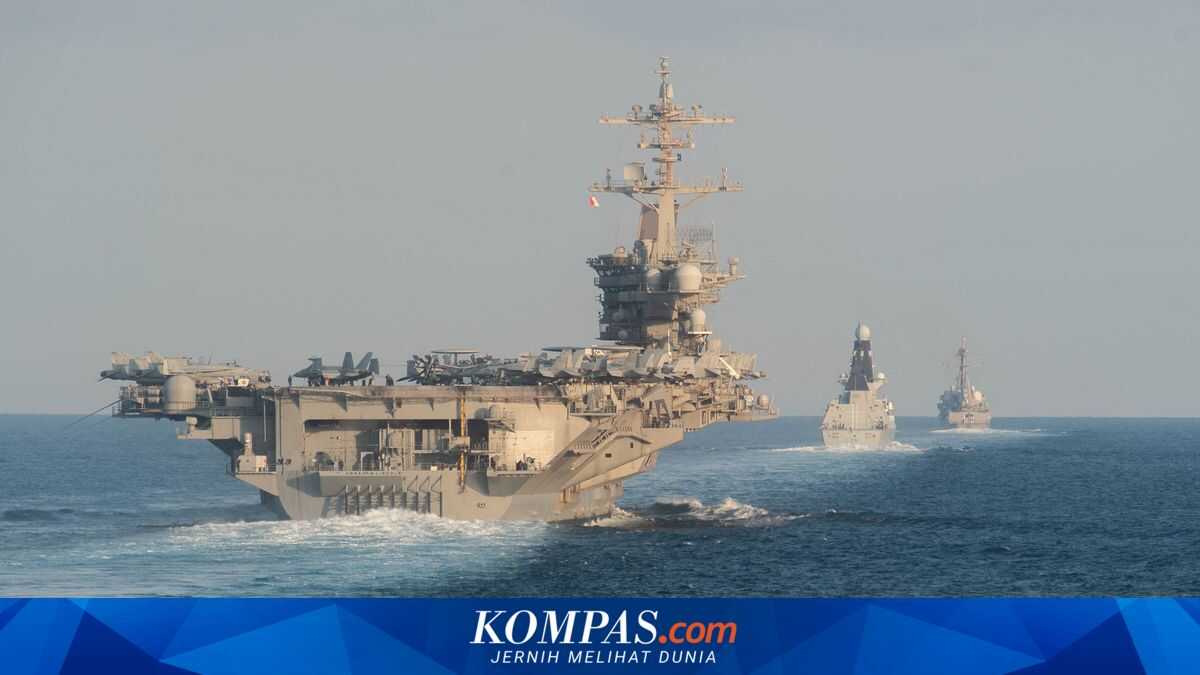
JAKARTA – Military conflict erupting between the United States, Israel, and Iran in late February 2026 has triggered fresh shocks to the global energy market. Military strikes and retaliatory responses from Tehran have not only intensified geopolitical tensions in the Middle East but also threatened one of the world’s most vital energy corridors: the Strait of Hormuz.
This development has prompted widespread concern because the maritime route represents one of the primary global energy trade chokepoints. According to Liu Xu, Executive Director of the Center for International Energy and Environment Strategy Studies at Renmin University of China, the sequence of events has the potential to trigger major disruptions to the global commodity market.
As reported by CGTN on Monday, 2 March 2026, he assessed that the conflict is not merely a short-term geopolitical tension but an event capable of triggering significant changes to the structure of the global economy. The conflict escalated after the United States and Israel launched a joint military operation against Iran on 28 February 2026. The operation, designated Operation Epic Fury, targeted several strategic facilities within the country.
According to Liu, the sequence of events will not only impact the energy sector but could rapidly spread throughout the global economy. The consequences have the potential to alter the structure of international finance and economics should the conflict continue.
The Strait of Hormuz ranks among the world’s most critical maritime routes for global energy trade. The passage connects the Persian Gulf with the Gulf of Oman and the Arabian Sea, making it the primary transit point for oil and gas exports from Gulf nations.
Beyond oil, the route plays a crucial role in liquefied natural gas (LNG) trade. Qatar, the world’s largest LNG exporter, ships its entire LNG exports through the Strait of Hormuz. This volume represents more than 20 per cent of global LNG trade.
Oil-producing nations in the Gulf region, including Saudi Arabia, Iraq, the United Arab Emirates, and Kuwait, are heavily dependent on this route. More than 90 per cent of oil exports from these countries pass through the Strait of Hormuz.
Beyond threats to the global shipping lane, the conflict also risks disrupting Iran’s oil exports directly. One of the most critical points in Iran’s energy export system is Kharg Island.