
Iran Confirms Death of Ali Larijani
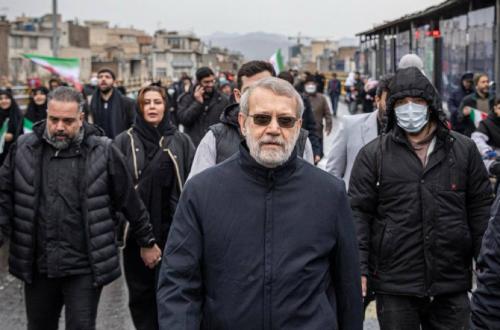
Iran has confirmed that security chief Ali Larijani and Basij militia commander Gholamreza Soleimani were killed in an Israeli attack on Monday, 16 March 2026.
In a statement published by Iran’s semi-official Mehr News agency, the Supreme National Security Council confirmed Larijani’s death following Israel’s claims of a targeted strike. The council’s statement read: “After a lifetime of struggle to elevate the dignity of Iran and the Islamic Revolution, he finally achieved his long-cherished desire, answered the call of truth, and proudly attained the rank of martyr in the service of the nation.”
Israel’s Defence Minister Israel Katz announced the killings on Tuesday, stating on social media that “the regime’s leaders have been killed and their capabilities have been halted.” Larijani served as secretary of Iran’s Supreme National Security Council, whilst Soleimani commanded the internal Basij militia.
The Iranian government media subsequently published a handwritten note attributed to Larijani, though its purpose remains unclear. The note, published on his social media account, commemorated 84 Iranian navy personnel who died in a US attack on an Iranian naval vessel in international waters, with funerals expected on Tuesday.
Larijani’s death marks the highest-level killing in the current conflict since the deaths of former Supreme Leader Ayatollah Ali Khamenei and several family members on 28 February, the first day of the US-Israel-led operation. Larijani was last seen publicly on Friday attending the Al-Quds Day gathering in Tehran alongside President Masoud Pezeshkian, where he expressed support for the Palestinian people.
Larijani held considerable political importance in Iran’s hierarchy for many years, having previously led his country’s nuclear negotiations with the West and served as speaker of the Iranian parliament.
Analysts suggest that future Iranian leaders, shaped by this conflict, may adopt more hardline positions than their predecessors. Ross Harrison, senior analyst at the Middle East Institute in Washington, DC, noted that whilst previous leaders such as Ayatollah Ali Khamenei and Larijani developed diplomatic skills and risk tolerance during the Iran-Iraq War, whoever succeeds Larijani “will be shaped by this conflict. In the long term, we cannot predict anything, but we can say that this war will shape the strategic thinking of new leaders – just as the Iran-Iraq War shaped the calculations of previous leaders.”