
Iran Closes Strait of Hormuz, Indonesia Accelerates Oil Purchases from United States
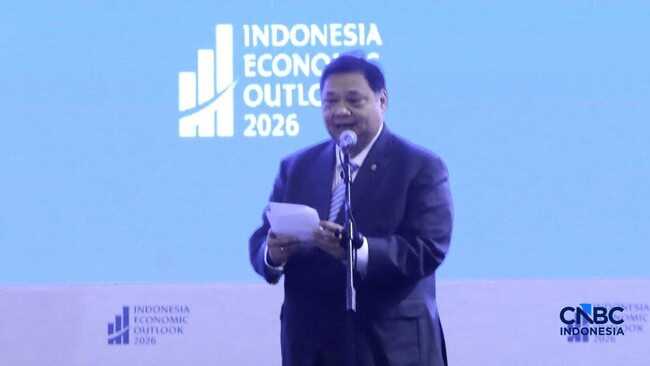
Jakarta — Indonesia’s Coordinating Minister for Economic Affairs Airlangga Hartarto has addressed concerns arising from the Iran-United States and Israel conflict, which has resulted in the closure of the Strait of Hormuz, one of the world’s critical maritime oil trade routes.
Hartarto expressed concern about the Hormuz closure, through which 20% of global oil supplies transit. Indonesia’s oil requirements comprise 20% from contracts with Saudi Arabia, making the country vulnerable to supply disruptions. However, Hartarto stated that the domestic risk remains manageable.
“Supply disruptions are expected and the WTI (West Texas Intermediate) price today stands at US$73 per barrel, whilst our state budget is based on US$70 per barrel, so it remains relatively controlled,” Hartarto stated at the CNN Indonesia Economy Outlook event at Bank Mega Tower on Monday, 2 March 2026.
The government of Indonesia, through state-owned Pertamina, is mitigating the situation through the Agreement on Reciprocal Trade (ART). Indonesia will purchase oil from the United States, and Pertamina has already signed memoranda of understanding with Chevron, ExxonMobil and other major oil companies.
“This may be an opportunity that needs to be accelerated,” Hartarto noted.
Despite these challenges, Indonesia maintains strong economic fundamentals. Hartarto highlighted that domestic consumption accounts for 54% of the economy, the debt-to-GDP ratio remains below 30%, foreign exchange reserves stand at US$154.6 billion, and foreign trade represents 42% of gross domestic product.
The minister further noted that the combination of rising commodity prices and exports of coal, nickel, aluminium and copper—totalling US$47.45 billion against imports of US$28.5 billion—provides a natural hedge of approximately 11.79%.
From a fundamental perspective, Indonesia’s economic growth reached 5.39% in the fourth quarter of 2025, amongst the highest among G20 nations. Hartarto expressed confidence that first-quarter growth this year would exceed the previous quarter’s performance, supported by government stimulus programmes and increased public spending aimed at bolstering macroeconomic activity, particularly consumer spending.