
Iran Ceasefire Agreement Causes Immediate Oil Price Drop
Global oil prices fell below $100 per barrel in early Asian trading on Wednesday (8 April 2026), after US President Donald Trump announced a conditional two-week ceasefire agreement with Iran. Quoting Oilprice.com, the WTI crude price dropped 13.96 per cent to $97.18 per barrel, while Brent Crude fell to $95.05 per barrel, a decline of 13.01 per cent on the same day.
This sharp drop occurred after Trump committed to halting military operations against Iran for two weeks, on the condition that the country immediately restores safe shipping lanes in the Strait of Hormuz.
“This will be a two-way ceasefire!” Trump said via social media, reversing his previous statement warning that “the entire civilisation will be destroyed tonight” if Iran did not meet US demands.
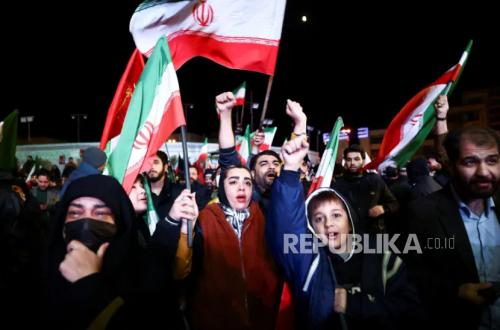
Iranian Foreign Minister Abbas Araqchi stated that Tehran would halt attacks on the condition that there are no further assaults on Iran and that transit routes in the Strait of Hormuz are coordinated by the Iranian side.
Although a breakthrough has been achieved, tensions in the region remain high. Several Gulf countries reported missile launches, drone activities, and civil defence alerts.
Oil prices have indeed fallen back below $100 per barrel, but they remain at elevated levels after a sharp surge in March. Despite the success of the ceasefire, geopolitical risks related to the Strait of Hormuz are expected to remain high in the near future under Iran’s control.
Trump also indicated that negotiations towards a long-term agreement are showing progress. He mentioned a 10-point proposal from Iran that he views as a workable basis for sustainable peace.
The Pakistani Prime Minister invited both parties to meet in Islamabad on Friday to negotiate a final agreement and resolve all disputes.
For now, the oil market is responding positively to these developments. However, volatility is expected to remain high as market participants continue to monitor the regional situation. The main factor of concern is the number of tanker ships transiting the Strait of Hormuz under this new agreement.