
Iran Bombs Qatar's Funding Source, Asian Stock Markets Mixed, Investors Confused
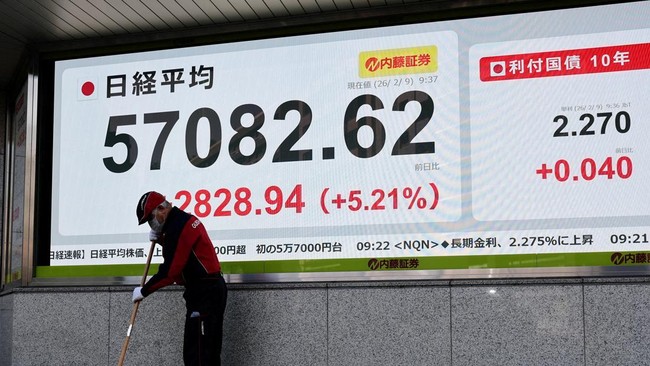
Asian stock markets moved in varied directions overshadowed by sentiment from escalating Middle East conflict. Geopolitical tensions in the region and energy supply disruptions continue to unsettle investors. Global sentiment leaning negative prompted selling actions in several major exchanges. In Japan, the Nikkei 225 index recorded the sharpest decline in the region, plummeting 1,866.87 points or 3.38% to 53,372.53. Meanwhile, China’s markets showed mixed results. The Shanghai Composite Index dipped slightly by 8.431 points or 0.21% to 3,998.121. In contrast, the Shenzhen Component Index strengthened by 170.348 points or 1.23% to 14,071.915. In Hong Kong, the Hang Seng Index also fell into the red, down 156.97 points or 0.62% to 25,343.61. This pressure reflects investor concerns over regional economic prospects. From Australia, the S&P/ASX 200 weakened by 58.60 points or 0.69% to 8,439.20. This decline aligns with weakening commodities and global sentiment. Unlike the majority of markets, South Korea recorded a gain. The KOSPI index rose slightly by 5.08 points or 0.09% to 5,768.30, supported by large-cap stocks. Citing CNBC International, Iran attacked the world’s largest gas plant in Qatar on Thursday, causing damage to energy supplies for several years ahead. This was in retaliation for Israel’s attack on its South Pars gas field. QatarEnergy CEO Saad al-Kaabi stated that the Iranian attack has destroyed 17% of the country’s LNG export capacity for the next 3-5 years. Retaliatory strikes on major oil and gas infrastructure across the Middle East have caused energy prices to surge. US natural gas prices last rose 1.5%, trading at US$3.112 per million British thermal units. Meanwhile, next-month RBOB petrol contracts on Nymex for April delivery rose nearly 1% to US$3.13, reaching a near four-year high. Oil prices fell as Brent crude futures, the international benchmark, declined 2% to US$106.45 per barrel. US West Texas Intermediate (WTI) futures dropped 1.56% to US$94.64. Saudi Arabia, one of the world’s largest oil producers, estimates prices could surge beyond US$180 per barrel if supply disruptions continue until the end of April. The market impact of this regional war has also spread to metals, with gold and silver each falling around 5% and 10% before trimming losses.