
Iran Begins Implementing $2 Million Toll per Tanker, Could Become Rich from Strait of Hormuz
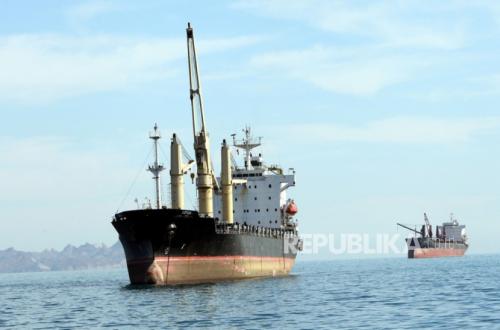
REPUBLIKA.CO.ID, TEHRAN – A member of the Iranian Council, Alaeddin Boroujerdi, on Sunday (22/3/2026) revealed that Tehran has begun implementing a $2 million US tariff for each tanker wishing to pass through the Strait of Hormuz. Reported by The Cradle on Tuesday (24/3/2026), Iran’s policy was described by Boroujerdi as a step towards a new “regime sovereignty” over the strategic sea route.
“Collecting $2 million US transit fees for ships passing through the strait (Hormuz) reflects Iran’s strength,” Boroujerdi told IRIB, adding that “war has costs.”
Boroujerdi, who is also a member of the parliamentary Committee on Foreign Policy and National Security, stated that the crossing tariff in the Strait of Hormuz reflects demands for control after decades of imposed norms that have now been reversed by US-Israel attacks on Iran.
Not only Iranian media, but Western outlets like Bloomberg and Lloyd’s List Intelligence have reported that Iran has begun implementing toll tariffs on tankers wishing to cross safely through the Strait of Hormuz.
The payments are reportedly requested by Iran based on specific destinations, where some ships have complied with the rules, effectively creating an informal toll payment system in one of the world’s most important energy corridors. The tariff collection mechanism remains unclear, including how ships make payments and what currency is used.
According to several Iranian officials, the implementation of tariffs in the Strait of Hormuz is part of a broader wartime approach to finance the financial burdens from ongoing military escalation and maritime security disruptions. Iranian President Masoud Pezeshkian stated that the Strait of Hormuz remains open, but only to countries considered friendly.
Iran currently permits ships from countries not involved in aggression to pass, while restricting those linked to nations involved in attacks on Iran. So far, at least only five countries—China, India, Turkey, Pakistan, and Thailand—have coordinated or negotiated directly with Iranian authorities to ensure safe passage.