
Iran Attacked by US and Israel: DKI Jakarta Provincial Government Ensures Food Stocks Remain Safe
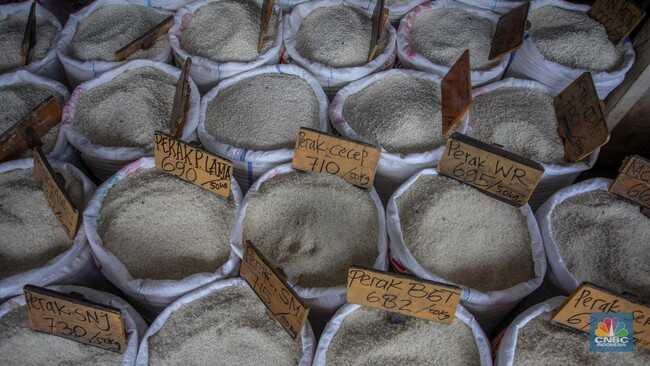
Jakarta – The DKI Jakarta Provincial Government has ensured that the availability of basic commodities for the community remains safe and sufficient during the holy month of Ramadan and approaching Eid al-Fitr 2026.
The statement was made by Elisabeth Ratu Rante Allo, Head of the Department of Industry, Trade, Cooperatives, Small and Medium Enterprises (PPKUKM) of DKI Jakarta Province, responding to the global geopolitical situation amid escalating conflict between the United States, Israel, and Iran, which could potentially affect international commodity prices.
“Based on forecasts of demand and food availability, all strategic commodities in Jakarta are in sufficient status with adequate reserves amid the intensifying US-Israel-Iran conflict,” Elisabeth stated in a press release from the DKI Jakarta Provincial Government.
Elisabeth confirmed that the DKI Jakarta Provincial Government has conducted detailed projections of basic commodity requirements for the Ramadan and Eid al-Fitr periods.
During this year’s Ramadan period, she acknowledged that food demand has indeed increased in Jakarta, particularly for chicken eggs, which rose approximately 7.5%, as well as beef and buffalo meat, and garlic which rose approximately 3.5%.
However, she emphasised that specifically for rice stocks, there are more than 100,000 tonnes available, far exceeding the requirement of around 68,000 tonnes.
“Meanwhile, chicken meat and beef also have reserves several times higher than monthly requirements. Similarly, sugar and cooking oil stocks have reached tens of thousands of tonnes and are declared sufficient,” Elisabeth said.
As is known, the Middle East conflict can influence commodity prices, as the region is a major producer of energy commodities that serve as the driving force for trading activities.
The Iranian government has also stated it will close the trade route through the Strait of Hormuz following the US-Iran attack incident that also resulted in the death of the highest leader of the mullahs’ nation, Ali Hosseini Khamenei. Closure of the Strait of Hormuz could result in a continued rise in global oil prices.
Based on trading data from the final week of February 2026, global oil prices showed dynamic movement but tended to be stable from early to mid-week. On Monday (23/2/2026), the global benchmark crude oil, Brent, opened at US$71.49 per barrel, whilst West Texas Intermediate (WTI) stood at US$66.31 per barrel.
Entering mid-week, prices experienced consolidation and touched US$70.75 per barrel for Brent and US$65.21 per barrel for WTI on Thursday (26/2/2026). Movement reversed at the close of trading on Friday (27/2/2026), where Brent closed strengthening approximately 2% at US$72.48 per barrel and WTI recorded a closing position at US$67.02 per barrel.
The price increase at the weekend indicated portfolio position adjustment measures by market participants before the market close. This step represents a form of risk mitigation against the potential development of the security situation in the Middle East during the weekend.
In line with these developments, a number of banking institutions have updated their energy market projections. Barclays, in its latest report, revised estimates of Brent forward oil prices from US$80 per barrel to approximately US$100 per barrel.
The revision of this projection is based on calculation of logistical risks in Middle Eastern waters, particularly the Strait of Hormuz. Based on industry data, approximately 20% of total global oil consumption is distributed through the waterway connecting the Persian Gulf with the Gulf of Oman and the Arabian Sea. The potential for obstruction or disruption to this distribution route becomes a major risk factor anticipated by the commodity market.