
Iran Allows Ships from Thailand and Five Other Countries to Pass Through the Strait of Hormuz: What About Indonesia?
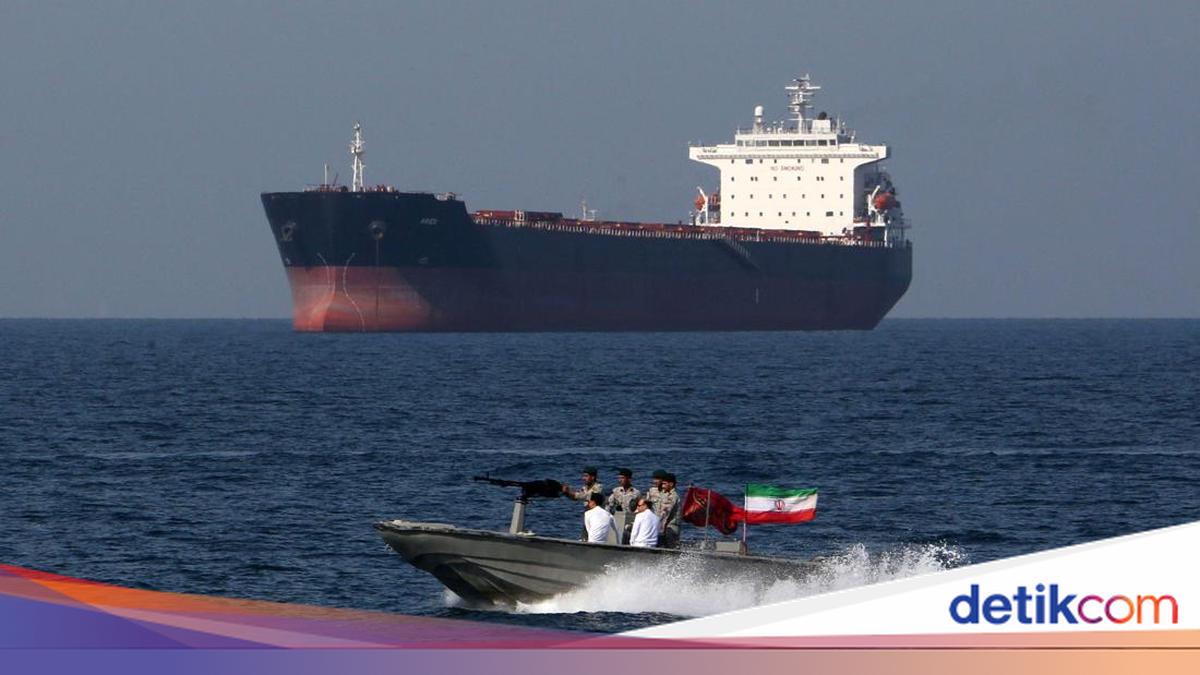
A Thai oil tanker successfully crossed the Strait of Hormuz safely following diplomatic coordination between the Thai government and Iran, according to Thailand’s Foreign Minister, Sihasak Phuangketkeow. Sihasak stated that the tanker owned by Bangchak Corporation crossed the strait on Monday (23/03) after discussions with Iran’s Ambassador to Thailand, Nasereddin Heydari. “I asked whether Thai ships needing to pass through the strait could be assisted to ensure safe navigation,” said Sihasak. “They replied that they would handle it and asked us to provide a list of ships that will cross,” he added, as quoted by the Bangkok Post. The safe passage of the Thai tanker occurred two weeks after another Thai-flagged carrier, Mayuree Naree, was struck by a projectile in the strait on 11 March. Which countries’ ships are allowed to cross the Strait of Hormuz? Speaking to an Iranian state television station, Foreign Minister Abbas Araghchi emphasised that the Strait of Hormuz is not completely closed. “Many ship owners, or countries owning those ships, have contacted us and requested that we ensure the safety of their navigation through the strait,” Araghchi said, as quoted by Reuters. “For a number of countries we consider friendly, or in certain cases that we deem necessary, our armed forces have provided safe escort,” he added. “As you can see in the reports: China, Russia, Pakistan, Iraq, and India. Two Indian ships crossed a few nights ago, as well as from other countries, even Bangladesh, I believe. These countries have talked and coordinated with us, and this will continue in the future, even after the war ends,” he continued. Data from shipping tracker Kpler shows only 99 ships have passed through the narrow strait this month, or an average of five to six ships per day. Before the war, around 138 ships crossed the strait daily, according to data from the Joint Maritime Information Centre. Those ships are relied upon to carry one-fifth of global oil supplies. BBC analysis shows that about one-third of recent passages through the Strait of Hormuz were by ships linked to Iran. Among them are 14 ships sailing under the Iranian flag and several other vessels sanctioned for alleged connections to Tehran’s oil trade. Nine other ships are owned by companies based in China. Six ships are recorded as heading to India as their final destination. Several ships that have successfully crossed the Strait of Hormuz appear to have chosen longer routes than usual. Tracking data for a Pakistani-flagged tanker shows the ship sailed closer to Iran’s coast on 15 March, instead of taking the usual central route through the strait. ‘No access for enemies’ Araghchi also stated that ships related to countries considered enemies or parties involved in the current conflict will not be allowed to pass. He said that ships from the United States, Israel, and several Gulf countries playing a role in the ongoing crisis will not be permitted transit. “We are in a state of war. This region is a war zone, and there is no reason to allow enemy ships and their allies to pass. However, the strait remains open to others,” he said on Wednesday (25/03). Araghchi’s remarks align with a statement posted by Iran’s representative to the UN. In a post on X, Tehran stated that “non-hostile ships” will be allowed to cross the Strait of Hormuz, provided they coordinate with “Iranian authorities.” Ships that have successfully crossed the Strait of Hormuz since the beginning of this month include those from China, India, and Pakistan. Instead of using the two narrow transit corridors closer to Oman, ships are now diverting further north, passing through Iran’s territorial waters north of Larak Island, allowing Iranian forces to monitor and control maritime traffic. What about Indonesian ships? As of 26 March 2026, two Pertamina tankers owned by Indonesia are still held up in the Arabian Gulf and have not been able to pass through the Strait of Hormuz. They are the PIS VLCC Pertamina Pride and Gamsunoro. According to the MarineTraffic website, the Pertamina Pride was detected north of Dammam City, Saudi Arabia. Meanwhile, the Gamsunoro is near the coast of Kuwait and Iraq. Based on a statement from Pertamina International Shipping, the Pertamina Pride is carrying cargo for national energy needs. Meanwhile, Gamsunoro is serving transportation for third-party partners (non-Pertamina). “The safety of the crew and cargo is our priority. The Pertamina Group operates 345 ships, so this situation is ensured not to disrupt domestic energy supplies,” said Vega Pita, Acting Corporate Secretary of Pertamina International Shipping, via the official Instagram account @pertaminainternationalshipping. Indonesia’s Ministry of Foreign Affairs is currently communicating with Iranian authorities to allow the two Pertamina ships to cross the Strait of Hormuz.