
Iran Allows Japanese Ships to Pass Through Strait of Hormuz: What Agreement Exists?
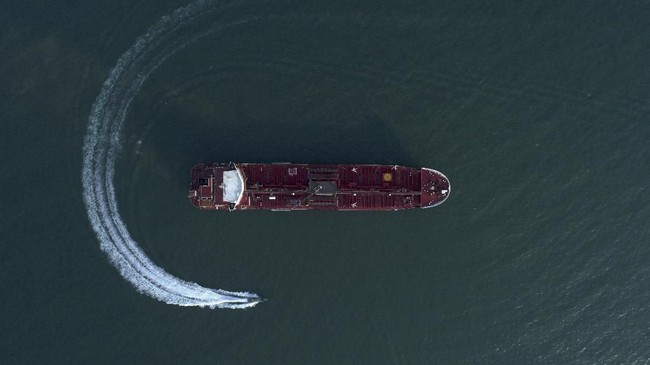
Iran is prepared to allow ships associated with Japan to pass through the Strait of Hormuz, a strategic route serving as the main conduit for approximately 93% of Japan’s crude oil imports.
Iran’s Foreign Minister Abbas Araghchi revealed that discussions on this policy have commenced between the two countries. This was stated in a transcript of his interview with Kyodo News, uploaded via his Telegram account on Saturday. He noted that the issue was also addressed in a telephone conversation with Japan’s Foreign Minister Toshimitsu Motegi last Tuesday.
Speaking on a television programme on Sunday, Motegi declined to detail the contents of the talks. However, he indicated that the discussions centred on the importance of maintaining smooth trade.
“I emphasised that the safety of these ships is extremely important from Japan’s perspective, as so many ships are involved, and we believe it is crucial to create a situation where all those ships can pass through,” Motegi said, quoted from the Japan Times on Monday (23/3/2026).
In a diplomatic breakthrough with Tehran, Motegi stated on the same television programme that one of two Japanese nationals previously detained in Iran was released last Wednesday. The individual then travelled via Azerbaijan before arriving in Japan on Sunday.
The reopening of the Strait of Hormuz following its effective closure amid the US-Israel conflict against Iran has become a major concern for Japan.
However, Iran’s Foreign Minister Abbas Araghchi denied that the vital route has been completely closed. In the interview transcript, he affirmed that the Strait of Hormuz remains open.
“The strait is only closed to ships belonging to our enemies, countries that attack us. For other countries, ships can pass through the strait,” he said.
Regarding ship safety issues, the senior Iranian diplomat stated that Iran is “ready to provide a safe passage for them.”
“They just need to contact us to discuss how this route will proceed,” he said.
When asked whether the Japanese government has formally requested permission to cross the strait, Araghchi declined to comment, stating that talks are ongoing.
While most Group of Seven (G7) member countries maintain somewhat tense relations with Iran, Japan continues to uphold relatively friendly ties with Tehran. This situation is seen as providing Tokyo with greater diplomatic influence compared to other G7 nations.
Araghchi’s statement comes amid escalating pressure from the United States. US President Donald Trump previously demanded that Iran open the Strait of Hormuz within 48 hours or face serious consequences.
In a social media post on Saturday, Trump warned that if Iran does not open the route without threats, the US will take military action.
“If Iran does not fully open, without threats, the Strait of Hormuz within 48 hours, the United States will attack and destroy various power plants of theirs, starting with the largest first,” he wrote.