
IPC TPK Records 6.7 Per Cent Throughput Growth Through April 2026
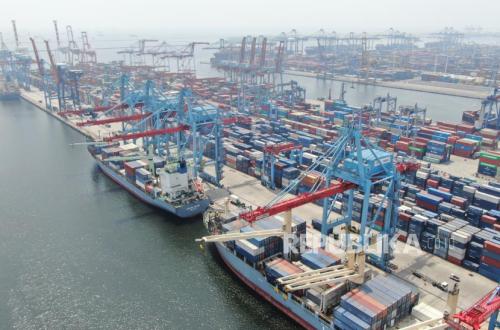
IPC Terminal Petikemas (IPC TPK) opened Q2 2026 with an improvement in operational performance. Throughput realised up to April 2026 reached 1,159,575 TEUs, up 6.7 per cent from the same period last year (1,086,766 TEUs).
The throughput increase for IPC TPK aligns with the trend of national trade growth. Data from the Badan Pusat Statistik (BPS) shows Indonesia’s imports for January–March 2026 grew 10.05 per cent year on year, while the national trade balance remained in surplus of 5.55 billion US dollars.
On the other hand, global supply chain dynamics continue to face various challenges, including rising logistics costs and uncertainty in international shipping routes due to escalation of conflict in the Middle East region. This condition also affects global shipping activity and prompts adjustments to several international maritime routes.
Nevertheless, IPC TPK continues to maintain service reliability and operational efficiency to ensure smooth goods flows.
Senior Manager of Corporate Secretariat IPC TPK, Daniel Setiawan, said the company continues to maintain service optimisation and operational efficiency to support smooth distribution of logistics nationwide.
“Optimization and service efficiency we continue to maintain to support the smooth flow of goods and to safeguard the competitiveness of national logistics,” said Daniel.
Year on year, the performance improvement in April 2026 was very significant, at 26.78 per cent compared with the same period last year. In April 2026, operational performance reached 308,810 TEUs, up from 243,579 TEUs in April 2025.
The highest increases occurred in the Tanjung Priok region, particularly IPC TPK Area Tanjung Priok 2 which grew 36.7 per cent and Area Tanjung Priok 1 by 24.3 per cent. The growth was driven by additional ad hoc services and higher volumes from several shipping lines.
Meanwhile, IPC TPK Area Palembang also recorded growth of 18.7 per cent as exports and imports of several commodities such as rubber, wood products, coconuts, and metal boxes rose.