
IPB Professor Explains Palm Oil Planting Issues in Duta Palma Trial
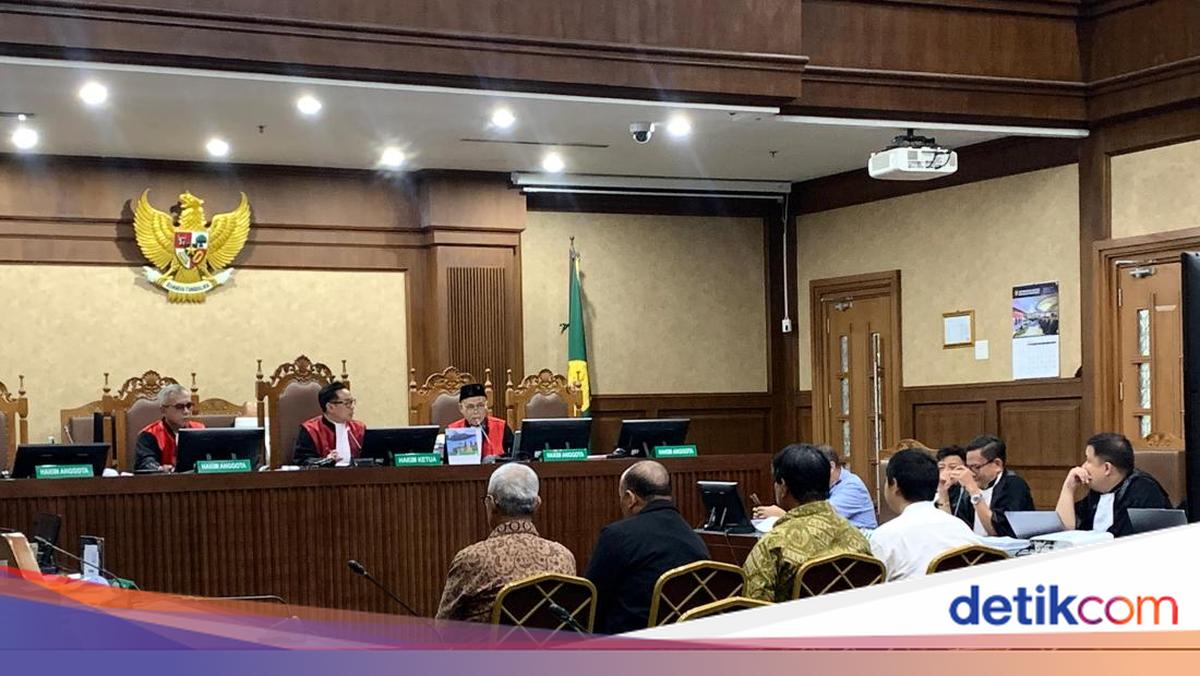
Professor Bambang Hero Saharjo from IPB University outlined his findings in the alleged corruption case of illegal palm oil plantations involving the corporate defendant PT Duta Palma Group. He stated that the deviations occurred because there was no permit for changing the forest function before the palm oil planting was carried out by Duta Palma Group.
This was conveyed by Bambang Hero when presented by the prosecutor as an expert at the Central Jakarta Corruption Court on Friday (8/5/2026). Initially, the prosecutor asked Bambang Hero to explain the deviations identified from the corporate defendant Duta Palma Group, namely PT Palma Satu, PT Seberida Subur, PT Banyu Bening Utama, PT Panca Agro Lestari, and PT Kencana Amal Tani.
“So the first one is PT Banyu Bening Utama, so the results of field verification and so on, first it was proven that palm oil planting had occurred in the forest area, which means it had physically changed that area into a palm oil plantation intentionally and systematically,” said Bambang.
He said the planted palm oil was already fruiting. He mentioned that the company also carried out road compaction in the forest area using sand and stones.
“This is strengthened by the finding of planted and fruiting palm oil, then there is road compaction, then using sand and stones done intentionally. The palm oil plantation there is guarded by the company’s security,” he stated.
Bambang said there was no document stating the change of forest function to non-forest area. He also mentioned there was no permit for releasing the forest area from the Forestry Minister.
In addition, he said, there was a letter from the Regent of Inhu number 122 dated 11 March 2011 regarding the report of non-procedural use of forest areas. He stated that palm oil could be planted, as long as it follows the rules.
“No document was found stating that there had been a change of forest function to non-forest area, so palm oil can be planted according to what, the legislation, this must first change its function,” said Bambang.
He said similar deviations were also found in PT Seberida Subur. He stated that PT Seberida Subur did not have a Hak Guna Usaha (HGU).
“There is also a clear written report that the forest area where PT Seberida Subur stands consists of convertible production forest of 2,269 hectares and production forest of 3,897 hectares without a permit for releasing the forest area from the Forestry Minister and also in the written report of Decree 89 2007 dated 26 February 2007, PT Seberida Subur has obtained IUP permit, location permit and on the same day, namely 26 February 2007. Then subsequently does not have HGU,” he explained.
Bambang explained the deviations from PT Kencana Amal Tani. He said PT Kencana had also intentionally changed the physical forest area into a palm oil plantation.
Bambang also said that PT Panca Agro Lestari and PT Palma Satu committed the same deviations, namely lacking permits for releasing forest areas. The identification of these deviations, he said, was strengthened by field findings of planted and fruiting palm oil.
“There is also a clear written report that the forest area where PT Panca Agro Lestari stands consists of convertible production forest in Danau Rumbai Penyaguhan Village, Batang Gansal Subdistrict, Inhu Regency, of 3,147 hectares and does not have forest area release. There is a location permit of 3,000 hectares,” said Bambang.
Bambang highlighted PT Palma Satu which has an Izin Usaha Perkebunan (IUP). He assessed that the IUP should not have been granted because there was no permit for changing the forest area function.
“In the Regent of Inhu Letter 122 of 11 March 2011 there is a report of non-procedural use of forest areas and then the written letter attachment clearly states that the forest area where PT Palma Satu stands consists of convertible production forest of 6,341 hectares, HPT 7,651 hectares and does not have a permit for releasing the area from the Forestry Minister,” he said.
He stated that palm oil is an agricultural crop. He said palm oil must not be planted in areas that still have forest status.
“For me, it’s simple. One, what is called palm oil is an agricultural plant and it is not part of forestry plants. So, it is forbidden to plant it in forest areas because that’s not the place for it,” said Bambang.
This Professor of Forestry and Environment at IPB said that palm oil planting could be done. As long as, he said, there is a change of forest function according to the rules.
“If you want to do it right, please do, because the opportunity to do the change of function is in Article 19 of Law 41 of 1999. And for us, of course, it’s strange then without changing the function but having IUP, HGU and so on. That’s it actually,” he said.
In this case, PT Palma Satu, PT Seberida Subur, PT Banyu Bening Utama, PT Panca Agro Lestari, and PT Kencana Amal Tani are represented by Tovariga Triaginta Ginting as the director of all five companies. Meanwhile, PT Darmex Plantations and PT Asset Pacific are represented by Surya Darmadi as the beneficial owner of both companies.
PT Duta Palma Group is charged with violating Article 2 paragraph (1) or Article 3 in conjunction with Article 20 in conjunction with Article 18 of the Corruption Eradication Law and Article 3 or Article 4 in conjunction with Article 7 of Law Number 8 of 2010 on the Prevention and Eradication of Money Laundering Crimes in conjunction with Article 55 paragraph (1) first of the Criminal Code.