
IPB: Palm Oil Waste Has Potential to Become High-Value Products
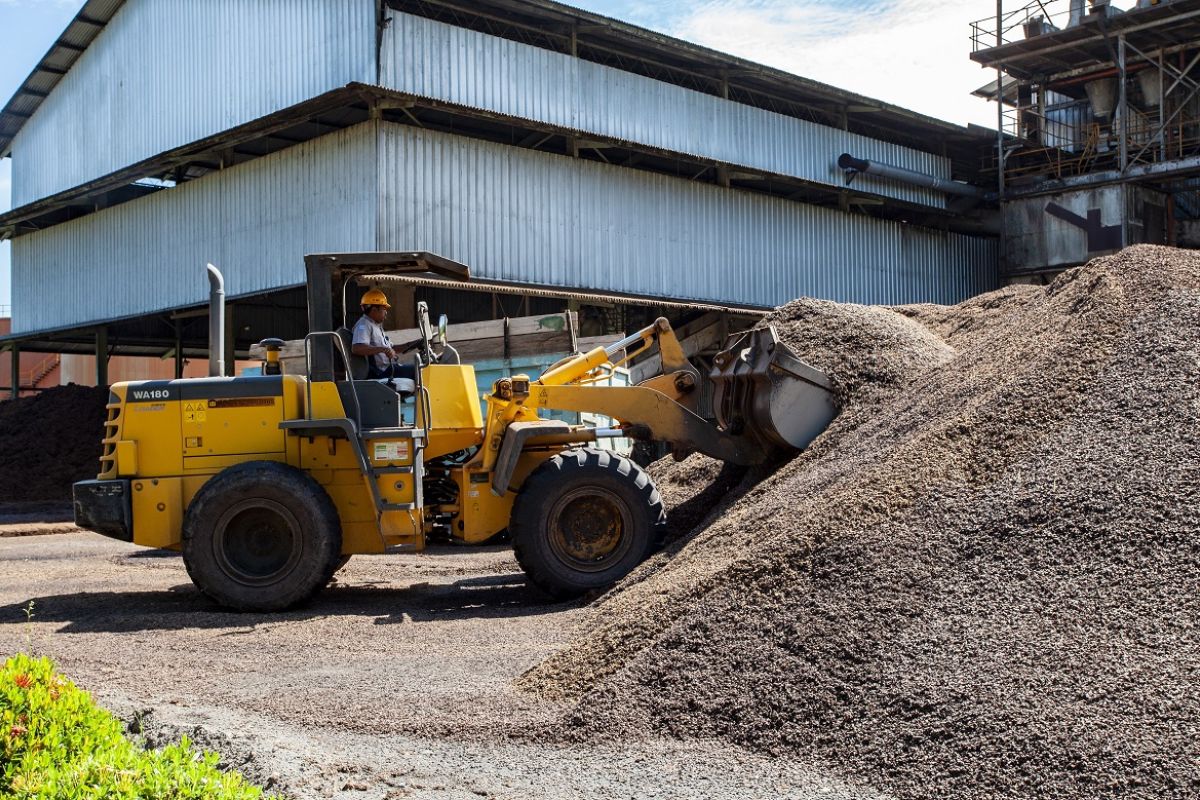
IPB University states that palm oil waste has great potential to be utilised as economically high-value added products, given its abundant availability in Indonesia. According to Professor Yanto Santosa from the Faculty of Forestry at IPB University, palm oil waste can be processed into various products with high economic value and environmental friendliness through the application of appropriate technology. “Palm oil waste has great potential to be utilised as products with added economic value. If not managed properly, palm oil waste can cause problems that impact environmental sustainability,” he said in Jakarta on Sunday. He explained that optimising the potential of palm oil waste offers several benefits, such as increasing economic added value, creating new business opportunities, supporting the circular economy concept, and producing renewable energy. Palm oil is a strategic national commodity that serves as real evidence of a zero-waste commodity, he continued, as a zero-waste commodity, every part of the palm oil can be processed into various added-value products to meet human needs. The Indonesian government, he added, has an important role in encouraging the implementation of the zero-waste concept in the palm oil sector to utilise all production results and waste so that no waste is discarded and pollutes the environment. He stated that the Plantation Fund Management Agency (BPDP) needs to collaborate with various research institutions to encourage innovation in palm oil waste management in Indonesia. “Collaboration between BPDP and research institutions will provide various benefits,” he said in his statement. Meanwhile, Executive Director of the Palm Oil Agribusiness Strategic Policy Institute (PASPI), Tungkot Sipayung, emphasised that utilising the potential of palm oil waste shows that the national palm oil industry is zero-waste while implementing a circular economy. Therefore, he disagrees if it is said that palm oil has waste because every part of the plant has economic value. According to him, what is correct is that there is a main product, namely CPO and CPKO, as well as by-products that are often referred to as waste. These by-products are numerous in type, from the plantation level to downstream. Tungkot explained that to date, these derivative/by-product items from the palm oil industry are still categorised as waste in environmental regulations, even some are classified as hazardous and toxic waste (B3). This classification as waste is a barrier to commercialisation because it requires permits and special industrial treatment. “Yet, what is B3 about it because everything is from organic material,” he said. He stated that if those environmental regulations are corrected, the industry for utilising palm oil by-products/derivatives will develop rapidly and produce many high added-value products, thus having a positive impact on the national economy, such as increasing foreign exchange and opening up employment opportunities. “In addition, the emission calculation (carbon footprint) of palm oil products will be even lower (low carbon), so the overall palm oil industry is a low-carbon renewable product,” he said.