
IPB Expert: Implementation of B50 Requires Strengthening the Energy Funding System
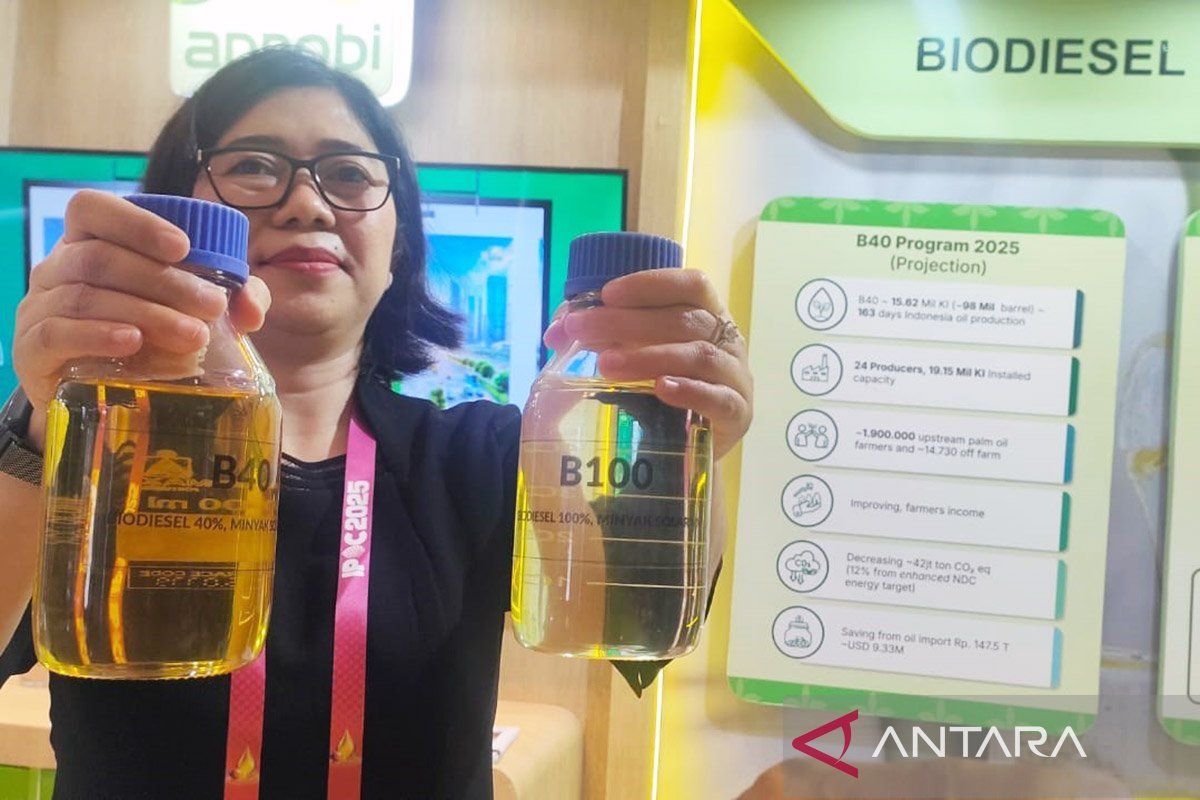
Jakarta (ANTARA) - Professor from the Faculty of Forestry and Environment at IPB University, Sudarsono Soedomo, assesses that the success of implementing B50 biodiesel fuel heavily depends on the national energy funding system. “The success of the programme greatly depends on the stability of the closed financing mechanism (self-financing) that has supported Indonesia’s biodiesel programme thus far,” Sudarsono stated in Jakarta on Friday. He noted that the national biodiesel programme has operated without direct APBN subsidies, instead relying on funds from palm oil industry levies managed by the Badan Pengelola Dana Perkebunan Kelapa Sawit (BPDPKS). This scheme, he continued, makes the programme relatively fiscally independent but vulnerable to cash flow disruptions when exports decline due to increased domestic consumption. “B50 is not merely about increasing the fuel blend percentage, but testing whether the internal funding system can continue to operate without relying on the APBN,” he said. In terms of production, the national palm oil industry is deemed capable of meeting the additional needs for B50. Indonesia’s crude palm oil (CPO) production is around 47-50 million tonnes per year, while the additional requirement for B50 is estimated at only 8-10 million tonnes. However, implementation readiness is not determined solely by raw material availability. When more CPO is diverted to the domestic market, export levy receipts automatically decrease. Sudarsono said this condition could pressure biodiesel fund liquidity and cause payment delays to producers, ultimately hindering production. “Industry will not increase production if payments are uncertain,” he stated. The national biodiesel production capacity has actually reached around 12–14 million kilolitres per year, but effective utilisation is still 60–70 percent. He assesses that the main obstacle is not physical capacity, but cash flow certainty. Therefore, the government needs to ensure payment predictability so that the industry dares to operate optimally. Besides financial factors, the transition to B50 also presents technical challenges, from fuel oxidation stability and engine compatibility to potential increases in nitrogen oxide emissions. The elevation of these technical standards implies higher production costs and a widening price gap between biodiesel and fossil diesel. Sudarsono encourages strengthening the domestic additives industry, standardising storage systems, and implementing gradual regional-based rollouts before full national application to maintain energy supply stability. He also highlighted the price disparity in the Domestic Market Obligation (DMO), which is around Rp14,300 per litre, while CPO prices are higher. In his view, the DMO scheme needs gradual adjustment through an indexed pricing mechanism to remain flexible without burdening the APBN. “The government can implement limited price pass-through in the non-subsidised sector, while households remain protected through automatic stabilisation mechanisms,” Sudarsono said.