
IPB commemorates Sajogyo's 100th birth anniversary through reflections on village development
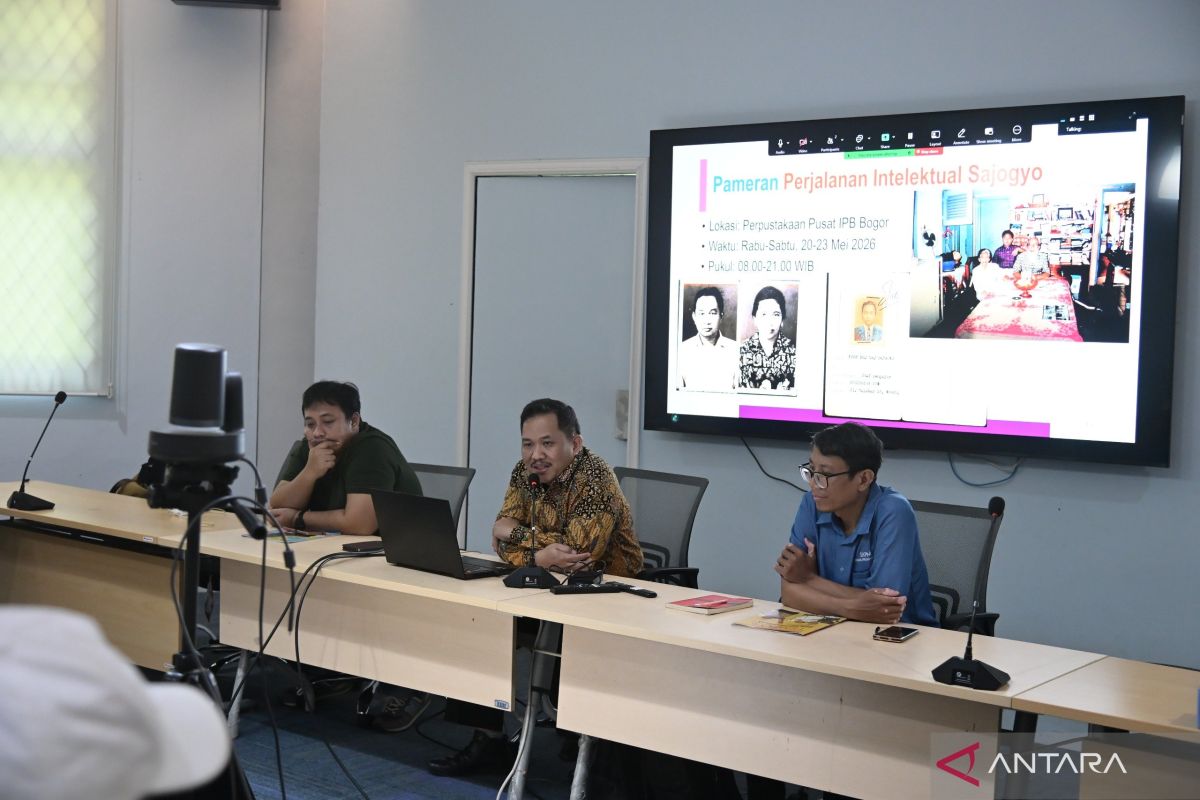
Bogor Regency, West Java — IPB University marked the 100th birth anniversary of Indonesian rural sociology figure Sajogyo with reflections on village development and community empowerment at the IPB Dramaga Campus, Bogor Regency, West Java, on Tuesday.
Head of the Center for Agricultural and Rural Development Studies (PSP3) at IPB University, Ivanovich Agusta, said that many of Sajogyo’s ideas remain relevant today, particularly those related to development that benefits marginalised groups.
“Generally speaking, development should be aimed at the weaker sections of society. That remains valid today,” he said.
He noted that Sajogyo also stressed the importance of equitable development and community participation in managing village programmes, including through village funds (dana desa) that residents can manage directly. “In villages, there should continue to be village funds that can be managed by residents rather than many other things being managed by the state without citizen participation,” he added.
Ivanovich explained that Sajogyo’s ideas have been widely adopted in national policy. One example is Sajogyo’s poverty line based on the purchasing power of rice, introduced in 1977 and subsequently used by the Central Statistics Agency (BPS) since 1984. “He looked from the bottom up, while today much policy has been top‑down,” he said.
He argued that the participatory, community-based development approach championed by Sajogyo remains relevant amid challenges such as social inequality, food crises, and village development today.
According to Ivanovich, Sajogyo, together with economist Mubyarto, also served as part of the expert staff of the National Development Planning Agency (Bappenas) in 1993 and advocated the formation of community self-help groups to manage funds under the Desa Tertinggal Instruction (IDT). “That means if the government is keen to empower communities, it can be implemented directly,” he said.
Sajogyo, born in Karanganyar, Central Java, on 21 May 1926, is known as the Father of Indonesian Sociology and served as IPB Rector from 1964–1965. He is widely known for the concept of ‘modernisation without development’ after criticising the Green Revolution’s impact, which benefited upper‑tier farmers and displaced rural workers. In addition to formulating a poverty line based on rice’s purchasing power, Sajogyo was known for consistently advocating development that favours the rural poor through a participatory approach.
Ivanovich noted that one of Sajogyo’s aspirations that remained unfulfilled until his death was to write the history of villages in Indonesia since the very formation of desa. “That work was not completed,” he said.
The 100th birth anniversary celebrations at IPB run from 18–23 May 2026, with activities such as an international conference, a book launch, exhibitions of intellectual journeys, displays of farmers’ products, and campus tours. The international conference, titled “Autonomous Social Sciences and Alternative Development in Times of Multiple Crises,” will bring together academics from various countries to discuss Sajogyo’s legacy on alternative development, climate crises, and food sovereignty.