
Invisible Hopes: Synopsis, Facts and Impact of the Documentary on Children in Prison
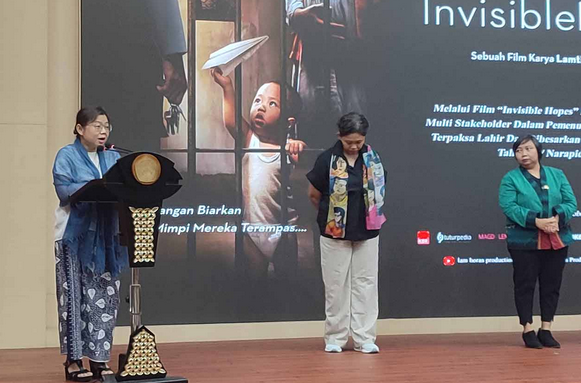
In celebration of International Women’s Day, the documentary Invisible Hopes (2021) remains one of Indonesia’s most influential cinematic works addressing humanitarian issues behind bars. Directed and produced by Lamtiar Simorangkir through Lam Horas Film, the documentary focuses on the lives of children born to incarcerated mothers who must spend their early years inside prison facilities. Invisible Hopes portrays the reality at Pondok Bambu Detention Centre and Prison in Jakarta, as well as several other prisons across Indonesia, showing how newborns live squeezed into cramped cells with their mothers and fellow inmates. Without dedicated treatment or adequate health facilities, these children become the ‘invisible victims’ of a justice system that has not fully safeguarded the best interests of the child. The narrative is built from Lamtiar’s own fieldwork in prisons in 2017. He found that many children even interpret the prison bell as an instruction to enter a cell, a strong indication that they have positioned themselves as detainees from an early age. Since its release, the film has earned prestigious accolades and sparked a national discourse on legal reform: one of the most startling findings is the absence of any state budget allocation for the basic needs of pregnant women and babies in detention. This forces incarcerated mothers to work harder inside the prison to meet their own nutritional needs and those of their children. As of 2026, Invisible Hopes continues to be used as an advocacy tool. On International Women’s Day 2026, the film was re-screened to urge the government and the police to pursue restorative approaches, such as suspending detention for pregnant mothers, to guarantee the rights to growth and development of children. Human rights organisations such as KPAI, Komnas Perempuan, and Komnas HAM continue to monitor the recommendations arising from the film so that the state provides concrete solutions for children who should not bear the burden of their parents’ punishment. The film is frequently shown at community screenings (roadshows), documentary film festivals, and on several indie/documentary streaming platforms such as MUBI or Bioskop Online, subject to the latest licensing. Lamtiar Simorangkir, the director and producer, is an activist and filmmaker focusing on social issues and human rights. Under Indonesian regulations, a child may stay with their mother in prison up to the age of two. However, facilities are often deemed inadequate for optimal growth and development. This article is evergreen and will be updated in line with policy developments on child protection in Indonesia. International Women’s Day is observed on 8 March each year, since the United Nations designated it 50 years ago.