
Investors Begin to Believe Conflict is Subsiding, Asian Bourses Surge Higher
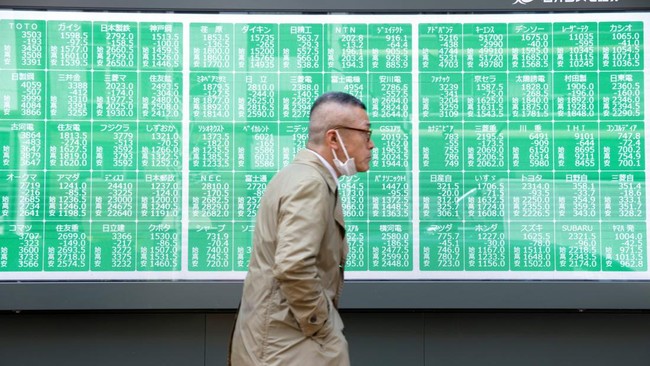
Jakarta, CNBC Indonesia — Asia-Pacific bourses returned to positive territory as investors assessed evolving geopolitical developments in the Middle East on Wednesday (11 March 2026).
Australia’s S&P/ASX 200 Index advanced 0.35% in early trading. Japan’s Nikkei 225 Index surged 1.36%, whilst the Topix gained 1.22%. South Korea’s Kospi Index climbed 2.52%, whilst the small-cap Kosdaq Index rose 1.39%.
Additionally, Hong Kong’s Hang Seng Index futures traded at 25,936 compared with the index’s last close of 25,959.9.
Crude oil prices, which had spiked to nearly US$120 per barrel on Monday amid concerns regarding Iranian conflict, retreated from their peak as market participants grew optimistic that a coalition of nations would deploy emergency crude oil reserves to reduce disruptions stemming from the conflict.
US crude oil prices most recently rose 3.24% to US$86.15 per barrel.
David Johnson, chief executive of financial services firm Vervent, stated that the direct economic impact of oil price shocks functions as a tax on the economy.
“When energy prices surge, households spend more on fuel and utilities and less on other goods, which quietly dampens consumer demand across the broader economy,” he commented on Tuesday (11 March 2026).
Overnight in the United States, the S&P 500 declined slightly amid volatile trading as oil prices fell and traders continued monitoring Iranian conflict developments.
The broad market index fell 0.21% to 6,781.48. The Dow Jones Industrial Average declined 34.29 points, or 0.07%, and closed at 47,706.51. The Nasdaq Composite rose marginally 0.01% to 22,697.10.
Earlier in the trading session, the Dow Jones had fallen as much as 296.57 points, or 0.6%, whilst the S&P 500 and Nasdaq each declined 0.5% and 0.4% respectively to their session lows.