
Investor Interest in ASEAN Countries Increases, Inflows Reach Record US$225 Billion
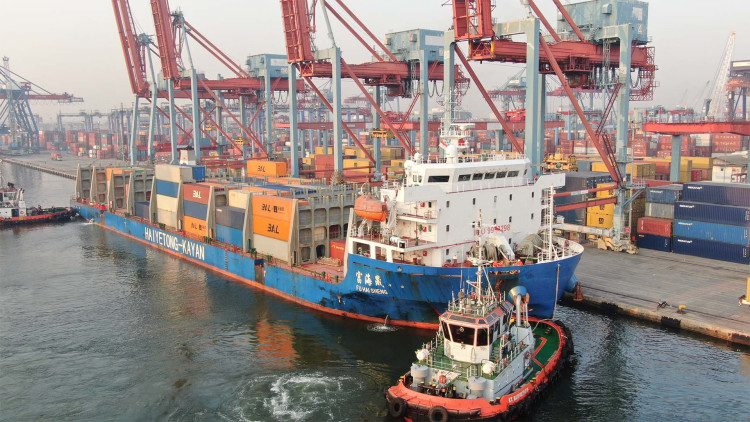
Ten countries from the Asia-Pacific region feature in this year’s Kearney FDI Confidence Index, making it the region with the highest representation compared to others. The United States tops the index, followed by Canada, Japan, and China, while Singapore holds the 8th position globally. Meanwhile, FDI inflows into the ASEAN market reached a record US$225 billion in 2024.
“Capital flows continue unabated, but companies are now more selective in choosing investment destinations, as they weigh technological capabilities, geopolitical risks, and the growing influence of industrial policies,” said Erik R. Peterson, Partner and Managing Director at Kearney Global Business Policy Council and co-author of the report.
In the 2026 developing markets ranking, Thailand improved from 10th to 6th place, while Malaysia rose from 11th to 7th. Indonesia, on the other hand, sits at 13th, down one spot from the previous year.
Key drivers of FDI attractiveness in Southeast Asian countries include improvements in ease of doing business, workforce quality, and economic performance. Thailand, for instance, is known for its skilled labour in manufacturing sectors such as automotive, food processing, and services. Malaysia’s workforce is more concentrated in high-value-added industries like semiconductors, technology, and services. Indonesia’s main attractions for FDI are supported by its large domestic demand and abundant natural resources.
Amid escalating conflicts in the Middle East that add layers of uncertainty to the global investment environment, 87% of survey respondents remain as optimistic or even more optimistic about Indonesia.
This optimism is driven by several key factors that make Indonesia an attractive investment destination. Investors highlight talent and workforce skills (28%) as the primary factor. As the world’s fourth most populous country—with nearly 288 million people—Indonesia offers a vast workforce and domestic market, providing a demographic advantage that supports sustainable economic growth.
Additionally, investors point to natural resources (28%) as another major factor. As the world’s largest nickel producer, Indonesia continues to leverage its resource strengths. In 2025, the basic metals sector recorded the highest FDI realisation at US$14.6 billion, followed by mining at US$4.7 billion.
These are followed by economic performance (27%), ease of doing business (25%), and technological innovation (21%), while transparent governance and low corruption levels (19%) are relatively the least influential factors for investors considering Indonesia compared to other Asian countries.
This reinforces the positive trend in Indonesia’s investment performance, which was solid in the first quarter of 2026 with realisations reaching Rp498.79 trillion, equivalent to 100.36% of the government target and up 7.22% year-on-year. The composition of investments between FDI and domestic investment (PMDN) is relatively balanced, each around 50%, with the largest contributions from Singapore (US$4.6 billion), Hong Kong (US$2.7 billion), China (US$2.2 billion), the United States (US$1.7 billion), and Japan (US$1 billion).
“Indonesia has implemented coordinated strategies that combine industrial policies, regulatory reforms, targeted incentives, and investment targets to deepen industrial downstreaming and increase value added. These efforts also include ongoing simplification of regulations and investment licensing to reduce bureaucracy, as well as channelling capital into priority sectors such as electric vehicles (EV), renewable energy, infrastructure, and digital through various incentives to actively encourage both foreign and domestic investment,” said Shirley Santoso, President Director of Kearney Indonesia and co-author of the report in an official statement on Friday (24/4).
Geopolitical Risks and Industrial Policies Reshape the Investment Map
Business leaders remain cautious about rising global risks despite strong investment intentions. Geopolitical tensions are seen as the most likely development in the next year (36%), followed by commodity price increases and political instability in advanced markets (30%).
At the same time, industrial policies are playing an increasingly important role in shaping investors’ decisions. According to the survey, 84% of investors say industrial policies are important or very important in determining where they invest, and 57% believe they positively impact their companies’ business performance. However, nearly nine out of ten investors report at least moderate business risks caused by competing national industrial policies. This underscores the complexity arising from overlapping policy frameworks.
In Asia, this dynamic is particularly prominent as governments actively implement industrial policies to compete in strategic sectors like semiconductors, EVs, and green energy, while facing increasing geopolitical fragmentation. Countries like China, Japan, and Singapore continue to bolster investor confidence through policy stability and strong institutional frameworks, while emerging Southeast Asian economies such as Vietnam, Thailand, and Malaysia have successfully attracted supply chain diversification flows in the ‘China+1’ strategy.
“Indonesia is at a pivotal point in this landscape. To maintain and sustain…”