
Investment Ministry Prepares Post-Audit Licensing Breakthrough to Accelerate Permits
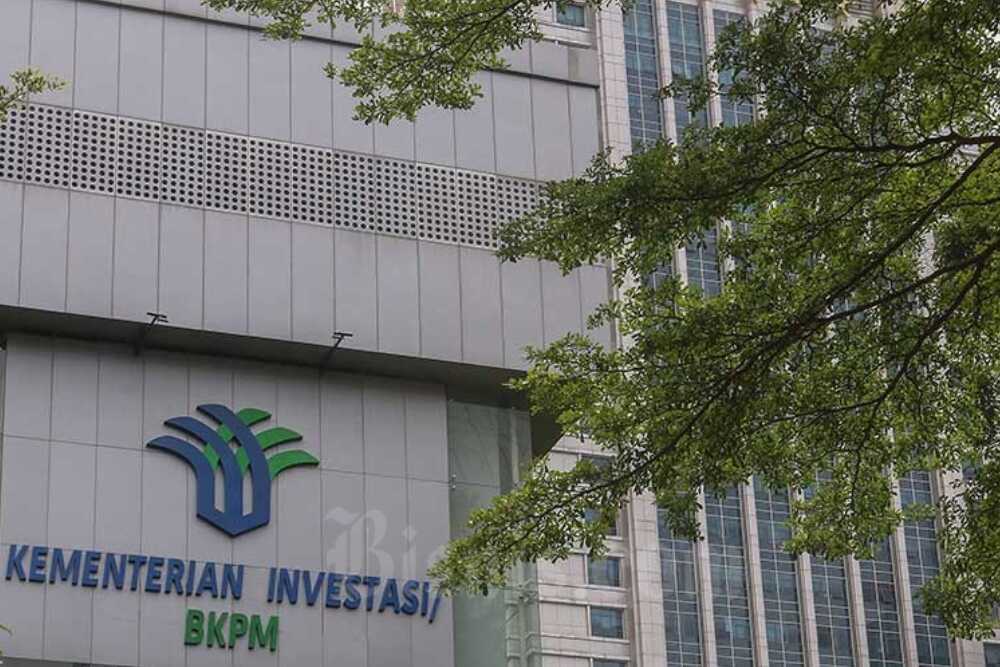
JAKARTA — The Ministry of Investment and Downstream Industries/Investment Coordinating Board (BKPM) is preparing a breakthrough in business licensing reform, including the implementation of a post-audit scheme whereby audits are conducted after permits have been issued.
Deputy Minister of Investment and Downstream Industries/Deputy Head of BKPM Todotua Pasaribu revealed that the government will push for faster issuance of business permits, particularly in industrial estates, special economic zones (SEZs), and free trade zones, by placing audit or verification processes after permits are granted.
“If investors are ready to enter, we issue the permit straight away, but the basic requirements will be post-audited,” he said during a Public Consultation on Draft Licensing Regulations on Thursday (3 July 2025).
According to Todotua, this scheme can accelerate investment inflows whilst providing legal certainty for business operators. With this model, he is confident that prospective investors will no longer flee.
He disclosed that many prospective investors have previously withdrawn their interest in investing in Indonesia due to convoluted and time-consuming licensing processes.
“We must make breakthroughs. We cannot allow the business cycle to pass and investments to be cancelled because permits only come through two or three years after application,” he stressed.
For investments in industrial estates or SEZs specifically, the scheme is expected to serve as a pilot for broader licensing reform across other sectors. Todotua also noted that BKPM has coordinated with the Coordinating Ministry for Economic Affairs to push for implementation of the policy.
Todotua emphasised that licensing reform is key to achieving the government’s investment targets. He stated that the government is targeting investment realisation of more than Rp13,000 trillion by 2029 to drive achievement of 8 per cent economic growth.
“Hopefully this will also become a breakthrough step in our actions to accelerate, simplify, and particularly provide certainty regarding business licensing,” he said.
BKPM has also opened public consultations to gather input from business operators, associations, and regional governments regarding the refinement of licensing regulations. Currently, BKPM is revising Minister of Investment/Head of BKPM Regulations No. 3, 4, and 5 of 2021. The three regulations will be consolidated into a single regulation in accordance with Government Regulation (PP) No. 28/2025 on the Implementation of Risk-Based Business Licensing.
Government Deregulates Licensing
The government has begun socialising PP No. 28/2025 on the Implementation of Risk-Based Business Licensing, which was officially issued on 5 June 2025. This new regulation replaces PP 5/2021 and marks the refinement of a more measurable, digital, and integrated risk-based business licensing system through the Online Single Submission Risk Based Approach (OSS-RBA).
“This regulation affirms the government’s commitment to strengthening the business licensing ecosystem that supports investment growth and provides legal certainty for business operators,” said Secretary of the Coordinating Ministry for Economic Affairs Susiwijono Moegiarso during a socialisation event at the ministry’s offices on Monday (30 June 2025).
Susiwijono explained that there are three key substantive differences between PP 28/2025 and the previous regulation.
First, the implementation of service level agreements (SLAs). For the first time, every stage of the business licensing process, from registration to permit issuance, will have clear service time limits. “Business operators have long complained about uncertainty over timing. Under PP 28, for example, the spatial utilisation conformity approval process at ATR/BPN is set at a maximum of 25 working days without revision, or 40 days if corrections are needed,” he explained.
Second, a deemed-approved policy whereby business permits will be issued automatically if the relevant agency fails to make a decision within the established SLA timeframe. This policy will be implemented in stages across permit-issuing ministries and agencies, including ATR/BPN, the Ministry of Environment and Forestry, the Ministry of Marine Affairs and Fisheries, the Ministry of Public Works, as well as technical sectors such as agriculture, energy and mineral resources, industry, tourism, and labour.
Third, all licensing processes — whether basic, sectoral, or supplementary — are required to be conducted through the OSS-RBA system managed by the Ministry of Investment/BKPM. “This regulation mandates that all ministry and agency systems be integrated into OSS-RBA. There will no longer be standalone sectoral licensing systems,” said Susiwijono.
In addition to the three existing subsystems (information, services, and supervision), OSS-RBA will be strengthened with three new subsystems: basic requirements, business facilities, and partnerships.
PP 28/2025 also establishes OSS-RBA as the sole legal reference for risk-based licensing. Accordingly, no additional requirements or permits beyond those stipulated in this regulation are permitted, whether imposed by central ministries or agencies, regional governments, or zone administrators.
The government has provided a four-month transition period during which the OSS-RBA system will be adjusted to comply with the new provisions of PP 28. Full implementation is scheduled to take effect from 5 October 2025.