
Investment Ministry Holds Public Consultation on New Regulation to Replace Three BKPM Rules
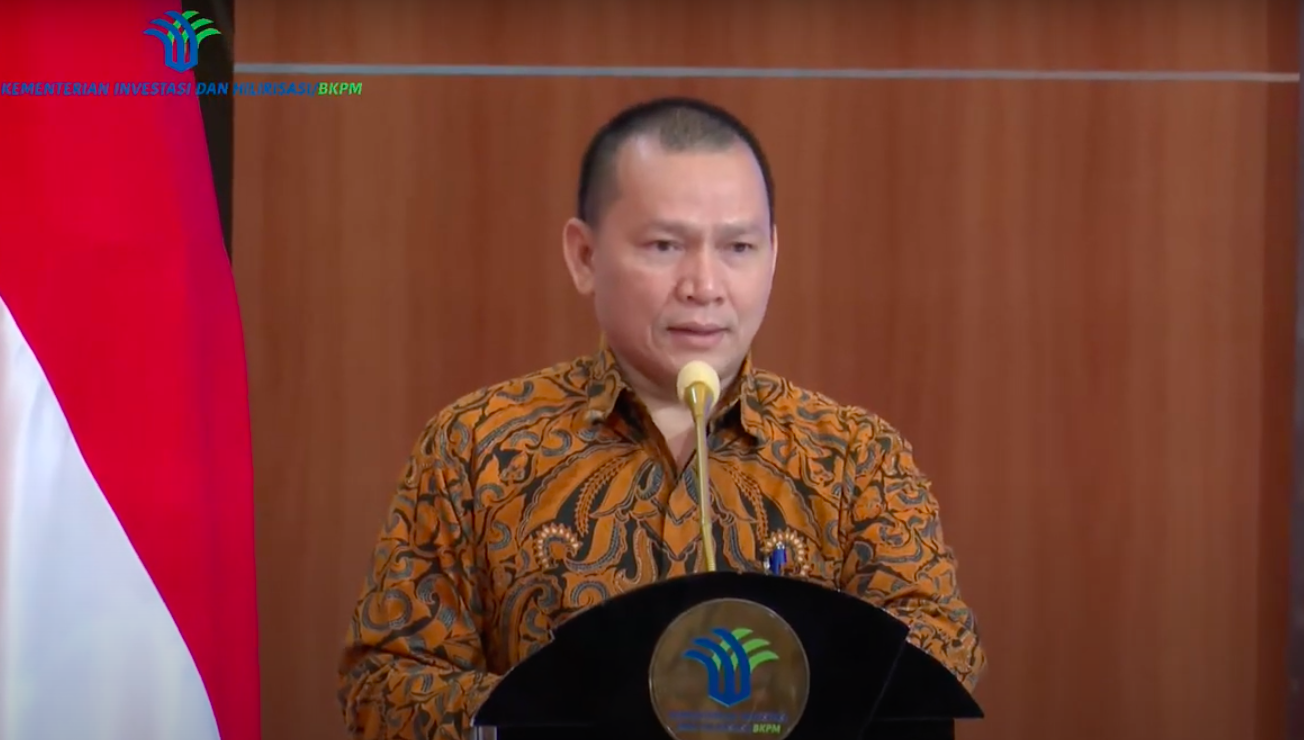
The Ministry of Investment and Downstreaming/BKPM held a public consultation agenda to discuss the draft Ministerial Regulation that will replace three previous regulations, namely BKPM Regulations Numbers 3, 4, and 5 of 2021. The event forms an important part of the government’s efforts to harmonise derivative regulations from Government Regulation (PP) Number 28 of 2025 on Risk-Based Business Licensing.
Deputy for Energy and Mineral Resources Coordination at the Coordinating Ministry for Economic Affairs, Elen Setiadi, affirmed that the issuance of PP 28 represents a crucial moment in addressing three main challenges in the investment world: licensing certainty, procedural simplification, and concrete regulatory reform.
Elen highlighted the importance of accelerating regulatory reform to address obstacles in implementing risk-based licensing, which has thus far remained suboptimal. He noted that over the past four years, various constraints have been found in issuing basic licensing requirements, such as spatial conformity approvals (KKPR), environmental permits, and others.
He conveyed that President Joko Widodo’s directive is very clear: licensing regulations must become simpler, more efficient, and provide legal certainty. Deregulation and bureaucratic reform were described as absolute prerequisites for achieving sustainable high economic growth and preventing Indonesia from falling into the middle income trap.
Elen reminded that to achieve the economic growth target of 8 per cent, the government must seriously improve the investment climate, partly by drafting regulations that facilitate rather than hinder business operators. The government was encouraged to emulate best practices from other countries where necessary. “Copy with pride,” he said, quoting the President’s directive.
In his presentation, Elen also conveyed that the President had urged that regulations relating to imports and Local Content Requirements (TKDN) be reviewed more realistically, without disregarding national interests. “The government must be able to balance national protection interests with ease of doing business,” he said.
He also touched on bureaucratic delays that still frequently occur, despite the introduction of the Online Single Submission (OSS) system. According to him, although OSS is described as ‘single’, entry points remain numerous. Going forward, an integrated system approach will be implemented with Service Level Agreements (SLA) and a ‘fictive positive’ scheme, whereby if the government fails to respond to a permit application within the stipulated timeframe, the permit is deemed granted.
Elen cited a real experience of a factory permit application that was delayed merely due to simple technical and bureaucratic obstacles, demonstrating how important the implementation of the fictive positive principle is. The government must actively guide business operators when there are discrepancies with Norms, Standards, Procedures, and Criteria (NSPK), rather than simply rejecting applications.
Furthermore, he emphasised the importance of the derivative regulations from PP 28 being consolidated into a single comprehensive ministerial regulation, replacing Ministerial Regulations Numbers 3, 4, and 5 of 2021. This is to prevent confusion among business operators, simplify references, and synchronise all rules.
“If there are differences in arrangements between PP 28 and the Investment Ministerial Regulation and sectoral regulations, then PP 28 and the Investment Ministerial Regulation shall serve as the reference, so there is no doubt among business operators regarding applicable regulations,” he stressed.
Elen also highlighted the importance of synchronisation with spatial planning. Many issues remain in the integration of Detailed Spatial Plans (RDTR) that delay the issuance of KKPR. However, the government is now pushing for the accelerated digitalisation of RDTR to expedite the process.
At the forum, participants from ministries, institutions, and regional governments were expected to provide input on the draft regulation. Feedback may be submitted until the end of this week through a link to be provided by the Ministry of Investment and Downstreaming/BKPM.
In closing, Elen expressed his hope that the regulatory reform would truly create a more competitive business climate, generate employment, and support development targets towards “Golden Indonesia” before 2045.
“If there are officials who do not support this deregulation, they will be evaluated. Even if ministers do not work quickly, the President has stated they will be left by the roadside,” he stressed.
The public consultation event marks the government’s seriousness in ensuring all regulations support a transparent, swift, and efficient investment ecosystem.