
Investment Ministry Holds Public Consultation on New Business Licensing Regulations
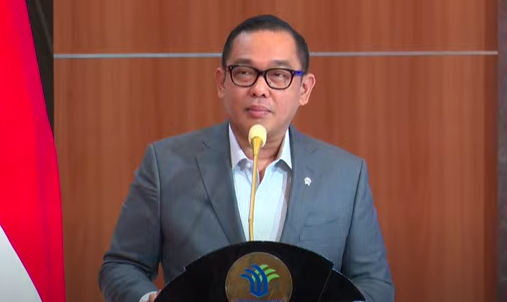
NIKEL.CO.ID, JAKARTA – The Ministry of Investment and Downstreaming/Investment Coordinating Board (BKPM) held a public consultation to gather input from various stakeholders on draft regulations to replace BKPM Regulations Numbers 3, 4 and 5 of 2021. The event formed an important part of refining risk-based business licensing policy.
In his remarks, Deputy Minister of Investment and Downstreaming/Deputy Head of BKPM, Todotua Pasaribu, stated that the public consultation was held in response to regulatory changes from Government Regulation (PP) Number 5 of 2021, now replaced by PP Number 28 of 2025.
“This policy is designed to address three main challenges: certainty in licence issuance, process simplification, and regulatory restructuring,” said Todotua on Thursday (3 July 2025).
He stressed that licensing services are the spearhead of investment realisation. The government is targeting economic growth of up to 8 per cent over the next five years, with an investment realisation target of Rp13,000 trillion. However, according to ministry records, unrealised investment still amounts to Rp2,000 trillion due to various licensing obstacles.
“Classic problems such as unconducive licensing, overlapping policies and lack of legal certainty remain the main impediments,” he said.
Todotua also stated that the Ministry of Investment is committed to bureaucratic reform as consistently emphasised by the President. One breakthrough in the new regulation is the application of the ‘fictive-positive’ concept, whereby if a licence is not issued within a specified timeframe, it is deemed to have been automatically granted.
“We must provide certainty. We cannot have investors ready to enter but their permits have not been issued. This can disrupt business cycles,” he explained.
During the forum, Todotua also highlighted the importance of synergy between ministries and agencies in integrating licensing services through the Online Single Submission (OSS) system. Currently, approximately 1,700 types of businesses are covered by OSS, involving coordination with more than 17 ministries and agencies.
He also revealed plans to integrate the financial sector, including banking and insurance, into the OSS platform. According to him, financial sector data has not yet been recorded in national investment realisation figures.
“We have already discussed this with the Financial Services Authority (OJK), and the response has been very positive. In the near future, we hope the financial sector can enter the OSS system, not just as an observer but also as part of the licensing process,” he said.
Furthermore, he highlighted the importance of a post-audit approach in the licensing process, particularly for investments made within industrial estates or special economic zones.
“If the investment is within a designated zone and the investor is ready, the licence can be issued immediately. Other requirements can be fulfilled later. The government must be bold in making breakthroughs,” he stressed.
The public consultation, he said, represents the government’s openness in formulating policies that are more responsive to the needs of business actors.
“This forum is important for absorbing constructive input from ministries and agencies, regional governments, business associations, MSMEs and investors. Such input will be key to refining the replacement regulations that will form the foundation of risk-based business licensing reform,” said Todotua.
He closed his remarks by expressing hope that synergy between the government and business actors can become a new energy for creating progressive regulations that serve the national interest.
“I hope this new regulation can strengthen legal certainty, simplify procedures, and encourage the creation of a better investment climate,” he concluded.