
Investment in Whoosh High-Speed Train Burdens WIKA's Finances by Rp 1.8 Trillion
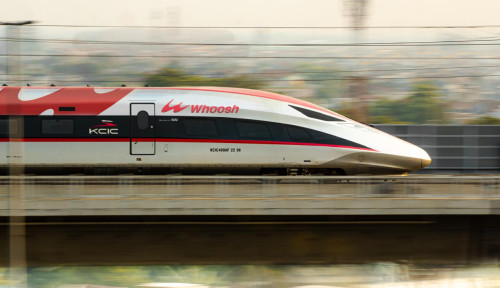
PT Wijaya Karya (Persero) Tbk (WIKA) has reported substantial losses stemming from its involvement in the Indonesia-China High-Speed Rail (KCIC) project, or Whoosh. The company has been booking average annual losses of approximately Rp 1.7 trillion to Rp 1.8 trillion from this investment. This recurring annual financial burden poses a significant challenge for WIKA in achieving optimal net profits. Furthermore, WIKA’s President Director, Agung Budi Waskito, acknowledged that this situation is severely pressuring the company’s financial performance. ‘In 2025, if I’m not mistaken, it booked a loss of Rp 1.7 trillion or Rp 1.8 trillion,’ Agung stated in North Jakarta on Monday (6/4/2026). Additionally, WIKA holds a 33.36% ownership stake in PT Pilar Sinergi BUMN Indonesia (PSBI), the consortium for the project. WIKA’s management has expressed a desire to divest its ownership in the high-speed rail project assets to reduce the annual burden. However, the divestment process is acknowledged to be difficult because the company’s involvement is stipulated in a Presidential Regulation. The company has requested that the government or Danantara consider WIKA’s position, which is fundamentally that of a contractor. Moreover, decisions regarding full asset divestment fall entirely within the policy domain of the central government. ‘It’s not easy for us to divest the high-speed rail assets,’ Agung emphasised in his statement to the media. In addition, WIKA remains focused on resolving a cost overrun claim worth Rp 5.02 trillion. The mediation process for this additional cost claim is currently ongoing between WIKA and KCIC. Furthermore, both parties have agreed to postpone arbitration proceedings at the Singapore International Arbitration Centre (SIAC). The government targets that the mediation process for this cost dispute can be fully completed by the end of 2026. Moreover, the resolution of this claim is expected to provide financial position certainty for the red-plate construction issuer. The operational sustainability of Whoosh remains a national strategic priority despite the investment pressures on contractors. Thus, synchronisation of policies between state assignments and the financial health of state-owned enterprises becomes key to future evaluations.