
Investment in Special Economic Zones Reaches Rp353 Trillion by Q1/2026, Absorbing Over 200,000 Workers
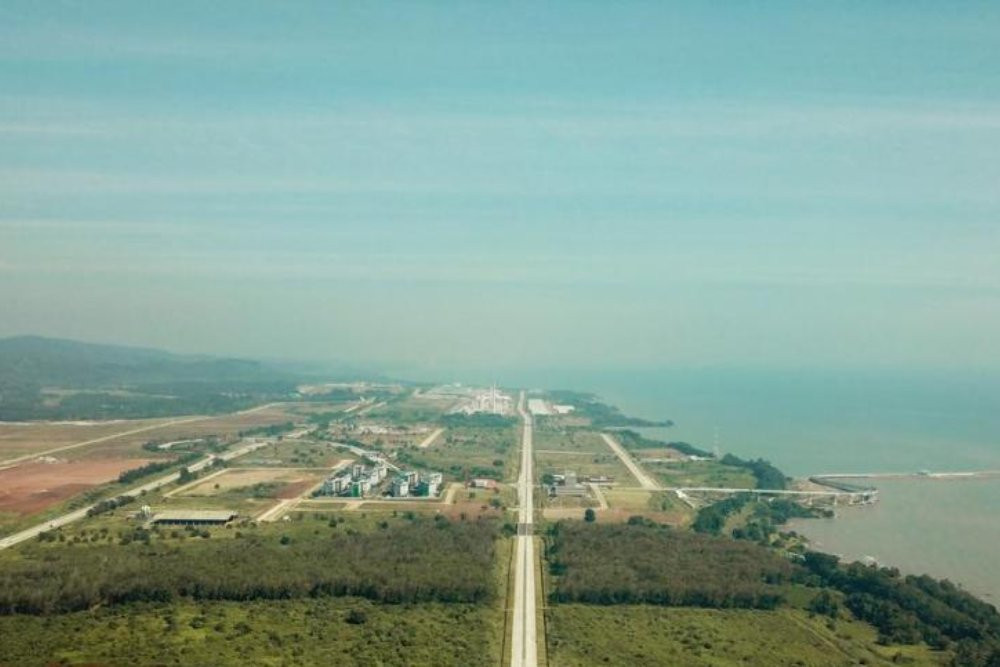
The government reports that the cumulative realisation of investment from Special Economic Zones (SEZs) has reached Rp353 trillion by the first quarter of 2026. These zones are said to have successfully absorbed more than 200,000 workers.
This cumulative investment figure comes from 365 Business Entities (BUs) and Business Actors (BAs) located in these special-function economic zones. The General Secretariat of the National SEZ Council also states that the Rp353 trillion figure represents a positive trend.
The report, quoted on Tuesday (28 April 2026), also records an additional investment of Rp17.5 trillion in the first quarter of 2026, which amounts to about 25% of the 2026 target. To date, SEZs have absorbed 273,301 workers, with an addition of 24,229 workers in the first quarter of 2026, representing 47% of the 2026 annual target.
Of the 25 existing SEZs, 10 have achieved more than 25% of their investment targets. Meanwhile, 11 SEZs have completed 25% of their workforce absorption targets.
Based on a study by Prospera, the Australia-Indonesia Partnership for Economic Development, areas with SEZs are able to attract Foreign Direct Investment (FDI) up to 173% higher compared to areas without SEZs. Employment absorption also increases in areas with SEZs, by around 4% more than in other regions.
Coordinating Minister for the Economy, who chairs the National SEZ Council, Airlangga Hartarto, stated that in addition to focusing on increasing investment, SEZ development is also being driven to strengthen its quality and impact on the economy.
Special Economic Zones are expected to become catalysts for growth as well as accelerators in supporting the achievement of the national economic growth target of 8%, Airlangga said at the National SEZ Working Meeting (Rakernas) for the First Quarter of 2026 on Monday (27 April 2026), as quoted from a press release.
To realise this impact, Airlangga emphasised the importance of support and coordination among various ministries and state institutions in accelerating SEZ development. In addition, he mentioned that SEZs also require accelerated regional infrastructure development and simplification and acceleration of business licensing.
He also highlighted the importance of improving digital infrastructure to meet the needs of data centre development. This, he said, is necessary in line with the rapid development of technology, such as artificial intelligence (AI) and quantum computing.
He and his team mentioned that there are two strategic zones with potential to become central points for data centre development in Indonesia, namely the SEZ in Batam and the SEZ in Bitung.
Airlangga hopes that the results of the working meeting can resolve the challenges faced by Indonesian SEZs.
I hope the results of this National SEZ Working Meeting, which will take place over the next two days, can finalise efforts to debottleneck various issues currently faced, so that the implementation of programmes and business activities in SEZs can run more optimally, he said.
On the same occasion, Acting General Secretary of the National SEZ Council, Rizal Edwin Manansang, stated that SEZ development also needs to be supported by workforce readiness that matches industry needs. According to him, efforts are needed to strengthen the linkage and matching between SEZ needs and training curricula and capacity.
Proactive steps from SEZ Developer and Manager Business Entities (BUPPs) and BAs in collaborating with the Ministry of Manpower to ensure the fulfilment of worker needs quickly and accurately are also required, Edwin said.
The Rakernas SEZ is expected to help resolve various SEZ development challenges, including licensing aspects, infrastructure, and policy support.