
Investment and Downstreaming as the Foundation for Sustainable Economic Growth
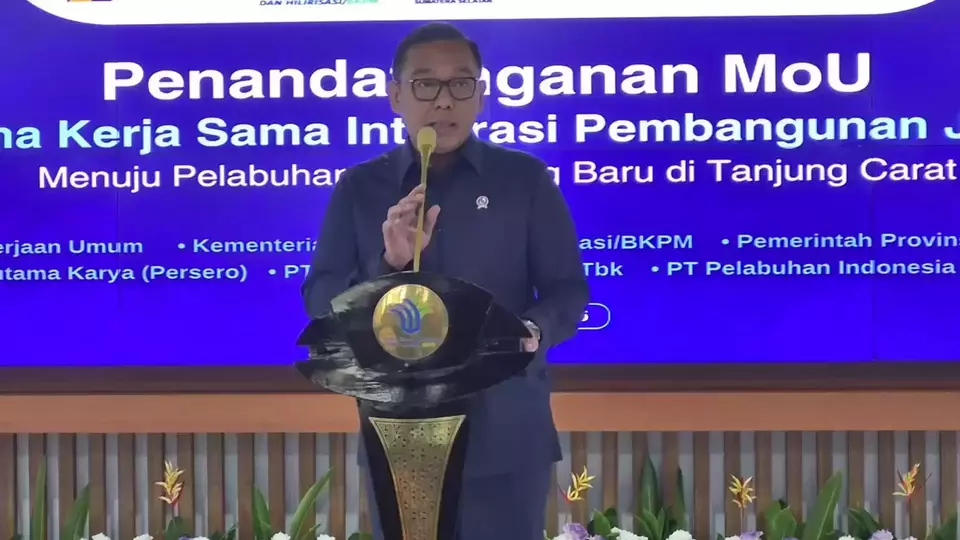
The Ministry of Investment and Downstreaming/Investment Coordinating Board (BKPM) has reaffirmed its commitment to bolstering investment and downstreaming strategies as the primary foundation for sustaining national economic growth.
Deputy Minister of Investment and Downstreaming Todotua Pasaribu stated that these measures are considered essential for maintaining positive and sustainable domestic economic growth targets. This is particularly relevant after the Central Statistics Agency (BPS) reported a 5.61% year-on-year (yoy) growth in domestic economic figures for the first quarter of 2026.
Consequently, national investment policy directions emphasise economic transformation through enhancing industrial value added, strengthening downstreaming, and building an integrated investment ecosystem.
Todotua revealed that investment plays a significant role in national economic growth. In the first quarter of 2026, the investment sector contributed approximately 30%.
“With a target economic growth heading towards 8%, various efforts and strategic frameworks are certainly needed to drive the realisation of national investments,” stated Todotua Pasaribu at the Ministry of Investment and Downstreaming office in Jakarta on Wednesday (13/5/2026).
Todotua assessed that future investment strategies must be increasingly targeted and integrated with the national downstreaming programme. Not only focused on increasing investments, these policies are also directed towards creating added value for commodities and strengthening the national industrial structure.
In this context, downstreaming becomes one of the main drivers of economic growth. In line with this, the Government continues to promote the development of integrated economic zones as a stimulus for accelerating investments. This strategy is further reinforced by improving connectivity and a more efficient national logistics system.
According to Todotua, the success of downstreaming is not only determined by the availability of commodities or industrial products but also by the readiness of supporting ecosystems such as logistics, energy, and industrial supply chains.
“Without integrated infrastructure and logistics ecosystems, investments cannot be efficient, and the strategies for downstreaming and industrialisation will not be optimal,” he concluded.