
Introducing Mizab Al Rahman, the Ka'bah's Water Spout Made of Pure Gold
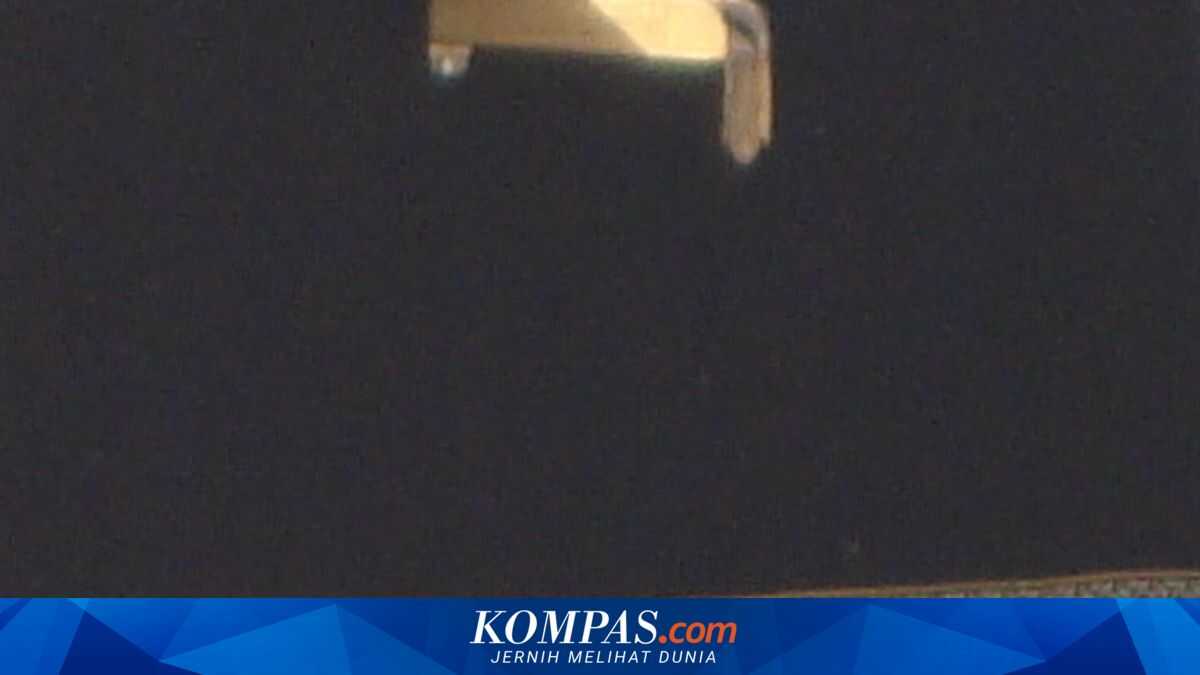
Among the various historical architectural elements of the Ka’bah, there is one part that often goes unnoticed by pilgrims, namely Mizab Al Rahman.
This water spout attached to the upper wall of the Ka’bah is not just a rainwater drainage system, but has a very long history.
As quoted from Al Arabiya, Mizab Al Rahman, also often called Mi’zab, is a rainwater drainage system from the roof of the Ka’bah. Its uniqueness lies in the material used, which is coated with pure gold.
The history of the installation of this water spout actually began during the time of the Quraysh tribe. At that time, the Ka’bah was rebuilt after being damaged by floods and fires.
Initially, the building did not have a roof. When the Prophet Muhammad was around 35 years old, the Quraysh tribe renovated the Ka’bah and for the first time added a roof.
As quoted from Hajj Umrah Planner, the tradition of installing this water spout has been maintained. In 63 Hijri (684 AD), Abdullah ibn al-Zubayr rebuilt the Ka’bah and continued to direct the water flow to the Hijr Ismail area, as in the previous practice.
The next change occurred in 73 Hijri (684 AD), when Al-Hajjaj ibn Yusuf carried out renovations and installed a new water spout.
The Mi’zab that now adorns the Ka’bah dates back to the reign of Abdulmejid I (Ottoman ruler). The spout was made in Constantinople (now Istanbul) and installed in 1276 Hijri or 1859 AD.
This spout is famous for its gold coating. Over time, several repairs have been carried out, including repairs to the upper nails to prevent pigeons from perching.
The renovation was carried out during the reign of Saud bin Abdulaziz Al Saud, when the roof of the Ka’bah was also renovated.
Architecturally, the roof of the Ka’bah is flat with a slight slope towards the northwest corner. From this corner, Mizab Al Rahman extends to drain rainwater away from the roof.
Below the spout is the Hijr Ismail area, which is covered in marble and decorated with intricate mosaics. This place is believed to be one of the most sacred places to pray.
A historian from the 3rd century Hijri, Al-Azraqi, noted that the length of the Mi’zab was about four hasta (a unit of measurement) with a height of eight fingers, and was decorated with gold sheets associated with the reign of al-Walid ibn Abd al-Malik, the Umayyad ruler.
Another account comes from the famous traveler Ibn Battuta, who visited Mecca in 726 Hijri (1326 AD). He described the Mi’zab as being located right above the Hijr Ismail, made of gold, and protruding about two hasta. Below it is an area believed to be a place where prayers are answered.
The design of Mizab Al Rahman has undergone various changes to reach its current form. This rectangular spout is made of thick teak wood as the basic structure, then coated with 24-karat gold sheets on the outside.
Its length reaches 2.58 meters, with about 58 centimeters embedded in the wall of the Ka’bah. The width is 26 centimeters and the height of each side is 23 centimeters.
Along both sides, sharp nails are installed to prevent birds from perching.