
Interpreting the Expansion of the Free Private Schools Programme in Jakarta
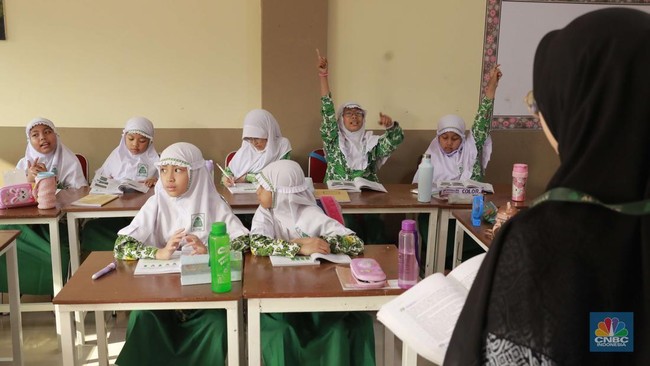
Recently, the Government of the Special Capital Region of Jakarta Province has expanded the free private schools programme as an effort to open up educational access for more citizens. This policy marks an important change: education is no longer seen solely as a service dependent on economic capacity, but as a right that must be concretely guaranteed by the state.
Within the framework of human rights, education is truly a fundamental right inherent to every individual. The state, including local governments, bears the responsibility to ensure that no child is left behind due to cost factors. Therefore, the step taken by the DKI Jakarta Provincial Government should be read as part of the effort to fulfil that obligation—eliminating economic barriers and providing more equal opportunities for children to access education.
This policy also shows that the fulfilment of rights does not always have to come in the form of large-scale national policies. Local initiatives, when properly designed, can become a concrete path to bringing educational justice closer to the daily lives of the community.
Legal Framework and Policy Design
The free private schools policy in Jakarta is built on a sufficiently firm legal foundation through the Governor of DKI Jakarta Regulation Number 34 of 2025. This regulation not only provides the basis for the local government to fund private schools but also emphasises an important principle: recipient schools are obliged to provide education without charging any fees from students.
Interestingly, this regulation explicitly refers to the Constitutional Court decision regarding the state’s obligation to guarantee fee-free education. This means the policy is not merely an administrative initiative but an effort to translate constitutional mandates into local policy practice.
From a policy design perspective, the funding scheme used is quite progressive. Assistance is provided through a grant mechanism with strict stages—from submission, field verification, determination, to reporting and accountability.
Schools not only receive funds but are also burdened with clear administrative obligations and accountability. This is important to ensure that public funds are truly used for educational activities, such as teaching, teacher development, and facility maintenance.
Another aspect worth noting is the needs-based approach. This regulation prioritises private schools located in areas without public schools. Thus, the policy not only expands access in general but also attempts to close geographical disparities in educational services. This shows an effort towards more equitable distribution, not just administrative equalisation.
Additionally, the amount of funding is determined based on the number of active students and the school’s minimum quality evaluation results. This approach is interesting because it combines two aspects at once: access (through the number of students) and quality (through quality standards). In other words, this policy not only encourages schools to open free access but also maintains decent educational standards.
The strengthening of this policy is then evident in the Governor of DKI Jakarta Decision Number 312 of 2026, which concretely determines the recipient schools and funding allocations. Here, the policy moves from norms to implementation. It does not stop at rules but truly reaches schools and students as direct beneficiaries.
If read in full, this regulation shows that the DKI Jakarta Provincial Government no longer positions private schools merely as complements but as part of the strategy to fulfil the right to education. In this condition, the boundary between “public” and “private” begins to be transcended, replaced by a more fundamental orientation, namely ensuring that every child can still attend school without being hindered by costs.
The Right to Education in the Human Rights Perspective
Within the human rights framework, the free private schools policy in Jakarta can be read as part of the state’s obligation to fulfil the right to education. This right is not just a normative aspiration but has been guaranteed in various legal instruments, both national and international.
At the constitutional level, Article 31 paragraph (1) of the 1945 Constitution of the Republic of Indonesia affirms that every citizen has the right to education, and paragraph (2) affirms the state’s obligation to fund basic education. This provision is then strengthened in Law Number 39 of 1999 on Human Rights, which places education as part of economic, social, and cultural rights that must be fulfilled by the state.
In the international sphere, similar guarantees are reflected in Article 26 of the Universal Declaration of Human Rights (UDHR), which states that everyone has the right to education and that elementary education shall be provided free of charge.
Article 13 of the International Covenant on Economic, Social and Cultural Rights (ICESCR), which has also been acceded to by Indonesia, affirms the state’s obligation to realise education that is accessible to all without discrimination, including through progressive steps towards free education.
Additionally, the Convention on the Rights of the Child (CRC) provides special emphasis that states must ensure education is accessible to every child and take steps to reduce economic barriers that hinder educational participation. In this case, education costs often become the most evident factor of exclusion, especially for families with limited socio-economic conditions.
If drawn into policy practice, the step taken by the DKI Jakarta Provincial Government can be understood as a form of fulfilling the state’s obligations in three main dimensions of human rights: respecting (not obstructing access